Key Takeaways
- Wade Litigation represents San Francisco property owners, buyers, and landlords in disputes over disclosures, boundaries, title, and construction quality.
- Property disputes in San Francisco often involve zoning regulations, disclosure requirements, and rent control ordinances unique to the city.
- California’s statute of limitations for real estate fraud claims is generally three years from discovery, while written contract claims allow four years.
- San Francisco’s dense development and older housing stock make disclosure failures, boundary conflicts, and construction defects especially common sources of litigation.
- Mediation and arbitration can resolve many real estate disputes faster and at lower cost than full litigation, though they involve real trade-offs.
Owning or investing in property in San Francisco carries real financial stakes, and disputes over what was disclosed, where a boundary actually sits, or whether a contractor’s work meets code can escalate quickly given the city’s property values. Wade Litigation represents San Francisco clients through every stage of a real estate dispute, from an initial demand letter through mediation, arbitration, or a full trial when negotiation fails. For a broader look at real estate litigation across California, our statewide real estate litigation resource covers those fundamentals in more depth.
Our approach starts with a careful review of the contracts, disclosures, and records at the center of the dispute. That early analysis shapes a realistic strategy, whether the goal is a fast resolution through ADR or building the strongest possible record for litigation.

What Is Real Estate Litigation?
Real estate litigation covers legal disputes tied to property ownership, use, or transfer. Courts step in when negotiation fails to resolve a disagreement or when one party refuses to honor a legal obligation. A few terms come up across nearly every case in this area.
- Breach of contract: a party failed to follow the terms of a signed agreement
- Disclosure: information a seller or landlord is legally required to share about known property issues
- Title: the legal right to own or use a piece of property
- Remedies: the court-ordered actions or monetary payments used to address the harm caused
Disputes generally trace back to one of three moments: a sales transaction, a leasing arrangement, or a construction or development project. A buyer may claim a seller withheld a known defect. A neighbor may challenge where a property line actually falls. A developer may clash with a contractor over workmanship or missed deadlines.
Common Sources of Real Estate Disputes in San Francisco
San Francisco’s dense development, aging housing stock, and layered regulatory structure create dispute sources that look different from what a suburban or rural California market typically sees. High property values also mean that even a modest mistake or omission carries outsized financial consequences.
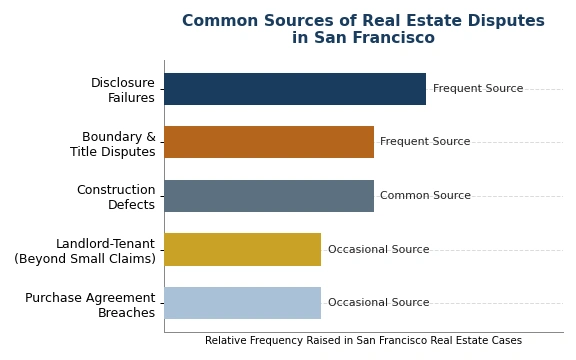
Failure to Disclose Material Defects
California sellers must disclose known defects that affect a property’s value or safety, most commonly through the Transfer Disclosure Statement. Issues like foundation movement or water intrusion often surface only after closing, and buyers are entitled to rely on what a seller represented, or failed to represent, at the time of sale.
Boundary and Title Disputes
Disagreements over where a property line actually sits can escalate quickly in a city where lots sit close together and older surveys sometimes conflict with modern measurements. A misplaced fence or an encroaching addition can cloud title and complicate a future sale or refinance, and resolving the dispute usually requires a close look at recorded deeds, historical surveys, and, in some cases, a quiet title action.
Construction Defects
San Francisco’s mix of century-old housing stock and newer construction generates two very different kinds of defect claims. Older buildings frequently raise issues involving outdated plumbing, electrical systems, or seismic vulnerabilities, while newer construction more often generates waterproofing, drainage, or framing disputes. California’s Right to Repair Act requires an owner to notify the builder and allow an opportunity to inspect and respond before litigation proceeds on many of these claims.
Landlord-Tenant Disputes Beyond Small Claims Court
San Francisco’s rent control ordinance and its eviction protections create friction that regular small claims court isn’t equipped to resolve. Habitability disputes, allegations of unlawful eviction, and lease violation claims often require the San Francisco Superior Court’s civil division, particularly once damages or injunctive relief are at stake, and our San Francisco civil litigation attorney can help evaluate whether a claim belongs there rather than in small claims court.
Breach of Purchase and Sale Agreements
Purchase agreements set firm deadlines, financing conditions, and pricing terms. When a buyer or seller fails to close on time, or a party refuses to release a deposit without a legally valid reason, the resulting dispute often turns on the specific language of the contract and the timeline of what each side actually did.
California’s Disclosure Laws and Your Rights as a Buyer
California’s disclosure requirements exist to give buyers an accurate picture of what they’re purchasing before the deal closes. Three disclosures come up in nearly every residential transaction. The Transfer Disclosure Statement requires sellers to identify known defects in the property’s structure, systems, and general condition. The Natural Hazard Disclosure Statement flags environmental risks like flood zones and earthquake fault areas that can affect both insurance and future development. California law also requires sellers to inform buyers about the availability of registered sex offender information through a public database, without requiring the seller to identify specific individuals.
When a seller fails to disclose a known, material defect, California law gives buyers more than one path to relief. Proving fraudulent concealment under Civil Code Section 1710 generally requires showing the seller actually knew about the issue and chose not to disclose it, often established through repair records, correspondence, or witness testimony. Courts can award monetary damages for repair costs or diminished value, and in more serious cases, can unwind the transaction entirely and restore both parties to their original position.
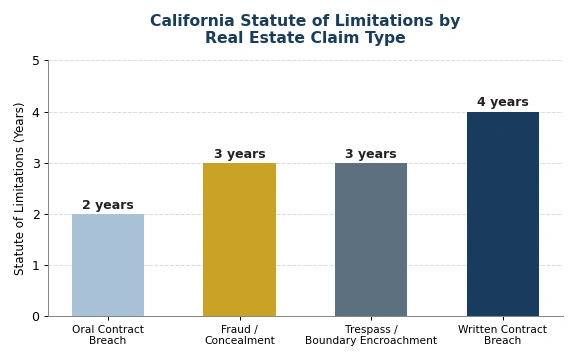
Most disclosure and fraud claims must be filed within three years of when the buyer discovered, or reasonably should have discovered, the problem. Waiting to investigate a suspected issue can quietly erode the time available to bring a claim, which is part of why a property inspection at the time of a dispute matters as much as the one performed before closing.
Title Disputes and Boundary Conflicts
A title dispute clouds ownership and can interfere with a sale or a refinance long before it ever reaches a courtroom. A quiet title action, brought under Code of Civil Procedure Section 760.010, asks the court to formally declare who owns a property and resolve competing claims once and for all. Adverse possession claims, which allow someone to gain ownership after openly occupying land for a statutory period while meeting strict legal requirements, often surface in disputes involving long-standing boundary usage between neighbors.
Easement disputes, over the scope or location of a right to cross or use another’s property, come up frequently on San Francisco’s hillside lots, where a shared driveway or a utility line easement can become a serious point of contention once a property changes hands or a renovation is planned.
San Francisco’s Unique Regulatory Landscape
San Francisco layers its own rules on top of California’s statewide real estate law, and several of these local requirements generate disputes that simply don’t arise in most other cities.
- Rent control ordinances and eviction protections that limit rent increases and restrict the grounds for regaining possession of a unit
- Condominium conversion regulations that require city approval before rental units can be converted, with disputes arising when conversions proceed without it
- Historic preservation restrictions that limit what alterations an owner can make to a protected property
- Seismic safety requirements, including soft-story retrofit mandates, that can generate disputes over responsibility for compliance costs and deadlines
Typical Timeline for a San Francisco Real Estate Dispute
How long a real estate dispute takes depends heavily on whether it resolves through negotiation, alternative dispute resolution, or full litigation, and on how factually or legally complex the underlying issue turns out to be.
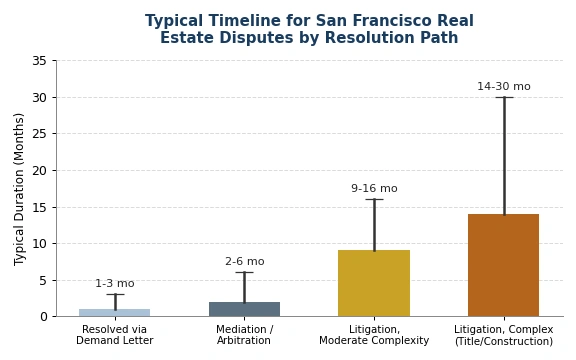
These ranges reflect general patterns rather than a guarantee for any individual dispute. Court calendar congestion, the number of experts required, and how cooperative the opposing party proves to be all affect how quickly a specific matter resolves.
Remedies Available in Real Estate Litigation
Courts have several tools available to address a real estate dispute once it reaches a judge or jury. Specific performance orders a party to actually complete an agreed transaction, such as finishing a sale that a seller improperly backed out of. Rescission cancels a contract outright, while restitution returns money or property already exchanged. Compensatory damages address measurable financial losses, and punitive damages may apply where the conduct involved intentional misconduct rather than an honest mistake. Declaratory relief simply clarifies each party’s legal rights without ordering further action, and injunctive relief can direct a party to stop, or start, a specific action, such as halting unauthorized construction.
Alternative Dispute Resolution: Mediation and Arbitration
Not every real estate dispute needs to go all the way through trial. Some purchase agreements require mediation before either side can file a lawsuit, and many contracts include an arbitration clause that places the dispute before a private decision-maker rather than a judge. Both options tend to move faster and cost less than full litigation, though arbitration in particular can limit the right to appeal an unfavorable outcome.
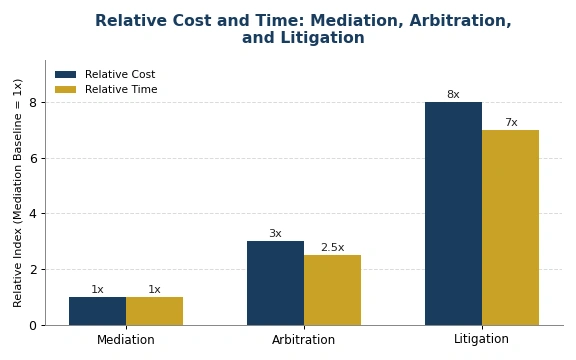
The right path depends on the dispute. ADR tends to work best when both sides are willing to negotiate in good faith and the underlying facts aren’t seriously contested. Litigation becomes the better option when a party refuses to cooperate, when the contract doesn’t require ADR, or when the stakes justify the added time and cost of a full court process.
How Wade Litigation Can Help
Wade Litigation supports San Francisco clients through every stage of a real estate dispute, starting with an initial case evaluation that reviews the contracts, disclosures, and records at issue to identify the strengths and risks in the matter. From there, a clear demand letter often presents the evidence and legal position needed to resolve a dispute through negotiation before litigation ever becomes necessary.
When a case proceeds to mediation or arbitration, our attorneys advocate directly for clients throughout the process, since preparation and presentation genuinely shape outcomes in ADR. When litigation becomes the only path forward, we present evidence and arguments to judges and juries with the same preparation-first approach, and we handle enforcement and appeals after judgment when a dispute isn’t fully resolved by the trial court’s decision.


Local Resources for San Francisco Real Estate Disputes
| Resource | Purpose | Contact / Location |
|---|---|---|
| SF Superior Court – Civil Division | Filing and hearings for real estate litigation matters | Civic Center Courthouse, 400 McAllister St, San Francisco, CA 94102 |
| SF Superior Court Self-Help Center | Form assistance for self-represented litigants (no legal advice or advocacy) | Civic Center Courthouse |
| San Francisco Rent Board | Information and disputes involving rent control and eviction protections | sf.gov/departments/rent-board |
| SF Department of Building Inspection | Permit history, code compliance, and inspection records relevant to construction defect claims | sf.gov/departments/department-building-inspection |
| San Francisco Bar Association LRIS | Attorney referral service for residents seeking real estate litigation counsel | sfbar.org |
Why Choose Wade Litigation as Your San Francisco Real Estate Litigation Attorney
Wade Litigation’s founder, Amiel Wade, brings a background as a former San Jose Police Officer to every case, shaping a disciplined approach to negotiation and courtroom advocacy alike. That preparation-first mindset carries through the entire firm: clients work directly with attorneys who personally handle case strategy rather than delegating it to unsupervised staff, and every matter gets the same close review of contracts, disclosures, and records before a strategy is set.
For San Francisco property owners, buyers, and landlords facing a disclosure dispute, a boundary or title conflict, or a construction defect claim, that combination of careful preparation and genuine litigation readiness often determines whether a case resolves on favorable terms or drags on longer than it needs to.
FAQs About San Francisco Real Estate Litigation
Contact a San Francisco Real Estate Litigation Attorney Today
Real estate disputes come with strict deadlines and evidence that can degrade or disappear over time. Prompt action helps preserve documentation, witness recollection, and legal options that narrow the longer a dispute sits unaddressed.
Wade Litigation offers focused legal representation for San Francisco property disputes, from an initial case evaluation through demand letters, mediation, arbitration, and litigation when it becomes necessary. Contact Wade Litigation today for a free case evaluation to discuss your San Francisco real estate dispute.
This page is for general informational purposes only and does not constitute legal advice. Prior results do not guarantee a similar outcome. Contact Wade Litigation directly to discuss the specific facts of your case.