A California appeals attorney represents parties who want to challenge a trial court judgment or defend one on appeal, in civil, family, and probate cases. An appeal is not a second trial. It is a written argument to a panel of justices that the trial court committed a legal error that affected the outcome, and the panel decides based on the trial record rather than new testimony. California’s Courts of Appeal are organized into six districts, each hearing appeals from the counties it covers, and a party generally has only 60 days to file a notice of appeal once the clock starts. Wade Litigation represents appellants and respondents statewide and offers a case evaluation to assess whether your case presents grounds for appeal before the deadline passes.
Searches about California appeals largely focus on the courts themselves: how the Courts of Appeal are organized, which district hears a particular case, and how to find an appellate lawyer. This page answers those questions, then explains the deadlines, standards of review, and strategic decisions that shape a civil appeal.
California Courts of Appeal and How They Are Organized
California has six appellate districts, and the district that hears an appeal depends on the county where the trial took place. The First District sits in San Francisco and hears appeals from Bay Area counties including Alameda and Contra Costa. The Second District, based in Los Angeles with an additional division in Ventura, hears appeals from Los Angeles County and several Central Coast counties. The Third District sits in Sacramento and covers a large area of Northern California and the Central Valley. The Fourth District has three divisions, in San Diego, Riverside, and Santa Ana, and Orange County appeals go to Division Three in Santa Ana. The Fifth District sits in Fresno, and the Sixth District in San Jose hears appeals from Santa Clara and neighboring counties.
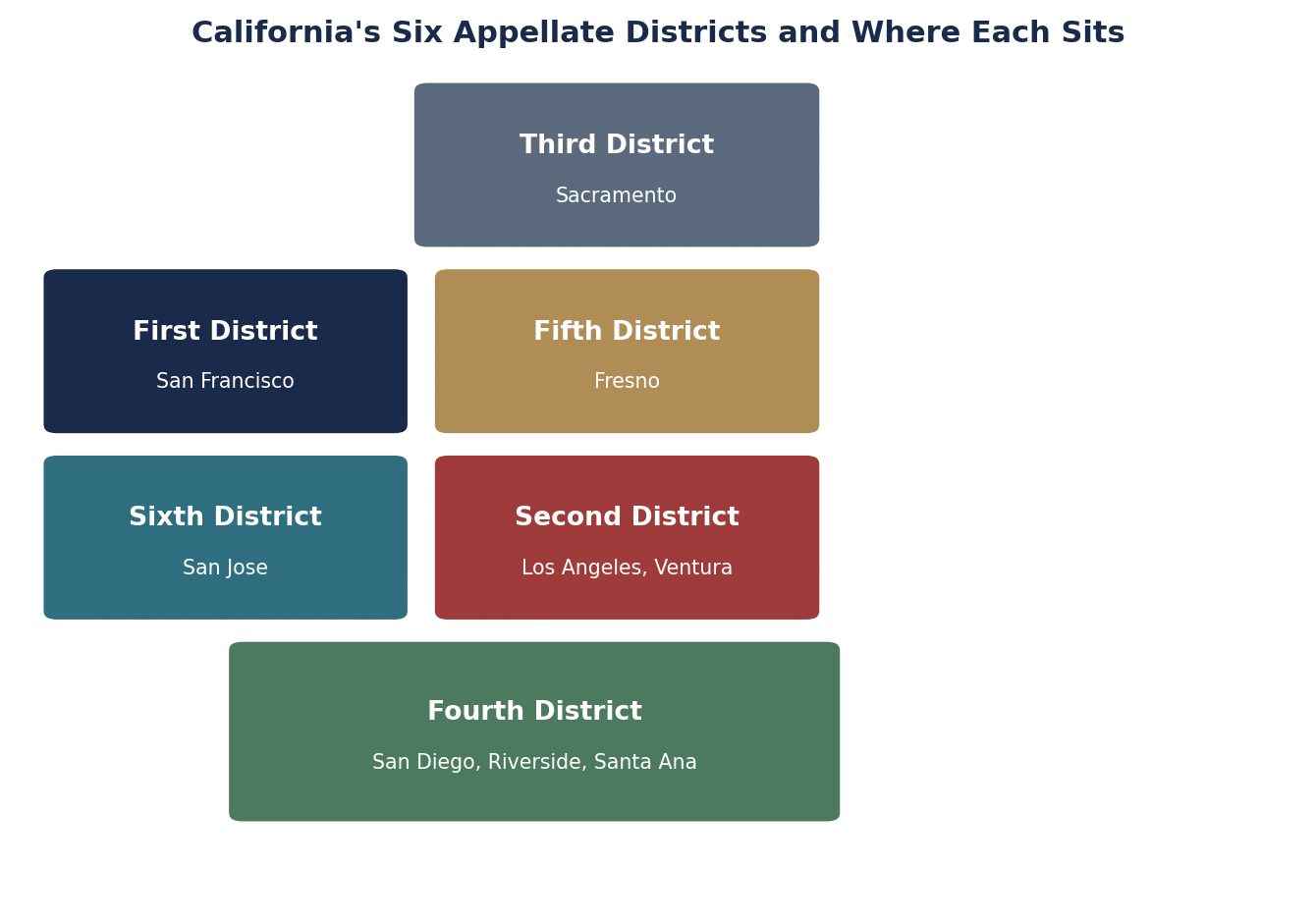
Figure 1: California’s six appellate districts and where each sits.
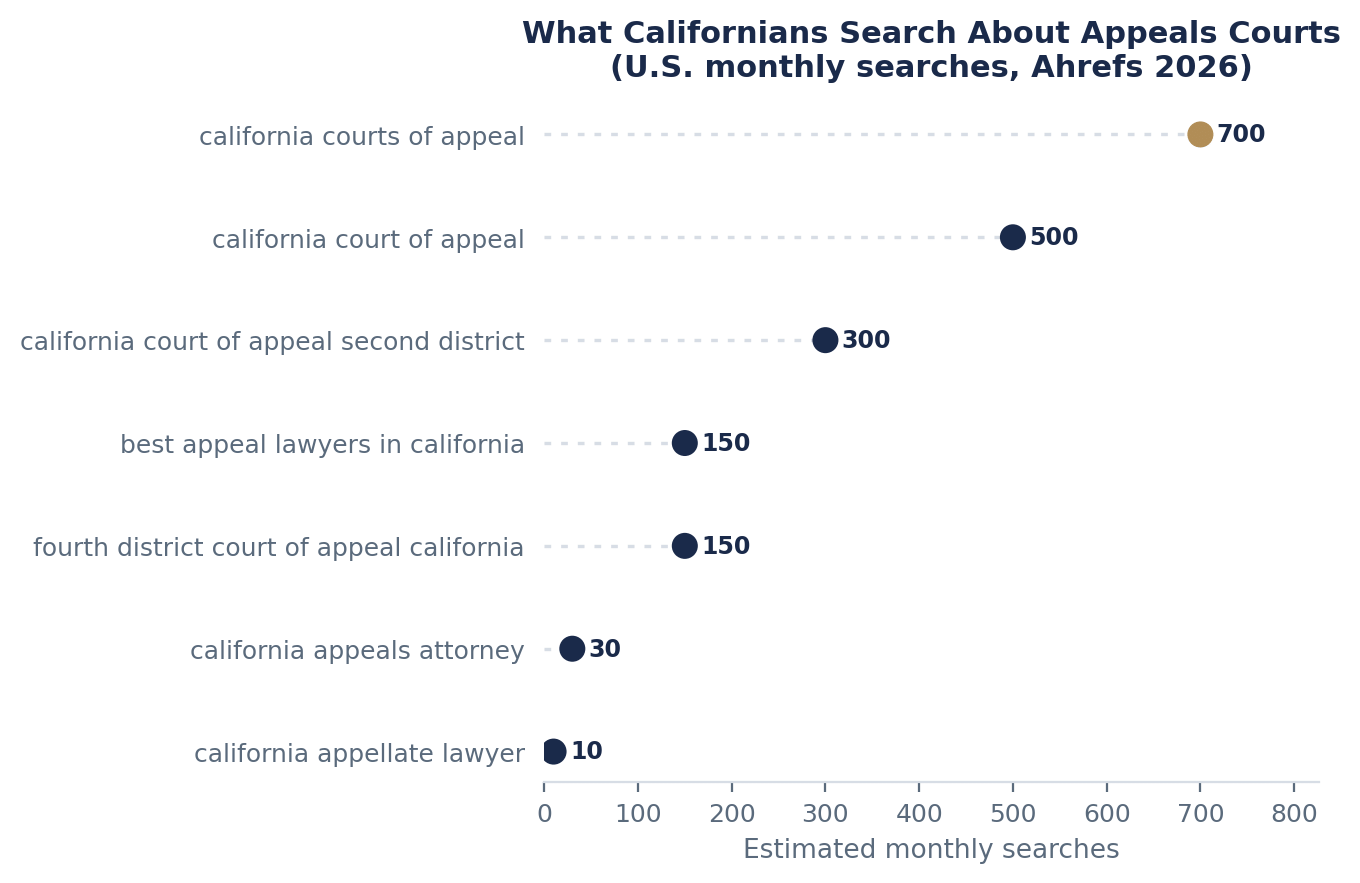
Figure 2: What Californians search about appeals courts (U.S. monthly searches, Ahrefs, 2026).
Searches for the Second and Fourth Districts show particular interest, which matches the concentration of litigation in Los Angeles, Orange, and San Diego Counties. The district matters because a published opinion from one district binds trial courts statewide until another district disagrees, and an unpublished decision generally cannot be cited as precedent under the California Rules of Court. The California Supreme Court sits above all six districts and chooses which cases to review.
Deadlines: The 60-Day Rule and the 180-Day Outer Limit
The deadline to file a notice of appeal in a civil case is one of the strictest in California law. Under California Rules of Court, rule 8.104, a notice of appeal must generally be filed within 60 days after the superior court clerk serves a document entitled notice of entry of judgment or a file-stamped copy of the judgment, or within 60 days after a party serves such a notice, whichever is earlier. If no one serves a notice, the outer limit is 180 days after the entry of the judgment. The deadline is jurisdictional, which means the Court of Appeal cannot extend it, and a late notice means the appeal is dismissed.
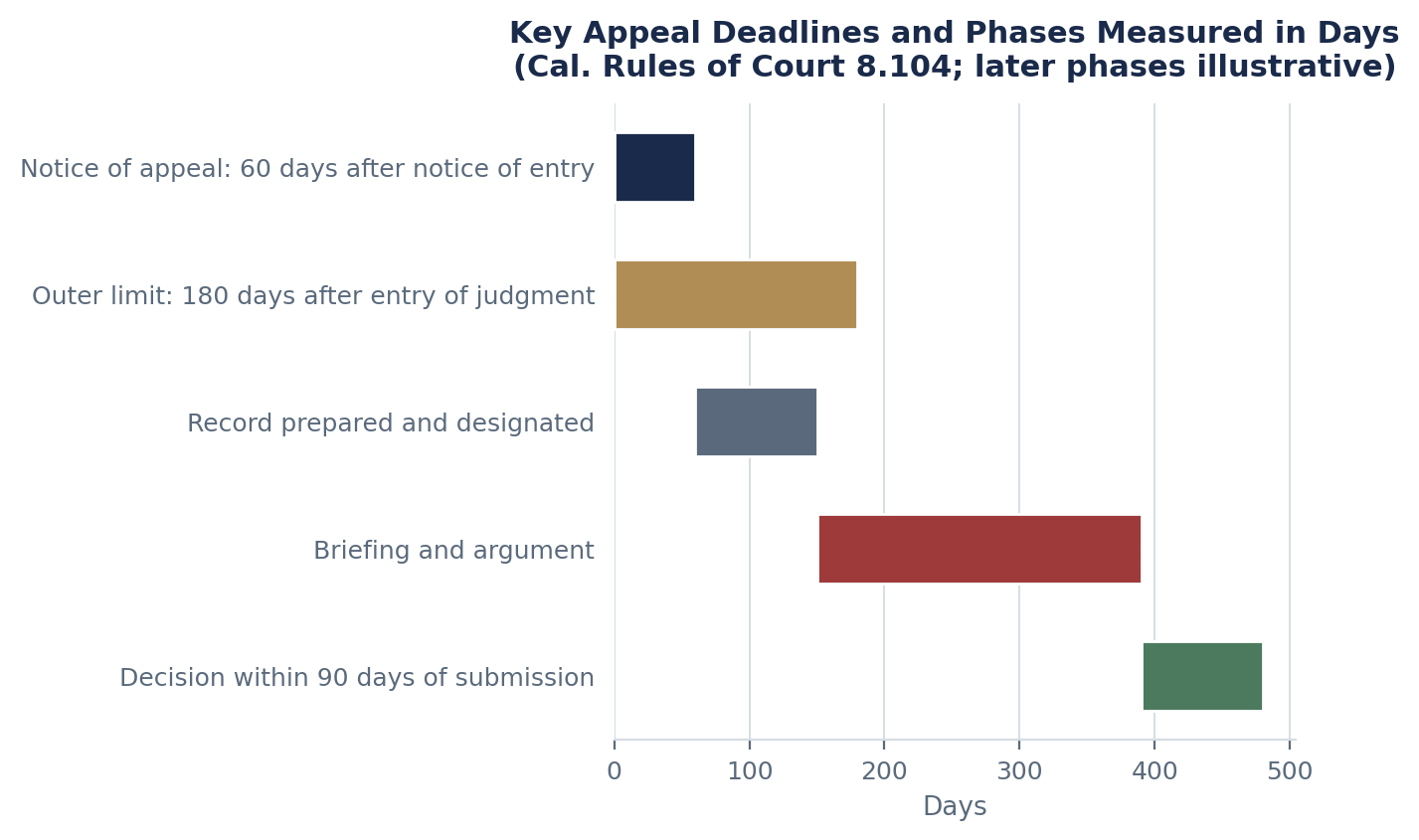
Figure 3: Key appeal deadlines and phases, measured in days (Cal. Rules of Court 8.104; later phases illustrative).
Certain post-trial motions, including a motion for a new trial and a motion to vacate the judgment, can extend the time to appeal, but the extension depends on the type of motion and on the court’s ruling, so a party should not rely on it without checking the specific rule. Because order and judgment dates vary and notices of entry are sometimes served in unexpected ways, the safest practice is to calendar the earliest possible deadline the day any judgment or appealable order is entered.

What Can Be Appealed in California
The general rule is that only final judgments and certain specified orders are appealable. A final judgment ends the case in the trial court. Some orders can be appealed before the case ends, including orders granting or denying injunctions, orders on certain motions, and in probate and family law some orders that finally decide a distinct issue. Rulings that are not appealable may sometimes be challenged by a petition for writ of mandate, a discretionary and faster route reserved for cases where waiting for a final judgment would cause irreparable harm.
Grounds for Appeal: Legal Error, Abuse of Discretion, and Insufficient Evidence
A successful appeal requires showing that the trial court made a mistake that mattered. The main categories are legal error, such as misreading a statute or applying the wrong legal standard, an abuse of discretion in a ruling the court had latitude to make, insufficient evidence to support a factual finding, and procedural errors that prejudiced the outcome. Equally important is whether the issue was preserved by an objection or motion at the right time in the trial court, since an argument raised for the first time on appeal is generally forfeited. Our guide to identifying strong grounds for appeal in civil litigation and our piece on appealing a civil case and identifying strong grounds cover how to evaluate each.
Because the standard of review depends on the type of error, it shapes strategy. Pure questions of law are reviewed independently, without deference to the trial court. Factual findings are reviewed for substantial evidence, which means the Court of Appeal asks only whether any reasonable evidence supports the finding, drawing every inference in favor of the judgment. Discretionary decisions are reviewed for abuse of discretion, the most deferential standard. An appeal built on a clean legal question is stronger than one asking the justices to reweigh the evidence.
How Civil Appeals Turn Out
Most civil judgments that are appealed are affirmed, reflecting the deference the Courts of Appeal give to trial courts, particularly on facts and discretionary rulings. A meaningful minority are reversed in whole or in part, and some are remanded for further proceedings. The proportions vary by district and case type, and the illustration below is a general pattern rather than a statistic for any court. The central point for a client is that the appeal should be filed because a genuine legal error exists, not simply because the result was disappointing.
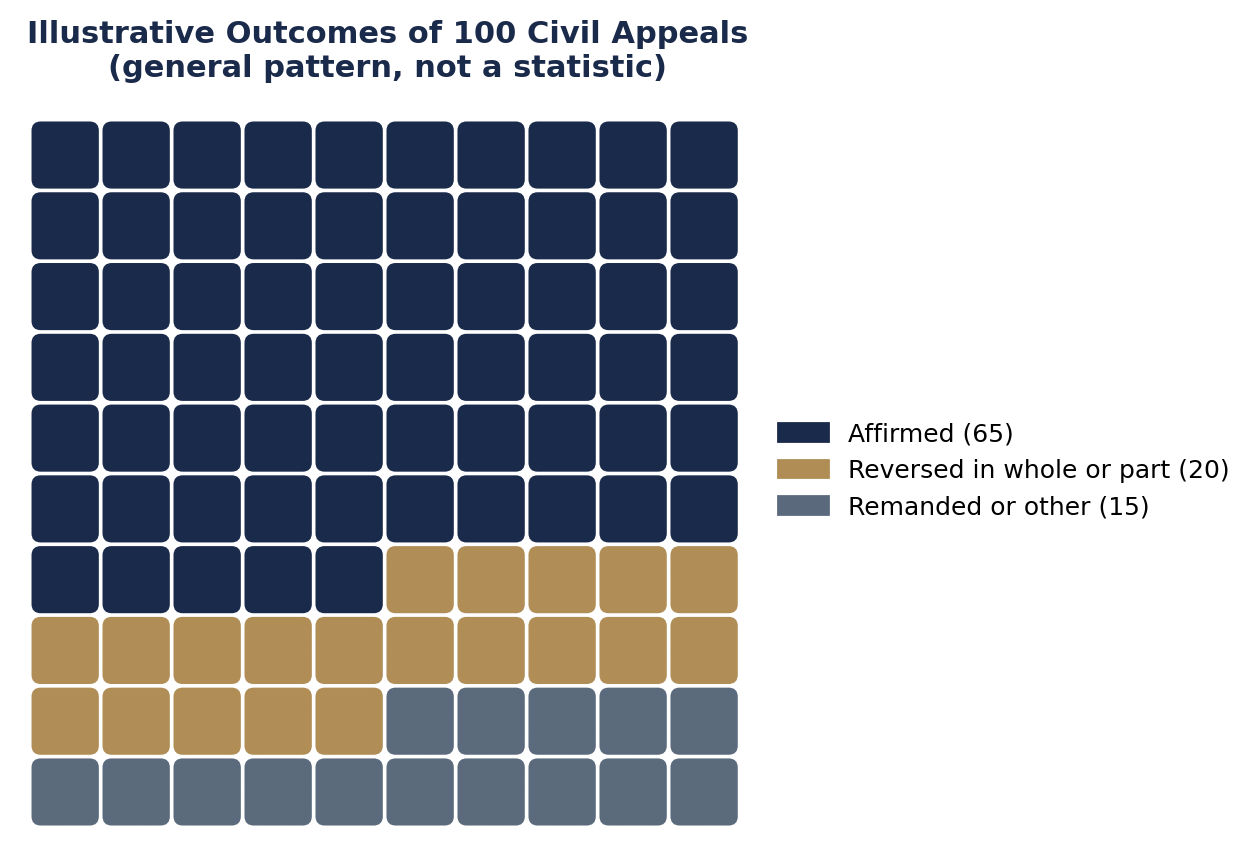
Figure 4: Illustrative outcomes of 100 civil appeals (general pattern, not a statistic).
The Appeal Process From Notice to Decision
After the notice of appeal is filed, the appellant designates the record, which consists of the clerk’s transcript of filings and, if testimony matters to the issues, a reporter’s transcript of the proceedings. The record must be prepared and filed before briefing begins. The appellant files an opening brief setting out the facts, the legal issues, and the arguments, the respondent files a responding brief, and the appellant may file a reply. The court may calendar oral argument, though many appeals are decided on the briefs, and the California Constitution requires the court to decide a case within 90 days after it is submitted. A party unhappy with the decision may petition the California Supreme Court for review within a short period after the Court of Appeal decision becomes final.
Appeals in Family Law Cases
Family court judgments and orders, including custody, support, and property division rulings, can be appealed, but trial judges have especially broad discretion in these cases, so the standard is demanding. A family law appeal usually needs to show that the court misapplied the governing legal standard or reached a result outside the range of reasonable outcomes. Time is also critical because custody and support continue under the existing order while an appeal proceeds, and a stay is not automatic. Parents weighing an appeal should review the underlying rules on our California child custody page and California family law page and consider whether a motion to modify might be the faster path.
Appeals in Probate and Trust Cases
Probate court orders are appealable more often than many people expect, because many probate orders finally decide a distinct issue and are treated as appealable even while the estate remains open. Rulings that admit or deny a will, remove or surcharge a trustee, approve or reject an accounting, or decide a petition about whether property belongs in a trust can each trigger a separate 60-day clock. Tracking the entry date of each order is therefore essential in a contested estate.
Appeals in Business and Real Estate Cases
Judgments in business and property cases are appealed for many of the same reasons as other civil cases, but they often involve complex contract interpretation, equitable remedies, and attorney fee awards, each with its own standard of review. An award of attorney fees can be appealed separately, and a party who wins on the merits may still need to defend the fee amount on appeal. Injunctions and orders compelling or denying arbitration are among the orders that are immediately appealable and therefore often the subject of early appellate review.
Stays, Bonds, and Enforcement During an Appeal
Filing a notice of appeal does not automatically stop the other side from enforcing a money judgment. A losing party who wants to prevent enforcement generally must post an appeal bond, typically in an amount tied to the judgment, under the automatic stay provisions of Code of Civil Procedure section 917.1 for money judgments. Other types of orders have their own rules, and some can be stayed by a request to the trial court or a petition to the Court of Appeal. Deciding whether to post a bond, and how to finance it, is part of an appeal’s cost-benefit analysis.
The Cost and Strategy of an Appeal
A significant share of an appeal’s cost comes from the record and the briefs. The cost of the reporter’s transcript depends on the length of the trial, and a careful designation of only what is needed to support the issues helps control it. The decision to appeal should weigh the strength of the legal issues, the amount at stake, the cost and delay of an appeal, and the possibility of settlement while an appeal is pending. Many appeals settle after the opening brief is filed because the other side can then see the specific arguments being raised. Bringing in appellate counsel, who can read the record with fresh eyes and who focuses on appellate procedure, often strengthens a case compared with relying solely on trial counsel.
Respondents: Defending a Judgment on Appeal
A party who won at trial still has important work to do once the other side appeals. The respondent’s brief must defend the judgment, typically by showing that the appellant failed to preserve an issue, relied on facts the trial court was entitled to reject, or asked the court to apply the wrong standard of review. A respondent may also argue that the judgment should be affirmed on a legal ground other than the one the trial court used, because the Court of Appeal reviews the correctness of the result rather than the reasoning alone, and may seek attorney fees if a statute or contract allows them.
The Role of Amicus Curiae in Significant Appeals
In appeals that raise issues of broad public or industry importance, outside organizations can file an amicus curiae, or friend of the court, brief offering additional perspective. These briefs are more common at the California Supreme Court but occur in the Courts of Appeal, too. Our article on the role of amicus curiae in civil appeals explains when they matter and how they are used, and our guide to key pitfalls to avoid in civil appeals lists the most common errors that sink otherwise strong appeals.
How Trial Courts in Each Region Feed the Appellate Districts
Understanding where a trial court sits tells you which appellate district will hear the appeal and which published opinions will bind the trial court. The table summarizes verified information for the regions where Wade Litigation practices.
County | Appellate District | Notable Local Fact |
Los Angeles | Second District, Ronald Reagan State Building, 300 S. Spring St., Los Angeles | The Second District has multiple divisions and handles the largest volume of appeals in the state. |
Orange | Fourth District, Division Three, 601 W. Santa Ana Blvd., Santa Ana | Division Three hears only appeals from Orange County. |
Santa Clara | Sixth District, 333 W. Santa Clara St., San Jose | The court sits in the same city as the county’s main courthouse. |
Alameda | First District, San Francisco | Appeals from the Hayward, Berkeley, and Oakland courthouses go to the same district. |
Contra Costa | First District, San Francisco | Appeals from Martinez go to the First District along with several neighboring counties. |
Local pages discuss the appellate path for specific communities, including Beverly Hills, Newport Beach, Walnut Creek, Palo Alto, San Jose, and Pleasanton.
Comparison: Appeal vs. Post-Trial Motion
Factor | Post-Trial Motion | Appeal |
Filed With | The trial court | The Court of Appeal |
Typical Deadline | Short statutory periods after notice of entry | 60 days after notice of entry; 180 days outer limit |
Who Decides | The same trial judge | A panel of appellate justices |
Typical Duration | 1 to 3 months | 12 to 18+ months |
What This Means for Your Case
If you are considering an appeal, the first task is to determine the exact deadline and calendar it, because everything else depends on it. Next, obtain the judgment or order, the notice of entry, and the trial record, and identify the legal issues that were properly preserved. An honest early assessment of the standard of review and the strength of the issues tells you whether an appeal is worth its cost, whether a post-trial motion or settlement is a better option, and whether a bond or stay is needed to protect your position.
Objections We Commonly Address
Clients sometimes assume that because they lost at trial, or because they strongly disagree with the result, an appeal will succeed. Disagreement with a factual finding the judge or jury was entitled to make rarely succeeds, while a genuine legal error, even one that seemed minor at trial, can be the strongest ground for reversal. An early, candid assessment spares clients the expense of an appeal unlikely to succeed and identifies those that have real merit.
What Happens When You Call
When you call Wade Litigation, the intake team asks about the judgment or order you are considering appealing, when it was entered, and whether anyone has served a notice of entry, because the filing deadline is critical. During the case evaluation, an attorney reviews the trial record where possible and gives you a candid assessment of your grounds for appeal and your options.
Related Reading
Parties weighing a challenge to a civil judgment often begin with demurrer versus answer as a first response to a California lawsuit and the basics of civil litigation in California. The trial-level rules behind many appeals appear on our California civil litigation page, and appeals in contested estates connect to our California probate litigation page.
Frequently Asked Questions
Speak With a California Appeals Attorney
Wade Litigation represents clients before the Courts of Appeal in civil, family, and probate matters, and its attorneys have earned seven 2026 industry awards. Call to schedule a case evaluation before your filing deadline passes.