Key Takeaways
- Wade Litigation represents San Francisco individuals and businesses appealing unfavorable civil rulings to California’s First Appellate District.
- Most civil appeals require filing a notice of appeal within 60 days of service of the notice of entry of judgment; missing this deadline generally ends the appeal before it begins.
- Appeals review the trial court record for legal error. They do not re-examine witness credibility or introduce new evidence, with narrow exceptions.
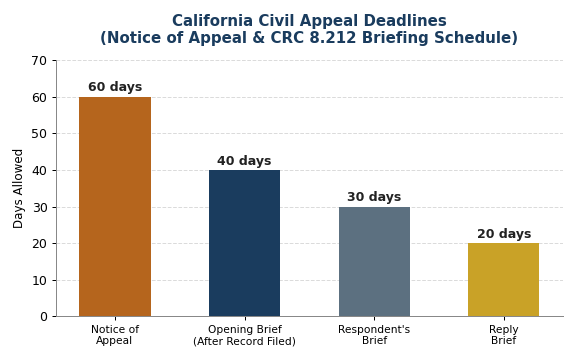
- California’s briefing schedule under Rule of Court 8.212 gives the appellant 40 days for the opening brief, the respondent 30 days to respond, and the appellant 20 days to reply.
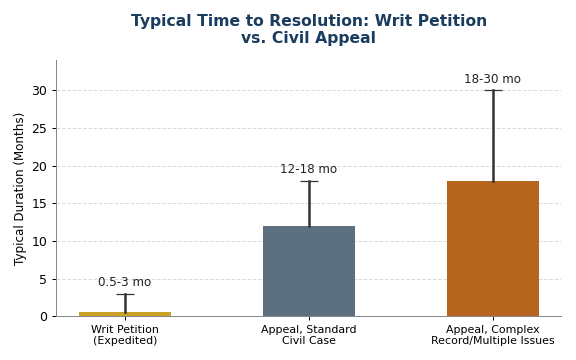
- Most California civil appeals take 12 to 24 months to resolve, though a writ petition can offer faster relief in limited circumstances.
A trial court ruling that rests on a legal mistake rather than the facts presented doesn’t have to be the final word. Many San Francisco individuals and businesses reach this point after a San Francisco civil litigation matter, uncertain whether the decision can still be challenged and, if so, how much time remains to act.
Wade Litigation represents clients throughout San Francisco who are considering or pursuing a civil appeal. An appeal moves quickly after judgment and depends on precision, timing, and persuasive legal writing rather than a second trial, which makes early legal involvement especially valuable. Call 408-214-5225 for a free case evaluation.

What Is a Civil Appeal in California?
A civil appeal asks a higher court to review whether the trial court applied the law correctly. The process does not repeat the trial. Appellate justices examine the written record and the parties’ legal arguments rather than hearing new testimony or weighing witness credibility.
How Appeals Differ from Trials
Trials center on testimony and exhibits presented to a judge or jury. Appeals center on written briefs and legal analysis presented to a panel of appellate justices. That panel does not re-decide factual disputes; it evaluates whether the law was applied correctly to the facts the trial court already found.
Which Court Hears San Francisco Civil Appeals
San Francisco falls within California’s First Appellate District, which hears appeals from San Francisco County Superior Court along with several neighboring Bay Area counties. The California Supreme Court sits above the Courts of Appeal but reviews only a small number of cases, generally those involving unsettled law or issues of statewide importance. Most civil appeals conclude at the Court of Appeal level without ever reaching the Supreme Court.
Grounds for Filing a Civil Appeal
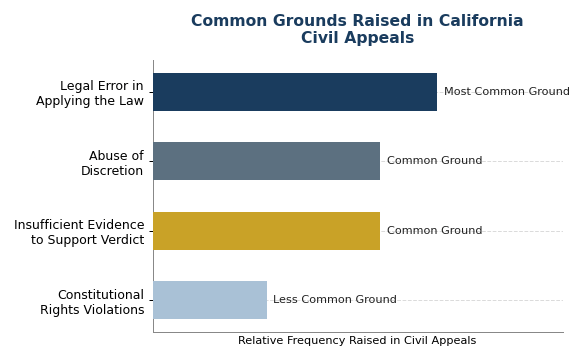
Not every unfavorable outcome supports an appeal. California law limits appeals to specific grounds tied to legal error, not simple disagreement with the result.
- Legal error: the trial judge misapplied a statute or binding precedent, such as through improper jury instructions or an incorrect contract interpretation
- Abuse of discretion: a ruling that falls outside the range of reasonable choices the law permits, often raised over discovery sanctions or evidentiary rulings
- Insufficient evidence: the record lacks substantial evidence to support the verdict, even viewed in the light most favorable to the prevailing party
- Constitutional violations: a ruling that infringes due process or equal protection rights
Timeline and Deadlines for a California Civil Appeal
Timing shapes every appeal from the outset. In most civil cases, the losing party has 60 days from service of the notice of entry of judgment to file a notice of appeal, and courts strictly enforce this deadline; a late notice generally results in dismissal regardless of how strong the underlying arguments are. Certain post-trial motions, such as a motion for new trial, can extend this deadline, but the rules governing that extension are specific, and a misstep can forfeit appellate rights entirely.
Once the record is filed with the Court of Appeal, California Rule of Court 8.212 sets the briefing schedule that governs the rest of the case.
Parties can extend each of these briefing deadlines by up to 60 days through a signed stipulation filed before the original deadline passes. Extensions beyond that require an application to the court showing good cause.
Parties can extend each of these briefing deadlines by up to 60 days through a signed stipulation filed before the original deadline passes. Extensions beyond that require an application to the court showing good cause.
The California Civil Appeal Process, Step by Step
- Filing the notice of appeal, which identifies the judgment or order under review
- Preparing the record on appeal, including trial transcripts, pleadings, and exhibits the appellate court will rely on entirely
- Drafting the appellant’s opening brief, which must demonstrate legal error with precise citations to the record
- The respondent’s brief, followed by the appellant’s optional reply brief addressing points raised in opposition
- Oral argument before the appellate panel, in cases where the court schedules it
- The court’s written opinion, which may affirm, reverse, modify, or dismiss the appeal
Preparing the Record on Appeal
The record on appeal is everything the appellate court has to work with, and an incomplete or poorly assembled record can undermine even a strong legal argument. It generally consists of the clerk’s transcript, covering the pleadings, motions, and orders filed in the trial court, and either a reporter’s transcript of what was said at trial or an appendix the parties assemble themselves under Rule of Court 8.124.
Reporter’s transcripts in particular can represent a substantial cost, especially after a lengthy trial with multiple witnesses, since a certified court reporter has to prepare a word-for-word transcription of everything said on the record. Parties sometimes elect to proceed by appendix instead, which limits the record to specific documents both sides agree matter to the appeal, though this approach carries its own risk if a document later turns out to be necessary and wasn’t included.
Whichever approach applies, the deadline to request an official record after filing the notice of appeal is not indefinite. Missing that window can force a party to seek a court order allowing a late designation, which adds delay and expense to a case that’s already operating on a compressed timeline.
Oral Argument Before the Court of Appeal
Oral argument offers a focused discussion rather than a presentation of new material. Each side typically receives a limited window, often 15 to 30 minutes, and the panel may interrupt with questions at any point. Justices often use this time to probe weaknesses in the briefs or explore how a particular ruling might affect future cases, which is why attorneys generally prioritize their strongest one or two issues rather than trying to cover everything raised in the briefs.
Can New Evidence Be Introduced on Appeal?
Appeals rarely involve new evidence. The appellate court reviews only what appears in the trial court record, and documents or testimony excluded at trial usually remain excluded on appeal. Limited exceptions exist, such as judicial notice of facts not subject to reasonable dispute, but courts apply these exceptions sparingly.
When a Writ Petition May Be the Better Option
When immediate review becomes necessary and no final judgment exists yet, a writ petition can offer a faster path than waiting for a standard appeal. Common writs include mandamus, which orders a court to perform a required act, and prohibition, which prevents a court from acting beyond its authority. Writs often address issues requiring prompt resolution, such as a discovery order that threatens to disclose privileged information before an appeal could otherwise be heard.
Courts review writ petitions quickly, and many receive summary denial without a full hearing, which makes careful preparation especially important on the front end.
Courts review writ petitions quickly, and many receive summary denial without a full hearing, which makes careful preparation especially important on the front end.
What Are the Possible Outcomes of a Civil Appeal?
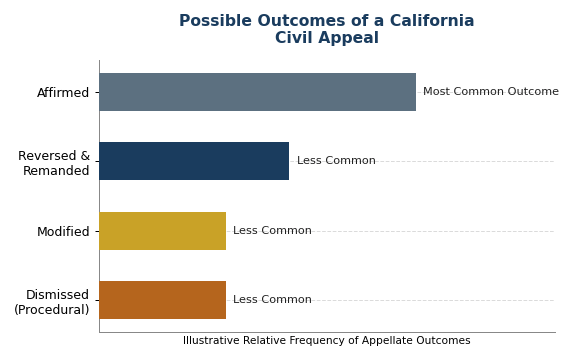
Appellate courts resolve appeals in one of several ways. An affirmance leaves the trial court’s judgment intact, meaning the panel found no reversible legal error. A reversal sends the case back to the trial court, sometimes for a new trial and sometimes with specific instructions on how to proceed. A modification changes a specific part of the judgment without ordering a new trial, and a dismissal, often the result of a procedural defect or a jurisdictional problem, ends the appeal without ever reaching its merits.
Common Mistakes That Weaken a Civil Appeal
- Failing to preserve an issue for appeal by objecting or filing the right motion at the trial court level
- Missing a critical deadline, which can jeopardize an otherwise strong appeal regardless of its legal merits
- Citing the record imprecisely, since unsupported factual assertions weaken an argument’s credibility with the panel
- Arguing facts rather than legal error, since appellate judges rarely revisit factual disputes the trial court already resolved
Business Litigation Appeals in San Francisco
San Francisco’s business environment generates its own category of civil appeals. Contract appeals often turn on how a court interpreted specific language in a written agreement. A San Francisco Business Litigation Attorney can assess whether that interpretation reflects a legal error. Partnership and shareholder disputes can raise fiduciary duty and corporate governance issues affecting companies headquartered in the Financial District, and appellate courts review whether the trial court applied the correct legal standard to that fiduciary conduct. Trade secret and unfair competition appeals frequently involve injunctions and statutory interpretation questions that require careful appellate briefing to preserve.
How Wade Litigation Can Help With Your San Francisco Appeal
Wade Litigation approaches every appeal with the same combination of careful preparation and respect for the appellate process. That starts with evaluating the merits of a potential appeal: reviewing the trial record and identifying which issues are actually grounded in legal error, which helps a client decide whether moving forward makes sense before significant time and cost go into the case.
From there, our attorneys conduct a comprehensive review of transcripts and filings to pinpoint the errors that affected the outcome, then build the brief around the strongest of those issues rather than every possible objection. When oral argument occurs, we prepare concise, direct responses to the panel’s questions, and we handle the procedural requirements, filing rules, and formatting standards that shape every California appeal from start to finish.
Our support doesn’t end with the appellate opinion. When an appeal succeeds, enforcing the outcome on remand or securing the appropriate costs award still requires attention, and we stay involved through that final stage rather than treating the written opinion as the end of the engagement.
Local Resources for San Francisco Civil Appeals
| Resource | Purpose | Contact / Location |
|---|---|---|
| California Court of Appeal – First Appellate District | Hears civil appeals from San Francisco County Superior Court and neighboring Bay Area counties | 350 McAllister St, San Francisco, CA 94102 |
| SF Superior Court – Civil Division | Source of the trial court record and judgment being appealed | Civic Center Courthouse, 400 McAllister St, San Francisco, CA 94102 |
| California Courts Self-Help – Appeals | State-level guidance on the civil appeals process and required forms | selfhelp.courts.ca.gov/appeals |
| San Francisco Bar Association LRIS | Attorney referral service for residents seeking appellate counsel | sfbar.org |
Why Choose Wade Litigation as Your San Francisco Appeals Attorney
Wade Litigation’s founder, Amiel Wade, brings a background as a former San Jose Police Officer to every case, an investigator’s eye for detail that translates directly into digging through a trial record for the overlooked facts and procedural errors that others might miss. That same disciplined approach carries through the firm’s appellate practice, where clients work directly with attorneys who personally handle brief writing and oral argument rather than delegating the matter to unsupervised staff.
For San Francisco individuals and businesses weighing whether to appeal a civil ruling, that combination of careful record review and genuine appellate experience often makes the difference between an appeal that gets a fair hearing on its strongest issues and one that gets lost in a brief that tries to argue everything at once.


FAQs About San Francisco Civil Appeals
Contact a San Francisco Appeals Attorney Today
Appeals operate on strict deadlines, and delay can close the door on review before the process even begins. Reaching out promptly after an unfavorable civil ruling preserves the time needed to evaluate the record, identify genuine legal error, and build a realistic strategy.
Wade Litigation offers focused appellate representation for San Francisco civil cases, from an initial merits evaluation through brief writing and oral argument. Call 408-214-5225 or contact Wade Litigation today for a free case evaluation to discuss your potential San Francisco appeal.
This page is for general informational purposes only and does not constitute legal advice. Prior results do not guarantee a similar outcome. Contact Wade Litigation directly to discuss the specific facts of your case.