A California probate litigation attorney represents executors, trustees, and beneficiaries when an estate or trust is administered through the courts or becomes the subject of a dispute. Probate is the court-supervised process of validating a will, appointing a personal representative, paying debts and taxes, and distributing what remains, and it is required in California unless the estate qualifies for a simplified procedure or its assets pass outside probate. Wade Litigation handles both routine administrations and contested matters, including will and trust contests, trustee misconduct, and undue influence, and offers a case evaluation to review your situation and your deadlines.
Californians search about probate for practical reasons: what it is, when it is required, how long it takes, what it costs, and how to avoid it. This page answers each question with the Probate Code provisions that govern the answer, including the small estate limits raised in 2025, and then explains where disputes arise and how they are resolved.
What Is Probate in California and When Is It Required
Probate is the legal process for transferring a deceased person’s property titled in the decedent’s name alone and with no beneficiary designation. A will does not avoid probate; it directs the court how to distribute the estate. Assets held in a properly funded living trust, accounts with named beneficiaries, jointly held property with survivorship, and retirement accounts with designated beneficiaries generally pass outside probate. Our overview of key facts about probate and estate administration explains which assets fall on each side of that line.
California requires probate when probate assets exceed the statutory small estate limits. Venue is generally the superior court of the county where the decedent lived at death, under Probate Code section 7051, or the county where the property sits if the decedent lived elsewhere. The court must appoint the executor named in the will or, without a will, an administrator chosen by statutory priority, and that person receives letters authorizing them to act.
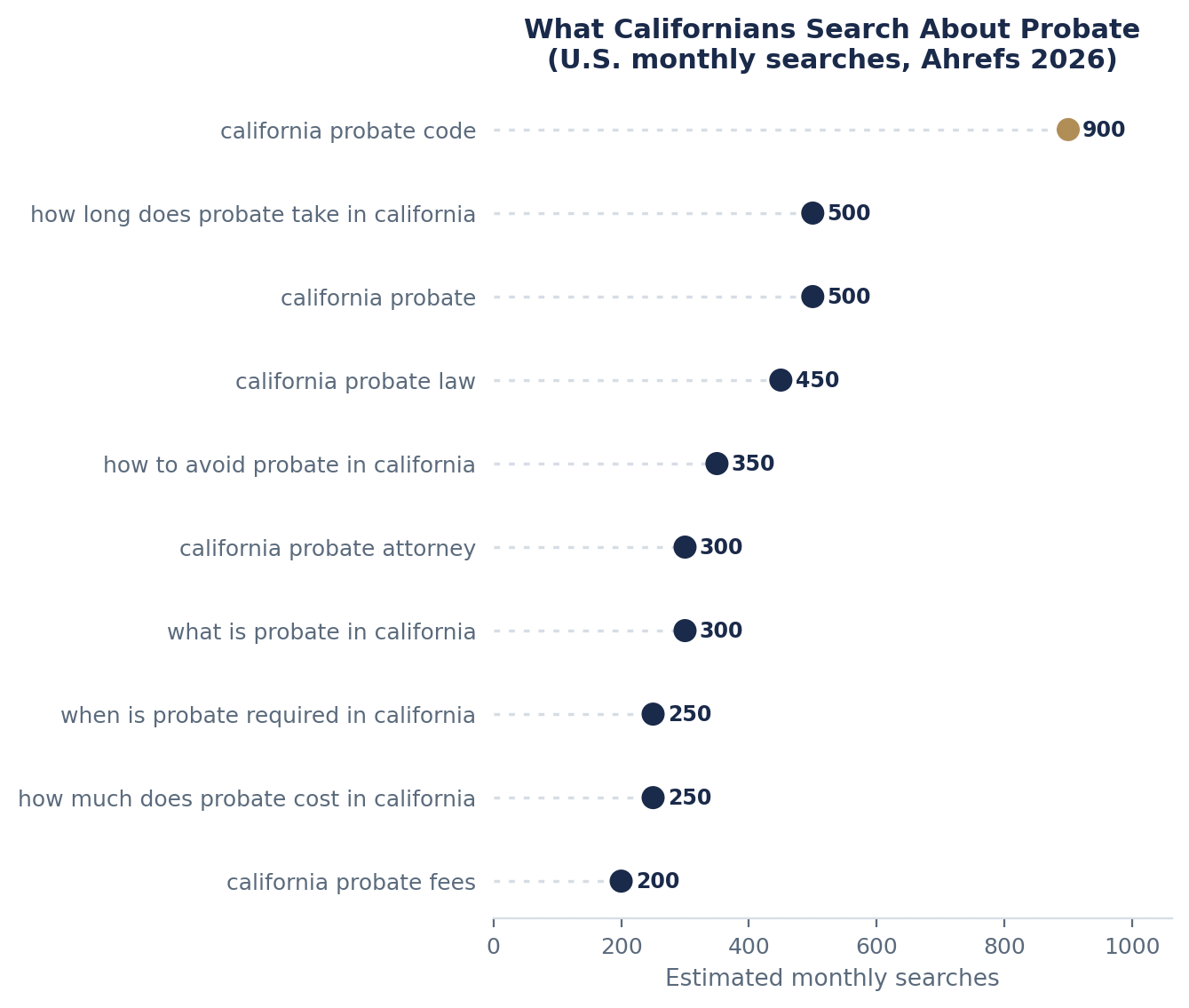
Figure 1: What Californians search about probate (U.S. monthly searches, Ahrefs, 2026).
California Small Estate Limits and How to Avoid Probate
California lets families skip formal probate for smaller estates, and the dollar limits were adjusted on April 1, 2025. For a person who died on or after that date, personal property of $208,850 or less can be collected with a small estate affidavit under Probate Code section 13100, real property of small value up to $69,625 can pass by affidavit under section 13200, and a spouse or minor children may receive a set-aside of up to $107,900 under section 6602. Assembly Bill 2016 also raised the limit for a simplified court petition under sections 13150 through 13157 to $750,000, but only for the decedent’s primary residence in California. These amounts are scheduled to be adjusted again on April 1, 2028.
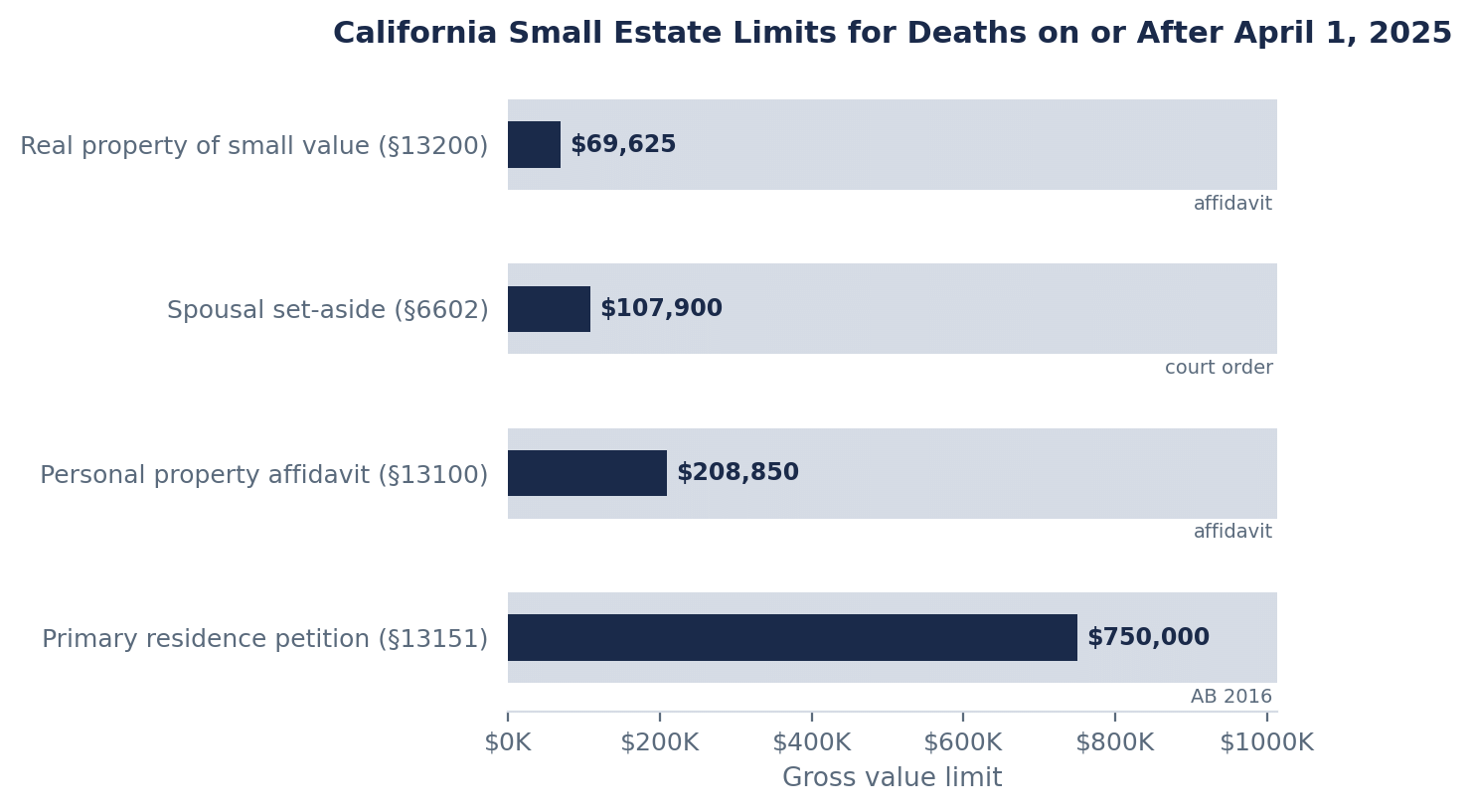
Figure 2: California small estate limits for deaths on or after April 1, 2025.
The most reliable way to avoid probate is planning during life. A revocable living trust that is actually funded, meaning assets are retitled into it, allows a successor trustee to distribute property without court involvement. Beneficiary designations, transfer-on-death registrations, and joint ownership with survivorship can also pass assets directly. The common failure is a trust that was signed but never funded, which leaves the house or accounts in the decedent’s name and forces probate anyway.
How Long Does Probate Take in California
A straightforward California probate commonly takes 9 to 14 months, driven largely by statutory time periods. After the court issues letters, the executor must notify heirs and creditors; creditors generally have four months from the issuance of letters to file claims under Probate Code section 9100, and the inventory and appraisal must be filed within four months under section 8800. Contested matters, such as will contests, creditor disputes, or sales of real property, extend the timeline substantially, and estates with tax issues or business interests take longer.
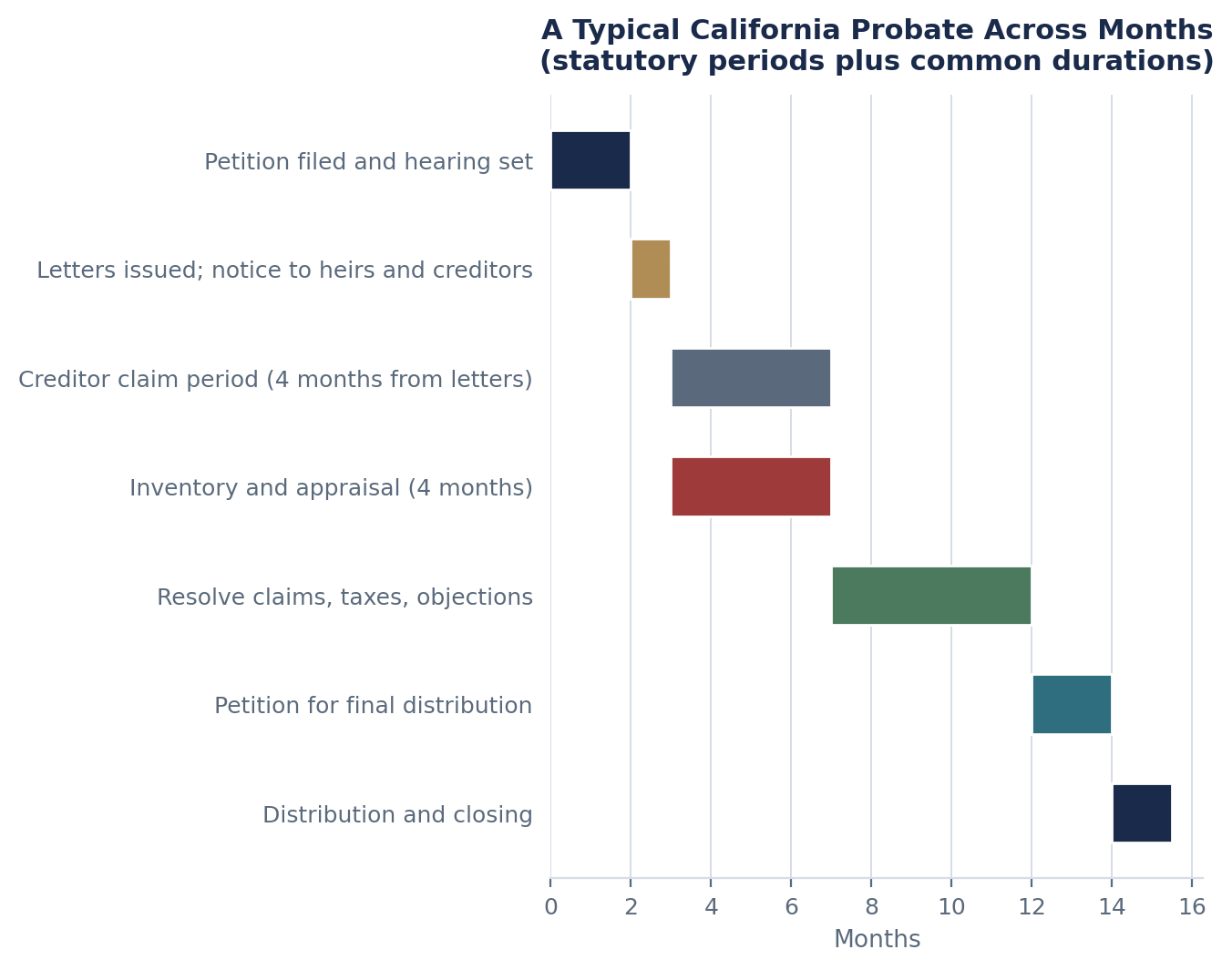
Figure 3: A typical California probate across months, showing statutory periods and common durations.
How Much Does Probate Cost in California
California sets statutory fees for both the personal representative and the attorney in Probate Code section 10800, and each is calculated on the gross value of the estate: 4 percent of the first $100,000, 3 percent of the next $100,000, 2 percent of the next $800,000, 1 percent of the next $9,000,000, and one-half of one percent of the next $15,000,000. A court may allow additional compensation for extraordinary services under section 10801. Because the percentage is based on gross value rather than net equity, a large, mortgaged home can produce substantial fees even when little cash remains, which is one reason families work to reduce the probate estate during life.
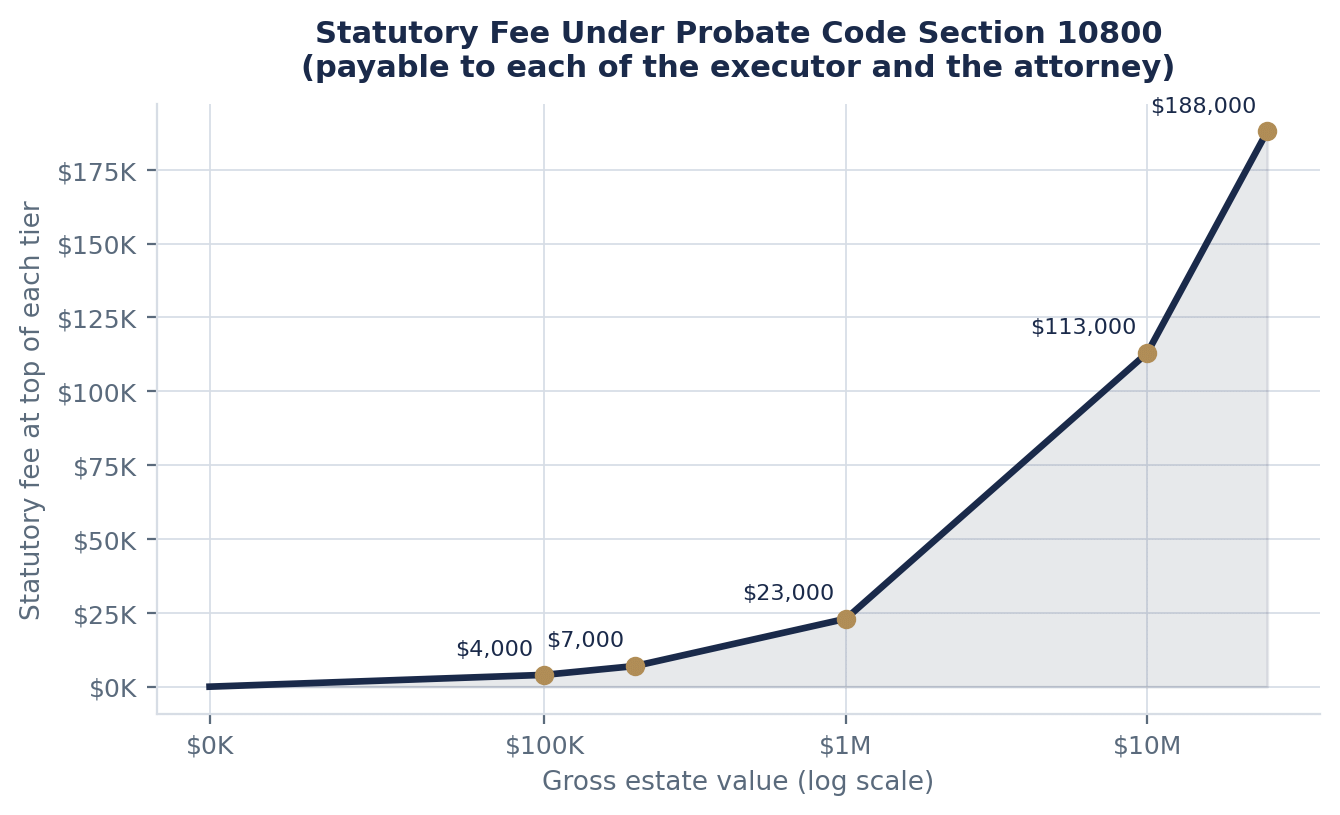
Figure 4: Cumulative statutory fee under Probate Code section 10800 by gross estate value.
Other costs include court filing fees, the probate referee’s fee for appraising non-cash assets, bond premiums when a bond is required, and appraisal and accounting costs. Executors should keep careful records, because every expenditure and the personal representative’s own compensation are reported to the court.

Will Contests, Trust Contests, and Undue Influence
A will can be challenged on grounds that include lack of capacity, undue influence, fraud, and improper execution. A will contest generally must be filed within 120 days after the will is admitted to probate under Probate Code section 8270, and a trust contest has its own strict deadline after the trustee serves the required notice. Our guides to challenging a will in California and the California probate process and protecting inheritance rights walk through the grounds and the evidence that matters.
Undue influence is the most frequently litigated ground in estates involving older decedents. Courts look at whether the person accused had a confidential relationship with the decedent, was active in procuring the estate plan, and received an unusually large benefit, and a presumption can arise when those facts are present. Medical records, the timeline of changes to the plan, and testimony from the lawyer who drafted the documents often decide these cases.
Trustee Duties, Accountings, and Removal
A trustee owes fiduciary duties of loyalty and care, must keep beneficiaries reasonably informed, and must account for the trust’s administration. Beneficiaries who suspect mismanagement can petition the probate court to compel an accounting, to surcharge the trustee for losses, or to remove the trustee for serious breaches. Executors face parallel duties and can be removed or sued for misconduct. Wade Litigation represents both trustees defending their administration and beneficiaries enforcing their rights.
Paying Debts, Creditor Claims, and Taxes
An executor must identify and pay valid debts before distributing to beneficiaries, and beneficiaries are generally not personally liable for the decedent’s debts except to the extent they receive estate property. Understanding which debts survive death, how creditor claims are filed and rejected, and what happens when an estate is insolvent protects the executor from personal liability. Our guide to paying off debts in a California probate explains the priority rules, and our overview of an executor’s rights and responsibilities in California covers the broader duties.
Conservatorships, Guardianships, and Incapacity
Probate courts also handle matters that arise before death, including conservatorships for adults who cannot manage their affairs and guardianships for minors. A properly signed durable power of attorney and advance health care directive can often avoid the need for a court-supervised conservatorship, and disputes about who should serve are decided on the person’s best interest. We address these proceedings in our article on California’s guardianship dispute procedures.
No-Contest Clauses and Disinheritance
Many wills and trusts contain a no-contest clause that threatens to disinherit a beneficiary who challenges the document and loses. California enforces these clauses narrowly under Probate Code sections 21310 through 21315, generally limiting them to direct contests brought without probable cause, certain creditor claims, and challenges to specific property transfers. The presence of a clause therefore does not automatically end a beneficiary’s options, but it makes a careful assessment of probable cause essential before anything is filed.
Probate Referees, Inventories, and Property Sales
The executor must prepare an inventory of the estate, and a court-appointed probate referee appraises non-cash assets such as real estate and business interests. If the estate needs to sell a house, the executor may have authority to do so under the Independent Administration of Estates Act without a court hearing for each step, though notice requirements apply, and the court may still need to confirm the sale in some cases. Disputes over the appraised value, the timing of a sale, or who occupies the property in the meantime often trigger objections from beneficiaries.
When Family Members Disagree About the Estate
Estate disputes are often as much about relationships as about money. Siblings disagree about who cared for a parent, a second spouse and adult children from a first marriage compete over the same assets, and a trustee who is also a beneficiary faces suspicion over every decision. Clear communication, regular accountings, and early mediation resolve many of these conflicts before they become litigation, and a neutral process often preserves relationships that a courtroom fight would not.
Property Outside California and Ancillary Proceedings
Real property located in another state generally cannot be transferred through a California probate. It usually requires an ancillary proceeding in the state where it sits, coordinated with the California case and often handled by local counsel. Identifying out-of-state property early avoids surprises, and a trust that holds that property in its name can avoid the second proceeding entirely.
How California Counties Handle Probate Differently
Probate procedure is statewide, but the courthouse, calendar, and local rules differ, and some counties centralize probate in a single location. The table summarizes verified information for the regions where Wade Litigation practices.
County | Where Probate Is Heard | Notable Local Fact |
Los Angeles | Stanley Mosk Courthouse, downtown Los Angeles | Probate for the entire county is centralized downtown, including for residents of Beverly Hills. |
Orange | Lamoreaux Justice Center, Orange | Newport Beach executors and trustees travel to Orange for hearings. |
Santa Clara | Probate division at the downtown San Jose courthouse complex | San Jose is the county seat, so hearings are local for city residents. |
Alameda | Berkeley Courthouse, Department 201 | Probate calendars were centralized in Berkeley in 2010. |
Contra Costa | Wakefield Taylor Courthouse, 725 Court Street, Martinez | The Walnut Creek courthouse does not hear probate matters. |
Our local pages add context for Beverly Hills, Newport Beach, Walnut Creek, Pleasanton, San Jose and Palo Alto.
Comparison: Probate vs. Trust Administration
Factor | Court Probate | Trust Administration |
Court Supervision | Required for probate assets | Generally none unless a dispute arises |
Privacy | Public record | Largely private |
Cost Pattern | Statutory fees on gross value | Fees by agreement; no statutory percentage |
Typical Duration | 9 to 14+ months | Often faster if the trust was funded |
Dispute Forum | Probate court | Probate court petition by interested party |
What This Means for Your Case
Probate and trust disputes turn on deadlines and documents. Locate the original will and trust, the most recent amendments, and any prior versions, note the date of death and the date letters were issued, and calendar the 120-day will contest period and the four-month creditor claim period. Executors should avoid distributing before the claim period closes, and beneficiaries who suspect a problem should act promptly because the contest windows are short. Early evaluation determines whether a contest, a defense, or a straightforward administration is the right path.
Objections We Commonly Address
Families sometimes hold back from a probate or trust dispute because they fear the cost will consume the estate or damage family relationships that are already strained. An early, focused challenge to clear misconduct or a defective document often costs less than letting a dispute run through the whole administration, and many contested matters settle once the evidence is on the table.
What Happens When You Call
When you call Wade Litigation, the intake team asks about the decedent, your role, whether a will or trust exists, and the issue that prompted your call. During the case evaluation, an attorney reviews the documents you have, explains the relevant deadlines, and outlines whether a contest, a defense, or an administration strategy fits your situation.
Related Reading
Many families also review a guide to facing probate litigation in California and how California probate protects inheritance rights. Disputes over an inherited home often connect to our California real estate litigation page, and family disputes that overlap with an estate are covered on our California family law page.
Frequently Asked Questions
Speak With a California Probate Litigation Attorney
Wade Litigation has represented executors, trustees, and beneficiaries across California in routine administrations and contested probate and trust disputes, and its attorneys have been recognized with seven 2026 industry awards. Call to schedule a case evaluation and get a clear view of your options.