

California superior courts received 107,146 divorce, legal separation, and annulment filings in fiscal year 2024 to 2025, down 23% from 139,806 a decade earlier. Over the same period, unlimited civil lawsuit filings rose 49%, from 200,712 to 298,223. Civil lawsuits now outnumber marital filings by nearly 3 to 1, and every one of the 10 largest California counties we reviewed followed the same pattern.
Most of the coverage of California divorce trends relies on surveys or national estimates. We went to the source instead. The Judicial Council of California publishes filing and disposition counts for every superior court in the state, by case type and fiscal year. We analyzed ten years of that data, from fiscal year 2015 to 2016 through fiscal year 2024 to 2025, to see how divorce and civil litigation caseloads have changed statewide and in the counties where Wade Litigation clients most often go to court.
Key Findings
- Marital filings fell 23% in ten years. Filings for divorce, legal separation, and annulment dropped from 139,806 in fiscal year 2015 to 2016 to 107,146 in fiscal year 2024 to 2025. Filings have declined 15% since fiscal year 2018 to 2019, before the pandemic.
- Civil lawsuits rose 49%. Unlimited civil filings, which cover disputes over more than $35,000, grew from 200,712 to 298,223, with most of the increase coming in the last three years.
- Civil cases now outnumber divorces nearly 3 to 1. In fiscal year 2015 to 2016, California courts saw 1.4 unlimited civil filings for every marital filing. By fiscal year 2024 to 2025, the ratio was 2.8 to 1.
- Los Angeles saw the biggest swing. Marital filings in Los Angeles County fell 27% while unlimited civil filings rose 60%, to 110,774.
- Alameda had the steepest divorce decline. Marital filings in Alameda County fell 32.5%, the largest drop among the counties we reviewed.
- Some courts are falling behind on divorce cases. Sacramento County resolved only 69 marital cases for every 100 filed in fiscal year 2024 to 2025, and Santa Clara County resolved 75.
- Courts statewide are catching up. California courts resolved 99 marital cases for every 100 filed in fiscal year 2024 to 2025, up from 79 in fiscal year 2020 to 2021.
Finding 1: Divorce Filings Are Down While Civil Lawsuits Are Up
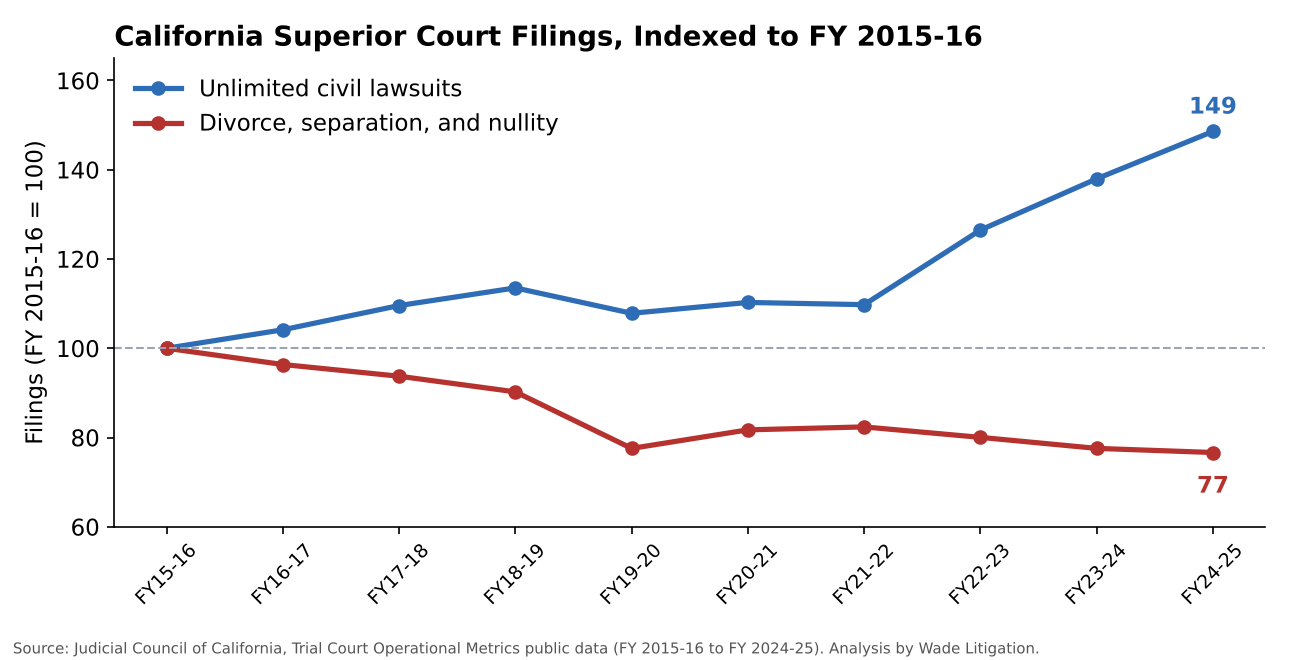
Figure 1. California superior court filings for unlimited civil cases and marital cases (dissolution, legal separation, and nullity), indexed so fiscal year 2015 to 2016 equals 100.
The two largest categories of private civil disputes in California have moved in opposite directions. Marital filings fell in seven of the last nine years and are now 23% below their level a decade ago. Unlimited civil filings, which include contract disputes, personal injury, employment, real property, and business cases worth more than $35,000, climbed 49%, with the sharpest growth since fiscal year 2021 to 2022.
Fewer divorce filings do not necessarily mean fewer divorces. Californians are marrying later, and more couples are cohabiting without marrying. Separating couples who never married may end up in custody and support proceedings or property disputes rather than divorce court, a distinction we explain in our guide to marriage versus cohabitation in California.
Finding 2: A Decade of California Marital Filings
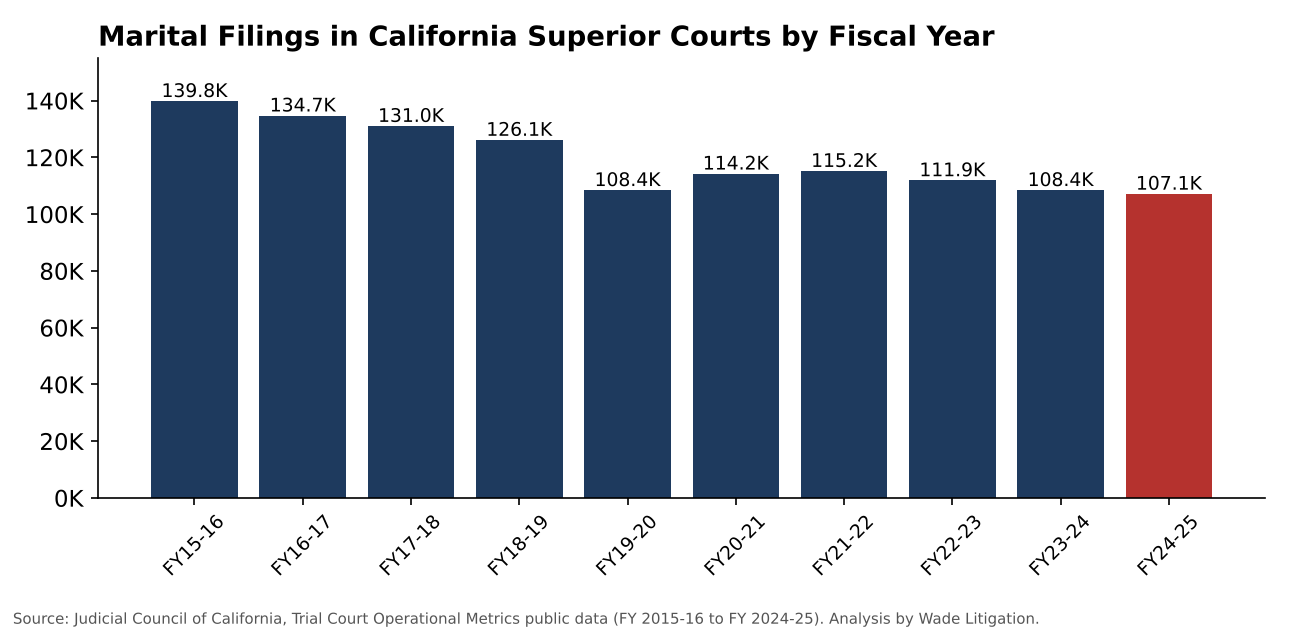
Figure 2. Marital filings (dissolution, legal separation, and nullity) in California superior courts by fiscal year.
Marital filings fell sharply in fiscal year 2019 to 2020, when courts closed or limited operations during the pandemic, then recovered only partially. Filings have declined each year since a post-pandemic high of 115,164 in fiscal year 2021 to 2022, reaching 107,146 in fiscal year 2024 to 2025.
Among courts that report filings by subtype, about 43% of dissolution filings in fiscal year 2024 to 2025 involved minor children. Those cases usually require custody orders, parenting schedules, and child support, which can make them longer and more contested than divorces without children.
Finding 3: The Pattern Holds in Every Major County
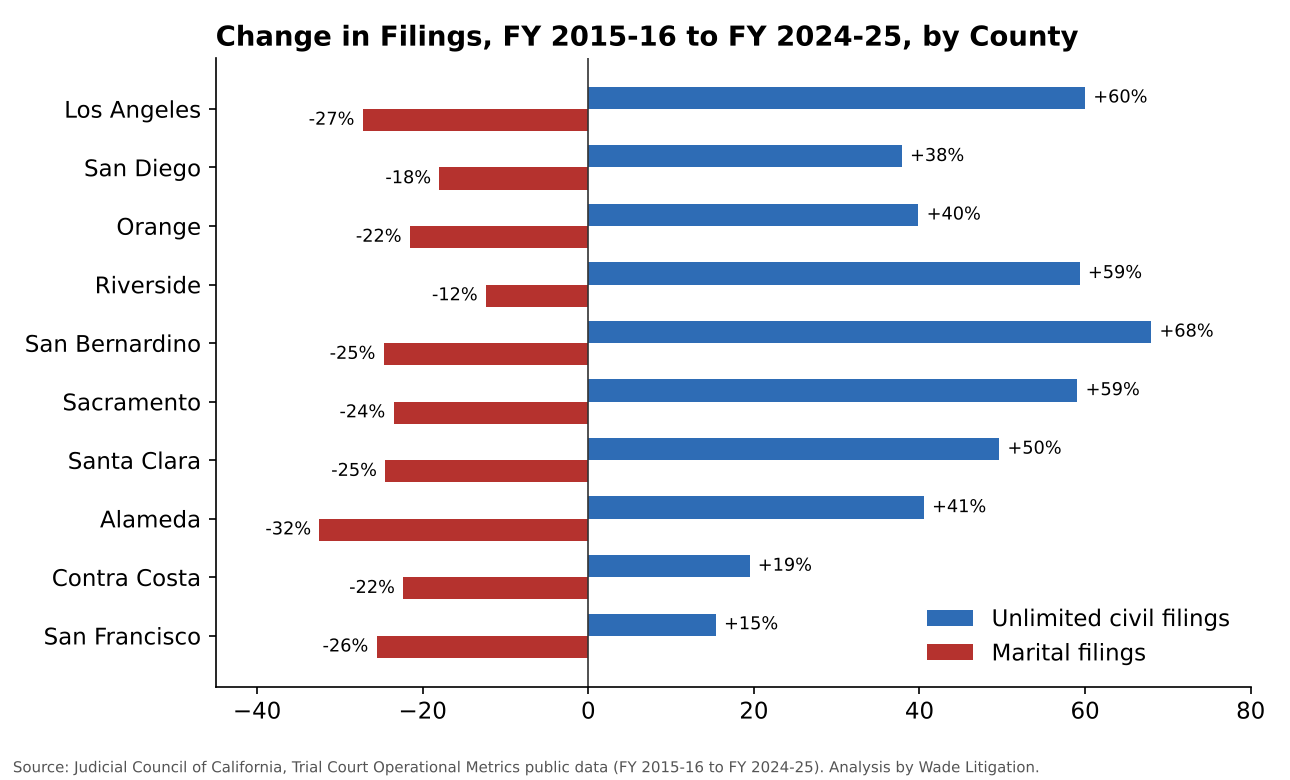
Figure 3. Percent change in unlimited civil and marital filings between fiscal year 2015 to 2016 and fiscal year 2024 to 2025, by county.
All ten counties we reviewed saw marital filings decline and unlimited civil filings increase. The size of the shift varied widely.
County | Marital filings FY15-16 | Marital filings FY24-25 | Change | Unlimited civil FY15-16 | Unlimited civil FY24-25 | Change |
Los Angeles | 34,757 | 25,288 | -27.2% | 69,237 | 110,774 | +60.0% |
San Diego | 13,081 | 10,729 | -18.0% | 17,175 | 23,678 | +37.9% |
Orange | 11,105 | 8,712 | -21.5% | 16,527 | 23,116 | +39.9% |
Riverside | 8,780 | 7,695 | -12.4% | 10,117 | 16,121 | +59.3% |
San Bernardino | 8,296 | 6,246 | -24.7% | 9,318 | 15,653 | +68.0% |
Sacramento | 5,680 | 4,344 | -23.5% | 8,299 | 13,201 | +59.1% |
Santa Clara | 5,191 | 3,918 | -24.5% | 6,525 | 9,763 | +49.6% |
Alameda | 4,946 | 3,340 | -32.5% | 8,953 | 12,581 | +40.5% |
Contra Costa | 3,592 | 2,789 | -22.4% | 4,760 | 5,687 | +19.5% |
San Francisco | 2,421 | 1,802 | -25.6% | 6,216 | 7,173 | +15.4% |
Riverside County had the smallest decline in marital filings (12.4%), while San Bernardino County had the largest increase in civil filings (68%). In Los Angeles County, unlimited civil filings rose by more than 41,000 cases a year, almost exactly the number of marital filings in Los Angeles, Orange, and Riverside counties combined (41,695).
Together, these ten counties accounted for about 70% of California’s marital filings and 80% of its unlimited civil filings in fiscal year 2024 to 2025. Local filing practices differ by court. See our county guides for Los Angeles divorce, San Diego divorce, Riverside divorce, Sacramento divorce, and San Jose divorce, as well as civil litigation in Los Angeles and civil litigation in Sacramento.
Finding 4: Some Courts Are Not Keeping Up With Divorce Cases
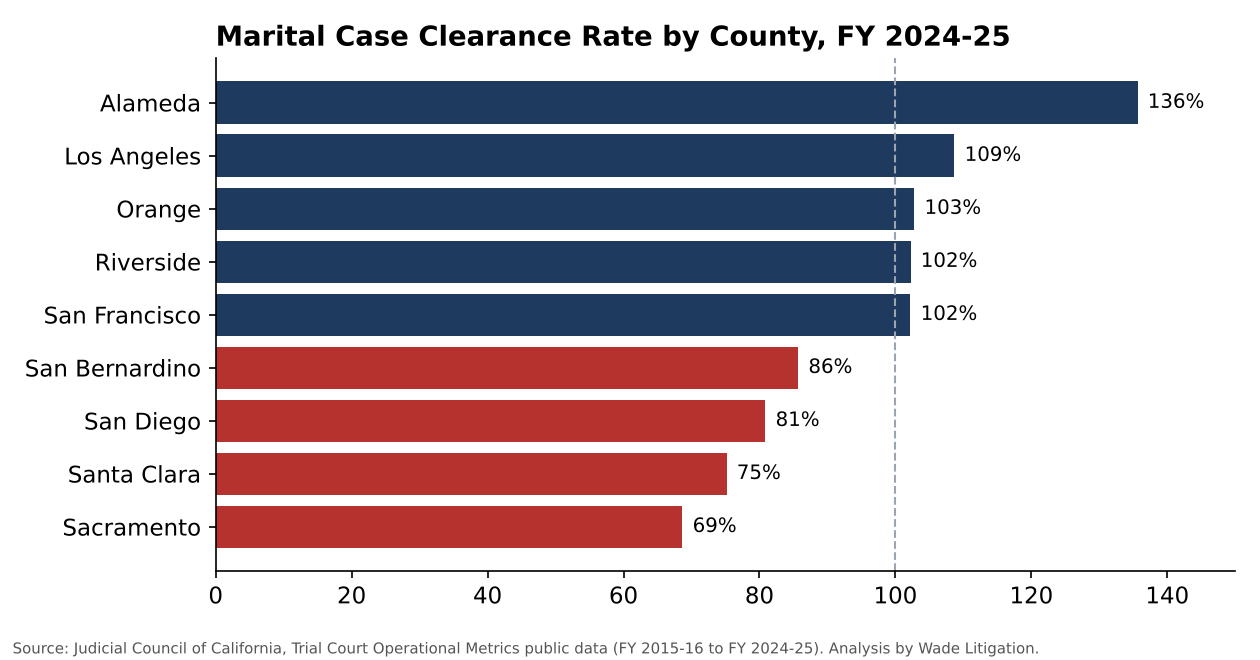
Figure 4. Marital dispositions as a percentage of marital filings in fiscal year 2024 to 2025. A rate below 100% means the court resolved fewer cases than were filed that year. Contra Costa County is not shown; see the note below.
A court’s clearance rate compares the number of cases it resolved in a year to the number filed. A rate below 100% means the court’s pending caseload is growing. Statewide, courts resolved 106,110 marital cases in fiscal year 2024 to 2025, a clearance rate of 99%. That is a strong recovery from fiscal year 2020 to 2021, when courts resolved only 79 marital cases for every 100 filed.
Some counties are still behind. Sacramento County resolved 2,983 marital cases against 4,344 new filings, a clearance rate of 69%. Santa Clara County’s rate was 75%, San Diego’s was 81%, and San Bernardino’s was 86%. When a court’s pending caseload grows, hearings and trial dates can take longer to schedule. Our guide to how fast you can finalize a divorce in California explains the six-month waiting period and other factors that affect timing.
Alameda County (136%) and Los Angeles County (109%) resolved more marital cases than were filed, which suggests they are working through older cases. Contra Costa County reported 6,145 marital dispositions against 2,789 filings, a rate of more than 200% that likely reflects a cleanup of older pending cases rather than a typical year.
“These numbers match what we see across California. Fewer couples are filing for divorce, but the cases that do get filed are often more complex, with children, businesses, and real estate involved. At the same time, civil disputes have grown sharply, and in some counties the courts have not kept pace. Knowing how busy your local court is helps you set realistic expectations and plan your case strategy from the start.” Amiel Wade, Founder and Managing Partner
What This Means If You Are Going to Court in California
- Expect timelines to vary by county. A divorce or lawsuit in a court with a low clearance rate may take longer to reach a hearing or trial.
- Consider settlement options early. Mediation and uncontested divorce can keep a case moving even when the court calendar is crowded.
- Prepare your financial disclosures and evidence before you file. Organized cases move faster at every stage.
- If your divorce involves a business or significant property, plan for the extra time it takes to value and divide those assets.
- Talk to a lawyer who knows your local court. Procedures, calendars, and judicial preferences differ from county to county.
Limitations of This Data
- Marital filings include petitions for dissolution, legal separation, and nullity. They do not include custody or support cases between parents who were never married.
- Some courts report only combined totals rather than subtype detail, so the share of filings involving minor children is based only on courts that report detail.
- A few courts did not report disposition data for some case types or years. Statewide clearance rates include only the dispositions that were reported. Solano County’s fiscal year 2024 to 2025 data was marked as uncertified.
- Filings measure new cases, not the number of people who divorced or sued. A single dispute may produce more than one filing.
- Unlimited civil cases generally involve claims over $35,000. The threshold was $25,000 before January 1, 2024. The change moved some smaller cases into limited civil, so recent growth in unlimited civil filings may be slightly understated.
Methodology
We used the Judicial Council of California’s Trial Court Operational Metrics public data file, published on the court operational metrics page, which reports filings and dispositions for each superior court by case type and fiscal year. The same data underlies the Judicial Council’s 2026 Court Statistics Report. We summed all Family Law Marital rows (dissolution, legal separation, and nullity, with and without minor children, plus combined totals for courts that do not report subtypes) and all Unlimited Civil rows for each county and fiscal year. Fiscal years run from July 1 through June 30. Clearance rates divide dispositions by filings for the same fiscal year.
Using This Data
Journalists, researchers, family law and civil litigation professionals, and bloggers are welcome to use the charts and findings in this study with credit to Wade Litigation and a link to this page.
Frequently Asked Questions
How many divorces are filed in California each year?
California superior courts received 107,146 marital filings, which include divorce, legal separation, and annulment petitions, in fiscal year 2024 to 2025. That is down 23% from 139,806 in fiscal year 2015 to 2016.
Is the divorce rate going down in California?
Divorce filings in California have declined over the past decade. Marital filings fell 23% between fiscal year 2015 to 2016 and fiscal year 2024 to 2025, and they are 15% lower than before the pandemic.
Which California county has the most divorce filings?
Los Angeles County had the most marital filings in fiscal year 2024 to 2025, with 25,288, followed by San Diego County with 10,729 and Orange County with 8,712.
Are civil lawsuits increasing in California?
Yes. Unlimited civil filings in California superior courts rose 49% over the past decade, from 200,712 in fiscal year 2015 to 2016 to 298,223 in fiscal year 2024 to 2025.
How long does a divorce take in California?
California requires a minimum six-month waiting period from the date the respondent is served before a divorce can be final. Contested cases often take longer, especially in counties where courts are resolving fewer cases than are being filed.
What percentage of California divorces involve children?
Among courts that report detailed data, about 43% of dissolution filings in fiscal year 2024 to 2025 involved minor children.
Talk to a California Family Law or Civil Litigation Attorney
Whether you are facing a divorce, a custody dispute, or a civil lawsuit, Wade Litigation represents clients in courts throughout California. Contact us or call 408-214-5225 for a free case evaluation.