AI Summary: Key Takeaways
|
Settling a loved one’s estate is rarely simple, even when the family gets along and the paperwork is in order. San Francisco’s high property values mean that even modest estates can exceed the thresholds for simplified procedures, pulling families into a formal probate process that most have never navigated before.
Wade Litigation guides San Francisco families and personal representatives through every stage of estate administration, from determining whether formal probate is even required to shepherding a case through the Probate Division to final distribution.
What Is Probate, and When Is It Required in San Francisco?
Probate is the court-supervised process of validating a will (if one exists), appointing someone to administer the estate, paying the decedent’s debts and taxes, and distributing what remains to the rightful heirs or beneficiaries. Not every estate needs to go through this process. Assets held in a properly funded living trust, accounts with a named beneficiary, and jointly held property with rights of survivorship generally pass outside of probate entirely.
Whether formal probate is required for the remaining assets often comes down to value. California provides simplified alternatives for smaller estates, which can save a family significant time and statutory fees when they apply.
California’s Small Estate Procedures
Small Estate Affidavit (Personal Property)
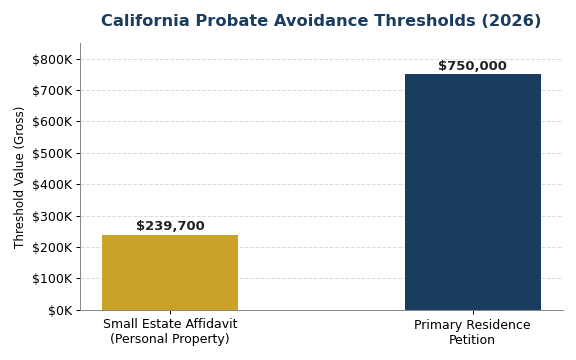
Under Probate Code Section 13100, an estate consisting of personal property with a total gross value under the statutory threshold, currently $239,700 as of April 2026, may be collected using a sworn affidavit rather than a full probate proceeding. This procedure covers bank accounts, vehicles, and similar personal property, but not real estate. California law requires a mandatory 40-day waiting period after the date of death before the affidavit can be used, and it is only available when no probate proceeding is already pending for the estate.
Primary Residence Petition
California also allows a simplified petition to transfer a decedent’s primary residence, valued up to $750,000, without full probate, even if other estate assets push the total above the small estate affidavit threshold. This procedure, more limited than a full probate but more involved than a simple affidavit, still requires a court petition and hearing.
Spousal or Domestic Partner Property Petition
A surviving spouse or registered domestic partner can generally use a simplified spousal property petition to confirm ownership of community property assets, regardless of the estate’s total value. This procedure is typically faster than formal probate and does not require formal notice to creditors in most cases.
Probate vs. Trust Administration
Families often use “probate” and “trust administration” interchangeably, but they describe different processes. Probate is a court-supervised proceeding required when a decedent’s assets were not transferred into a trust before death and don’t qualify for a simplified exemption. Trust administration, by contrast, generally happens outside of court: a successor trustee steps in to manage and distribute trust assets according to the trust’s terms, without needing a judge’s approval for most routine steps.
This distinction matters because a decedent can have both processes running for different assets at the same time. A person might have funded a living trust with their home and investment accounts, avoiding probate on those assets, while still leaving a car or a bank account outside the trust that requires a small estate affidavit or, if large enough, formal probate. Determining which assets fall into which category is often the first task in any estate administration matter.
Documents and Information Needed to Open Probate
Having the right documents organized before filing helps avoid delays once a probate examiner reviews the petition. Most San Francisco probate filings require the following at the outset.
- A certified copy of the death certificate
- The decedent’s original will, if one exists, along with any codicils
- A preliminary list of the decedent’s known assets and their approximate values
- Names and current addresses of all heirs and beneficiaries entitled to notice
- Information about any outstanding debts, mortgages, or pending litigation involving the decedent
Gathering this information early, even before deciding whether formal probate or a simplified procedure applies, tends to shorten the overall timeline once a case is ready to file.
The Formal Probate Process in San Francisco
When an estate does not qualify for a simplified procedure, it moves through formal probate administration. While every case has its own timeline, most formal probate matters in San Francisco follow the same general sequence.
- Filing a Petition for Probate with the Probate Division, along with the original will if one exists
- A court hearing to appoint a personal representative (executor or administrator) and issue Letters of Administration or Letters Testamentary
- Formal notice to creditors, who generally have four months from appointment to file a claim against the estate
- Inventory and appraisal of estate assets, with real property and other significant assets valued by a court-appointed probate referee
- Payment of valid debts, taxes, and administration expenses from estate funds
- A final petition for distribution, followed by a court order authorizing the transfer of remaining assets to the heirs or beneficiaries
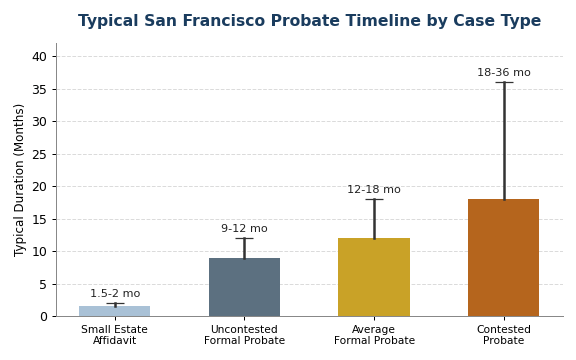
These ranges reflect general patterns rather than a guarantee for any individual estate. Court calendar congestion, the complexity of the estate’s assets, and whether any party contests the proceeding all affect how quickly a specific case moves.
What Does Probate Cost in San Francisco?
Unlike most legal matters, California does not leave probate attorney fees to hourly negotiation for ordinary administration work. Probate Code Sections 10810 and 10800 set a statutory, sliding-scale fee based on the estate’s gross value, and the personal representative is entitled to an identical fee under the same schedule. Because both fees are calculated on the estate’s gross value, a home with a large mortgage is valued at its full market price for fee purposes, not its equity.
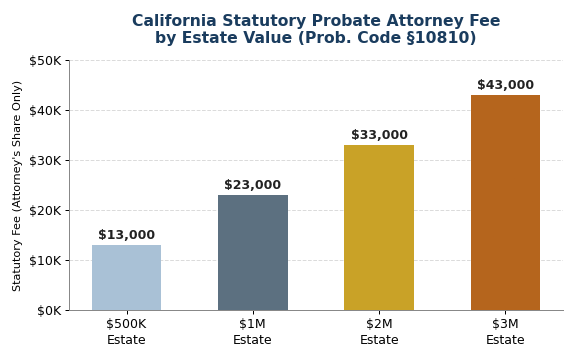
The statutory schedule works out to roughly 4 percent on the first $100,000, 3 percent on the next $100,000, 2 percent on the next $800,000, and 1 percent on the next $9 million, with the attorney and personal representative each entitled to that amount separately. Additional costs on top of statutory fees typically include court filing fees, probate referee fees for appraising assets, and publication costs for required legal notices. Extraordinary services beyond routine administration, such as selling real property or resolving a will contest, can justify additional fees approved by the court under Probate Code Sections 10801 and 10811.
Common Sources of Probate Disputes
Most probate matters proceed without significant conflict, but disputes do arise, particularly in estates involving blended families, significant real property, or a personal representative who is also a beneficiary. Recognizing where conflict tends to surface early can help a family or a personal representative address it before it escalates.
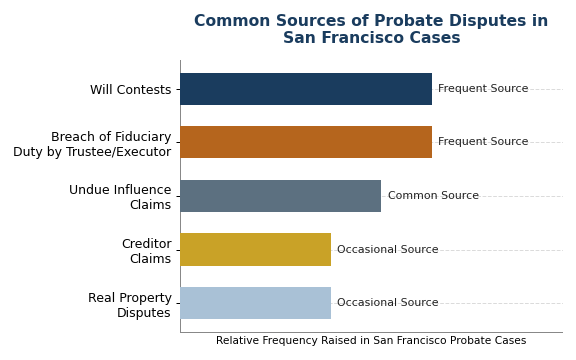
When a probate matter becomes contested, whether through a will contest, a claim of breach of fiduciary duty against a trustee or executor, or an allegation of undue influence, the legal analysis shifts substantially, including how attorney fees may ultimately be paid.
The Personal Representative’s Role and Responsibilities
Whoever is appointed executor or administrator, called the personal representative, takes on significant legal responsibility. That role includes locating and securing estate assets, providing formal notice to creditors and beneficiaries, preparing and filing a complete inventory and appraisal, managing estate property during the administration period, filing any required tax returns, and ultimately accounting to the court and the beneficiaries before distribution.
A personal representative who mismanages estate assets, fails to provide required notices, or favors their own interests over the estate’s can face personal liability, including removal by the court and an order to repay the estate. Many personal representatives retain an attorney not because the law requires it, but because the personal exposure involved in the role makes experienced guidance worthwhile.
Tax obligations often catch personal representatives off guard. The estate may need a final individual income tax return filed for the decedent’s last year of life, and larger estates may require a separate estate income tax return for income earned by estate assets during administration. Federal estate tax only applies to a small number of very large estates given the current exemption threshold, but California’s lack of a state estate tax does not eliminate these income tax filing obligations.
San Francisco Probate Court: What to Expect
Probate matters in San Francisco are handled by the Probate Division of the San Francisco Superior Court, located in Department 204 at the Civic Center Courthouse. The Probate Examiner’s Office reviews filed petitions before the hearing date and issues notes identifying any defects that need to be corrected, a process that catches many of the procedural errors that would otherwise delay a case. Appearance hearings for most probate matters are held on weekday mornings, and the court’s tentative rulings are typically available online in the days before a hearing.
Local Resources for San Francisco Probate Matters
| Resource | Purpose | Contact / Location |
|---|---|---|
| SF Superior Court – Probate Division | Filing, hearings, and case management for probate matters | Civic Center Courthouse, 400 McAllister St, Dept. 204, San Francisco, CA 94102-4514 |
| Probate Examiner’s Office | Reviews filed petitions and issues examiner’s notes on deficiencies | (415) 551-3702 |
| SF Superior Court Self-Help Center | Form assistance for self-represented petitioners (no legal advice or advocacy) | Civic Center Courthouse |
| San Francisco Bar Association LRIS | Attorney referral service for residents seeking probate counsel | sfbar.org |
| San Francisco Public Administrator | Administers estates when no willing or eligible personal representative is available | City and County of San Francisco |
Why Choose Wade Litigation as Your San Francisco Probate Attorney
Wade Litigation has been recognized as a Top Probate Law Firm in California by the Global Excellence Awards, reflecting a firm-wide commitment to guiding families through estate administration with both compassion and precision. Every client works directly with our attorneys, who personally handle case strategy, court filings, and hearings rather than delegating the matter to unsupervised staff.
For San Francisco families and personal representatives navigating estate administration, whether the estate qualifies for a simplified procedure or requires full formal probate, that direct attention helps keep a difficult process moving forward without unnecessary delay or costly missteps. And if a probate matter later requires a ruling to be challenged, our San Francisco appeals attorney can evaluate whether the decision can be contested.