A Palo Alto family law attorney represents clients across a full range of California family law matters in Santa Clara County, including divorce, child custody, spousal and child support, and domestic violence restraining orders. Family law issues rarely arrive one at a time, and Wade Litigation coordinates strategy across all of them so decisions made in one area do not create problems in another. Call to schedule a case evaluation.
Family law covers the full spectrum of legal issues that arise when a family relationship changes, whether through divorce, separation, a custody dispute, or a safety concern requiring a restraining order. In Palo Alto, family law matters frequently intersect with complex financial issues, including equity compensation, business ownership, and high-value real estate, making it important to work with an attorney who understands both the emotional and financial dimensions of these cases.
What Family Law Covers
Family law is broader than divorce alone. It encompasses the establishment and modification of custody and visitation arrangements, the calculation and enforcement of child and spousal support, the division of marital property, domestic violence restraining orders, and parentage matters for unmarried parents, several of which we cover in more depth in family law matters: how to protect your rights. Many clients come to Wade Litigation with more than one of these issues overlapping at the same time, such as a custody dispute that arises alongside a divorce, or a support modification request that follows a change in employment.
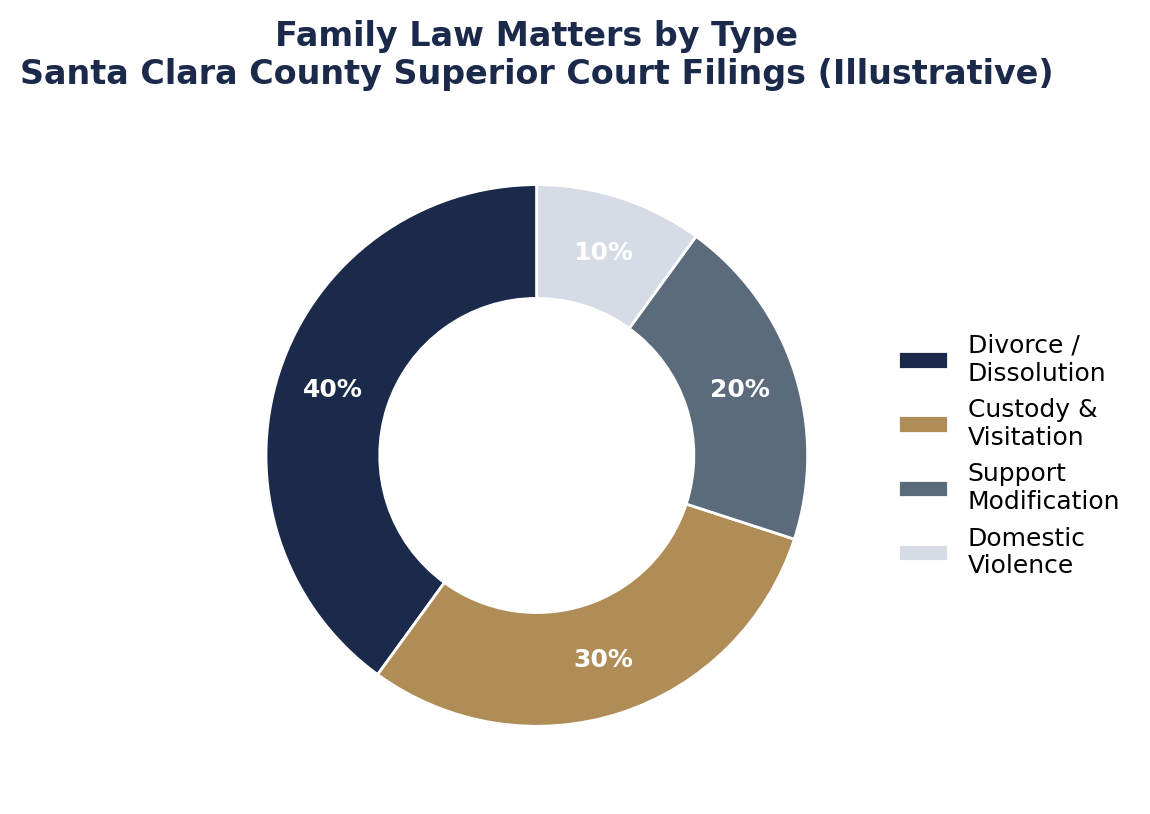
Figure 1: Family law matters by type in Santa Clara County Superior Court filings (illustrative).
Spousal Support in California
California Family Code section 4320 sets out the factors courts must consider when awarding spousal support, including the marital standard of living, each spouse’s earning capacity, the age and health of both parties, and the duration of the marriage. There is no fixed formula for long-term spousal support the way there is for child support, which gives judges considerable discretion and makes the presentation of evidence around these factors especially important.
As a general guideline, California courts often look to marriage duration when setting an expected support timeline, though this is not a rigid rule and judges retain discretion to depart from it based on the specific facts of the case.
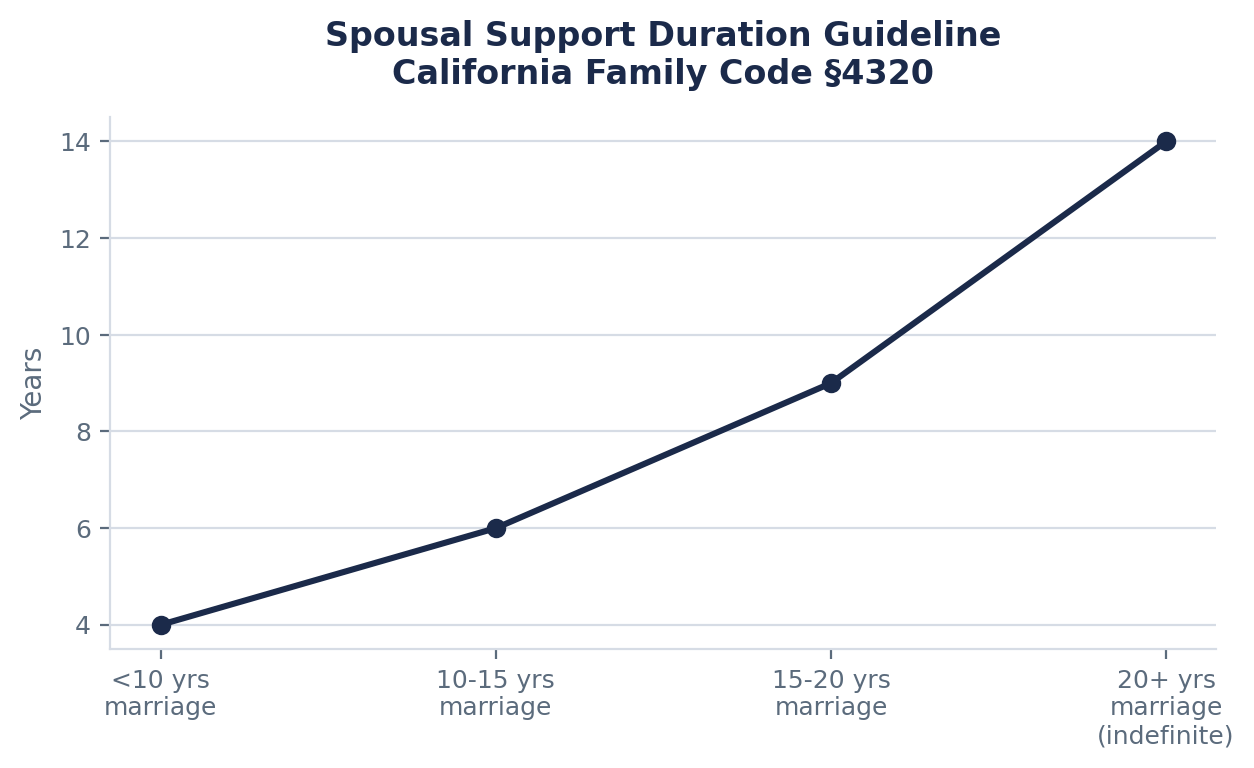
Figure 2: General spousal support duration guideline relative to marriage length under California Family Code section 4320 (illustrative).
Factors Courts Weigh in Support Orders
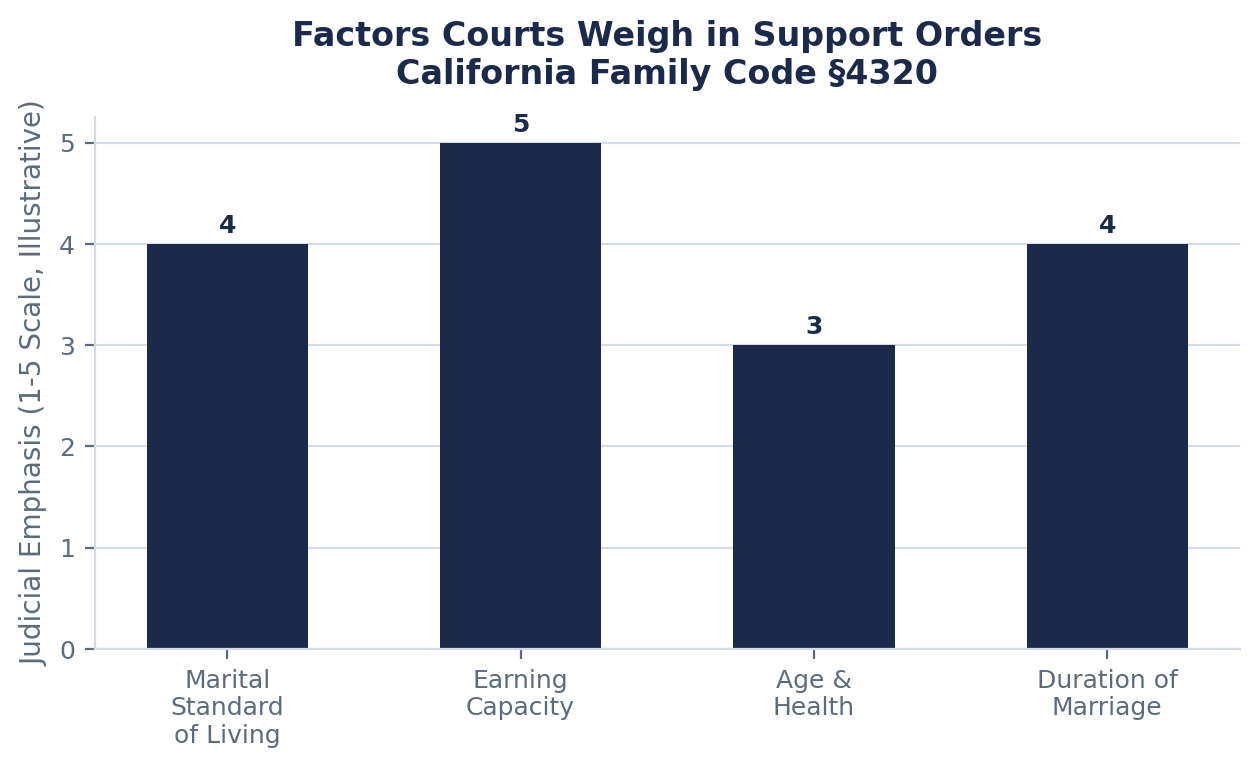
Figure 3: Illustrative judicial emphasis on key Family Code section 4320 factors in support determinations.
Domestic Violence Restraining Orders
When safety is a concern, a Palo Alto restraining order attorney can assist with seeking or responding to a domestic violence restraining order and the related family court proceedings. These orders can address more than physical safety, including temporary custody arrangements, exclusive use of the family home, and financial support while the underlying family law matter proceeds. Wade Litigation represents both parties seeking protection and parties responding to a restraining order request, since a wrongly issued order can have serious, lasting consequences for custody and other family law proceedings.
Establishing Parentage for Unmarried Parents
Unmarried parents in California must establish legal parentage before either parent can seek custody, visitation, or child support orders. This typically happens through a voluntary declaration of paternity signed at the hospital or later, or through a court proceeding when parentage is disputed. Once parentage is established, unmarried parents have the same rights and obligations regarding custody and support as married parents going through a divorce.
Prenuptial and Postnuptial Agreements in Palo Alto
Given the concentration of equity compensation, business ownership, and significant pre-marital assets among Palo Alto residents, Palo Alto prenuptial agreements and postnuptial agreements can serve as planning tools before or during a marriage and may also become central issues in a later dispute. California enforces these agreements under the Uniform Premarital Agreement Act, but only when both parties had adequate time to review the agreement, fully disclosed their finances, and each party either had independent counsel or knowingly waived that right. Agreements drafted hastily before a wedding, or without proper disclosure of stock holdings and startup equity, are the ones most likely to be challenged and set aside later.
Wade Litigation drafts and reviews these agreements for clients entering a marriage with significant separate property, and represents clients seeking to enforce or challenge an existing agreement once a marriage has ended.

Comparison: Family Law Mediation vs. Litigation
Factor | Mediation | Litigation |
Typical Duration | 3 to 6 months | 10 to 18+ months |
Cost | Generally lower | Generally higher |
Suitability | Cooperative parties | High conflict or safety concerns |
Outcome | Negotiated agreement | Court order |
Modifying Existing Family Court Orders
Family court orders, whether for custody, support, or visitation, are not permanent and can be modified when circumstances change materially. A job loss, relocation, remarriage, or a significant change in a child’s needs are common triggers for a modification request. California requires the requesting party to show the change is significant enough to justify revisiting the existing order, not simply preferring a different arrangement, so thoroughly documenting the change in circumstances is a critical first step.
Coordinating Family Law Strategy With Financial Complexity
Because many Palo Alto family law matters involve equity compensation, business interests, or significant real property, these financial issues can become especially important in a Palo Alto high-net-worth divorce and should be considered alongside the broader family law strategy. A custody schedule that looks reasonable on paper can become impractical if it isn’t coordinated with a support order that accounts for irregular equity vesting, and a property division agreement drafted without input from someone who understands the family law implications can create unintended tax or support consequences. Wade Litigation coordinates directly with forensic accountants, business valuators, and tax professionals when a case calls for it, so the family law outcome and the financial outcome work together rather than against each other.
What This Means for Your Case
Family law matters often involve more than one issue at once, and decisions made early in one area, such as agreeing to a temporary custody arrangement, can affect leverage and outcomes in related areas like support or property division later. Wade Litigation reviews your full situation at the outset rather than addressing each issue in isolation, so your strategy stays consistent as the case develops.
Confidentiality in High-Profile Family Law Matters
Family court proceedings are generally public record, which concerns many Palo Alto clients whose professional roles, business ownership, or public visibility make privacy a genuine priority. California law permits sealing certain filings under limited circumstances, and parties can agree to resolve disputes through private mediation or arbitration rather than public litigation, keeping the substance of financial and personal matters out of the public docket. Wade Litigation discusses these options with clients early when privacy matters, since the choice between a public and private process should be deliberate rather than by default.
Objections We Commonly Address
Clients sometimes delay seeking family law representation because they hope to resolve matters informally with their former partner, or because they worry that involving an attorney will escalate an already difficult situation. In practice, having clear legal guidance early often reduces conflict by giving both parties a realistic framework for negotiation, rather than leaving important issues to informal agreements that can unravel under stress.
What Happens When You Call
When you call Wade Litigation, the intake team will ask about the family law issues you are facing, whether that involves divorce, custody, support, or a safety concern, and any deadlines already in motion. During your case evaluation, an attorney will review your situation as a whole and help you understand how the different pieces of your case connect before recommending next steps.
Related Reading
For more on how California family law works, see our guides on family law matters and protecting your rights, alimony in California and how it is calculated, and establishing parentage in California, along with our overview of family law secrets and smart strategies for asset protection.
Frequently Asked Questions
Explore Related Palo Alto Practice Areas
If your matter centers on ending a marriage, see our Palo Alto divorce attorney page; for a custody-specific concern, see our Palo Alto child custody attorney page. You can also view our full Palo Alto office overview for every practice area we handle in Santa Clara County.
Speak With a Palo Alto Family Law Attorney
Amiel Wade, founding attorney and recognized among the Top Ten California Family Law Attorneys, leads Wade Litigation’s family law practice across Santa Clara County, backed by the firm’s recognized track record of seven 2026 industry awards. Call to schedule a case evaluation.