A Palo Alto divorce attorney helps spouses end a marriage under California’s no-fault system while dividing community property, including restricted stock units, stock options, and startup equity common among Silicon Valley professionals. Wade Litigation represents clients in Santa Clara County Superior Court and offers a case evaluation to review filing requirements, timelines, and property exposure before filing any paperwork.
Divorce in Palo Alto carries a financial complexity that few other California cities share. A large share of the local workforce is compensated through equity: restricted stock units, incentive stock options, non-qualified stock options, and startup grants that vest over years rather than arriving as a single paycheck. When a Palo Alto marriage ends, those unvested and partially vested awards often represent more value than the family home, and California’s community property rules do not treat them the same way they treat a bank account. Wade Litigation represents spouses across Santa Clara County who need a divorce strategy built around equity compensation and other complex assets, issues that are often central to a Palo Alto high-net-worth divorce
How California Divorce Law Applies in Palo Alto
California is a no-fault divorce state. Under Family Code section 2310, a spouse only needs to state that irreconcilable differences have caused the breakdown of the marriage. Neither spouse has to prove wrongdoing, and the court will not consider fault when dividing property or setting support in most cases. Our California divorce law overview covers filing requirements in more depth. Filing takes place in Santa Clara County Superior Court, and California imposes a mandatory six-month waiting period from the date the respondent is served before a divorce can be finalized, regardless of how quickly the spouses reach agreement.
California is also a community property state. Family Code section 760 defines community property as nearly everything either spouse acquires during the marriage, regardless of whose name is on the account or the paycheck. Separate property, defined under Family Code section 770, includes assets owned before marriage, inheritances, and gifts made to one spouse individually. The line between the two categories is where most Palo Alto divorce disputes actually happen, particularly once equity compensation and commingled accounts enter the picture.
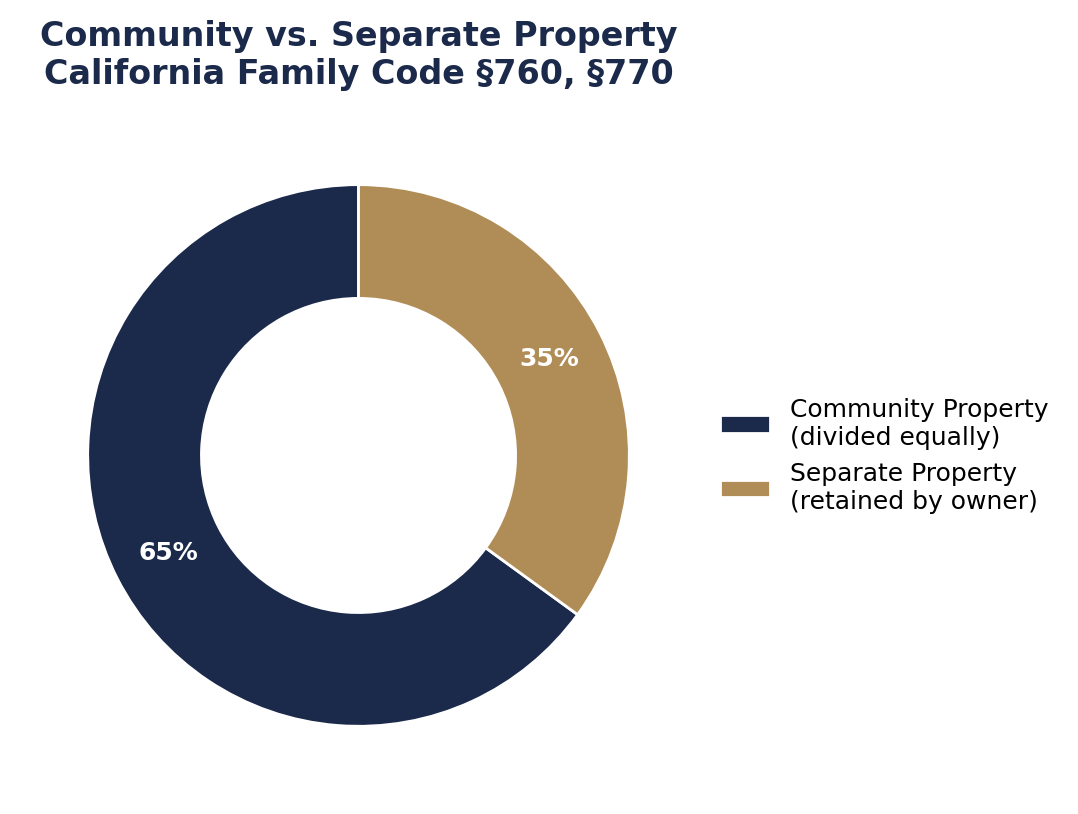
Figure 1: General community versus separate property division under California Family Code sections 760 and 770.
Dividing Stock Options, RSUs, and Startup Equity
Restricted stock units granted during the marriage but vesting after separation raise a threshold question: how much of that unvested equity was earned for past service during the marriage, and how much is compensation for future work after the marriage ended. California courts commonly apply a time-rule formula, sometimes called the Hug or Nelson approach depending on the purpose of the grant, to apportion unvested shares between community and separate property. Getting this calculation wrong in either direction can overpay or underpay a spouse by a meaningful amount, since a single vesting tranche at a Palo Alto-headquartered company can be worth more than most families’ entire net worth.
Stock options add a wrinkle because they may have no present value until exercised, yet California treats the right to exercise as property subject to division. Startup equity introduces a third layer: illiquid shares with no public market price, subject to company-imposed transfer restrictions, vesting cliffs, and buyback provisions that can be triggered by a departure from the company. Wade Litigation works through each equity grant’s plan documents, vesting schedule, and grant date relative to the date of marriage and date of separation before proposing a division approach, rather than treating all equity as identical to cash.
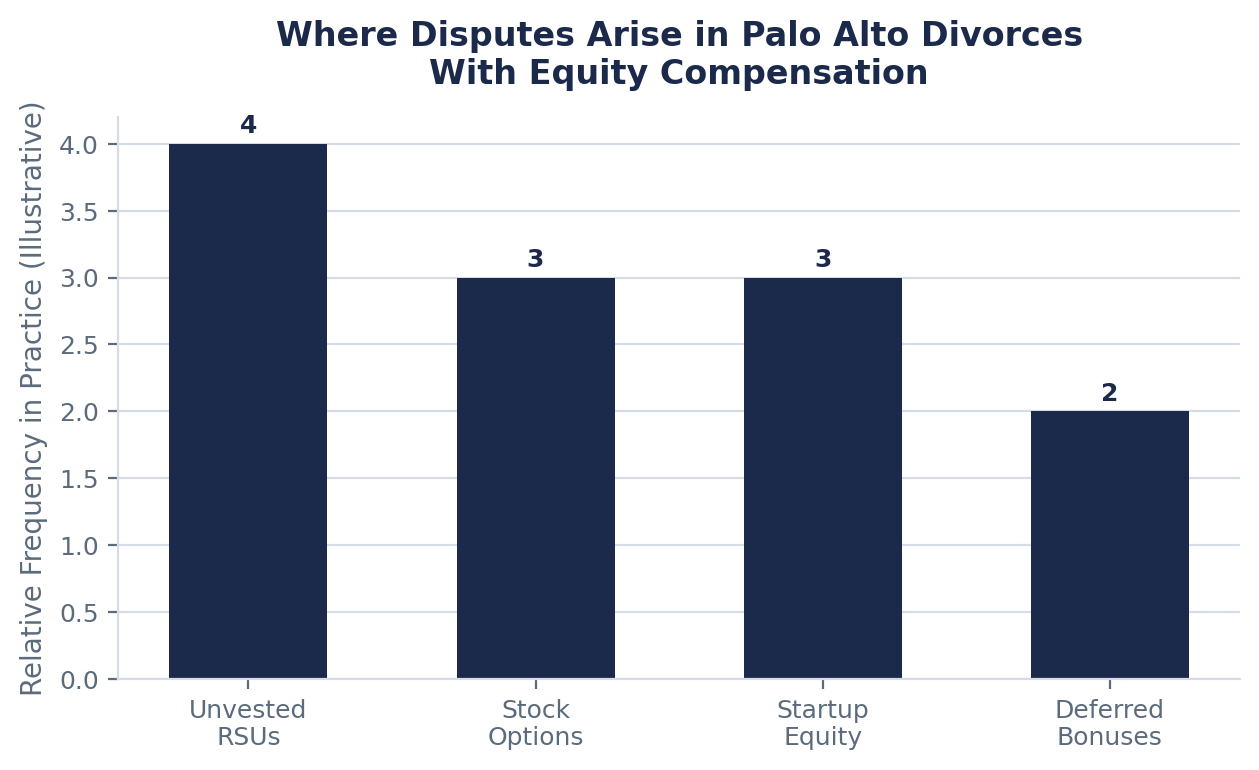
Figure 2: Where equity-related disputes most often arise in Palo Alto divorces (illustrative, based on case patterns).
The Divorce Timeline in Santa Clara County
A Palo Alto divorce follows the same procedural sequence as any California dissolution, but the discovery phase tends to run longer when equity compensation, business interests, or real property require appraisal. After the petition is filed and served, the responding spouse has 30 days to respond. Both spouses then exchange Preliminary Declarations of Disclosure, listing all assets, debts, income, and expenses. From there, the case moves into discovery, where equity grants, vesting schedules, and business valuations are typically produced and analyzed, followed by settlement negotiations or, if necessary, trial.
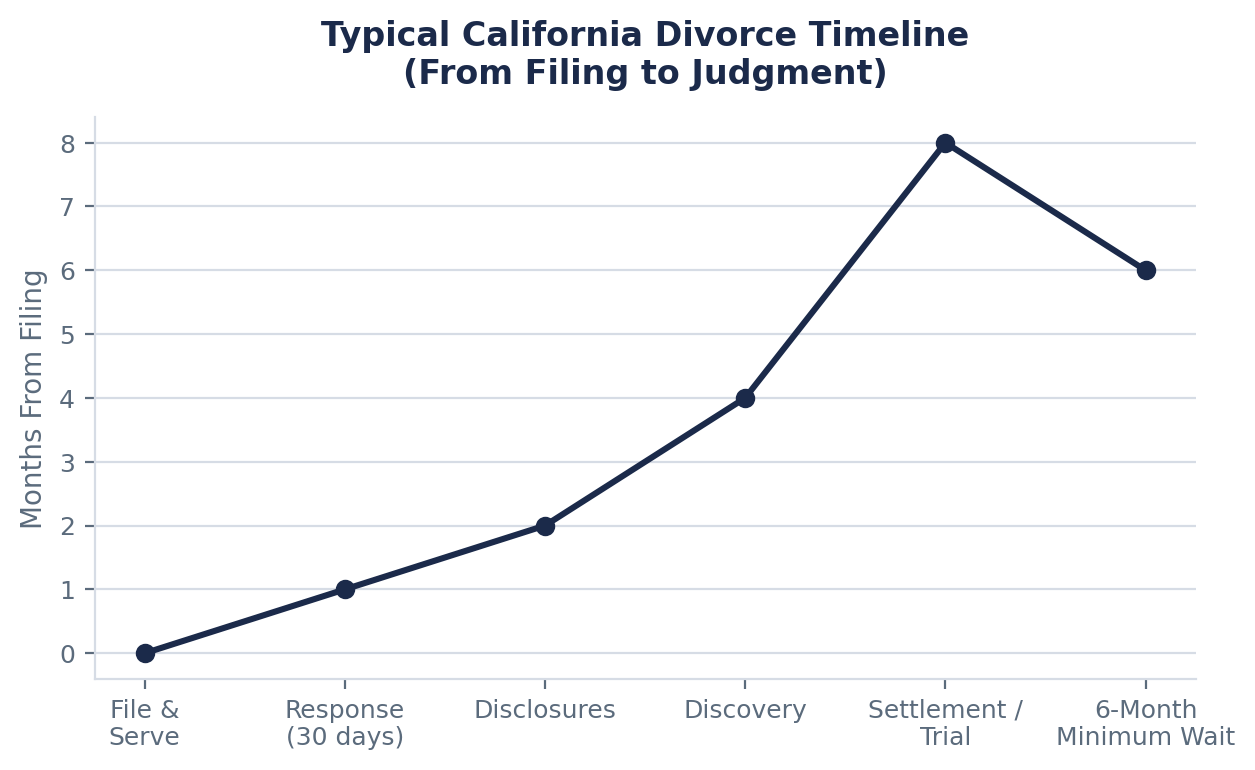
Figure 4: Typical elapsed time from filing to judgment in a California divorce with disputed property issues.

Support and Custody Alongside Property Division
Most Palo Alto divorces involving equity compensation also involve related Palo Alto family law issues, including spousal support and, where children are involved, custody and child support. Support calculations become more complicated when a paying spouse’s income includes irregular equity vesting rather than a flat salary, since courts must decide how to average or annualize that income for support purposes. Wade Litigation coordinates the property division strategy with the support and custody strategy from the outset, since a settlement that resolves equity division in isolation can create unintended consequences for support obligations later.
Comparison: Litigated Divorce vs. Negotiated Settlement
Factor | Litigated Divorce | Negotiated Settlement |
Typical Duration | 12 to 18+ months | 6 to 9 months |
Control Over Outcome | Decided by judge | Retained by spouses |
Equity Valuation | Court-appointed expert | Jointly retained or agreed expert |
Confidentiality | Public court record | Private negotiation |
What This Means for Your Case
If your marriage includes RSUs, options, or startup equity that has not fully vested, the timing of your separation date matters as much as the terms of your settlement. Wade Litigation has represented clients whose initial case evaluation surfaced a vesting cliff or a company-imposed transfer restriction that changed the entire division strategy. Amiel Wade, founding attorney and recognized among the Top Ten California Family Law Attorneys, brings that pattern recognition to Palo Alto clients from the first consultation.
Frequently Asked Questions
Business Interests and Marital Homes in Palo Alto Divorces
Beyond equity compensation, many Palo Alto divorces involve a privately held business interest, a rental property, or a marital home whose value has appreciated well beyond what either spouse anticipated at the time of purchase. When one spouse owns or co-founded a business, the court must determine what portion of the business’s value is community property, which often requires a forensic accountant to separate the owner spouse’s labor contribution from passive growth in the company’s value, a process we outline further in protecting your business during divorce. Real property presents a related challenge: a home purchased before marriage but paid down with community funds during the marriage creates a reimbursement claim under Family Code section 2640, and Palo Alto’s home values make that calculation financially significant even on a single property.
Wade Litigation approaches these valuation questions the same way it approaches equity compensation: by identifying which expert reports are needed before spending money on unnecessary appraisals, and by sequencing the valuation work to support settlement negotiations rather than drag the case toward an expensive trial.
Objections We Commonly Address
Some Palo Alto clients delay contacting an attorney because they assume equity compensation is too complicated to divide fairly, or because they worry that raising the issue will slow down an otherwise amicable separation. In practice, addressing equity early tends to shorten the overall timeline, since waiting until late in the case to value startup shares or unvested RSUs typically causes delays and renewed disputes.
What Happens When You Call
When you call Wade Litigation, a member of the client intake team will ask about your marriage date, separation date, and the types of income and equity involved so we can prepare the case evaluation in advance. During the case evaluation, you will speak directly with an attorney about your filing options, a preliminary view of how your property may be characterized, and what documentation to gather before your next step. You will leave the call with a clear understanding of your filing timeline and what to expect in the following 30 days.
Related Reading
For more on how California divorces handle property and business assets, see our guides on dividing property in a California divorce, protecting your business during divorce, and how the discovery process works in a California divorce, along with our overview of filing for divorce in Santa Clara County.
Explore Related Palo Alto Practice Areas
If your divorce also involves children, see our Palo Alto child custody attorney page, or for a marriage with substantial assets, our dedicated Palo Alto high-net-worth divorce attorneys page. You can also view our full Palo Alto office overview for every practice area we handle in Santa Clara County.
Speak With a Palo Alto Divorce Attorney
Wade Litigation has resolved matters involving substantial equity compensation for Silicon Valley professionals, including the firm’s own reported track record: seven 2026 industry awards and recognition of Amiel Wade among the Top Ten California Family Law Attorneys. Call to schedule a case evaluation and get a clear view of how your property will be characterized before you file.