A California civil litigation attorney represents individuals and businesses in non-criminal disputes that are resolved in the state’s superior courts, including breach of contract, fraud, business torts, and property conflicts. A civil case begins with a complaint, moves through a defendant’s response, discovery, motions, and settlement efforts, and ends in trial only when the parties cannot agree. Deadlines are strict and vary by claim, and a dispute’s dollar value determines which of three court tiers hears it. Wade Litigation, with civil litigation attorney Yuri Voronin leading trial work, represents clients statewide and offers a case evaluation to assess your claim or defense.
The most searched questions about civil lawsuits in California are about time and process: how long do I have to sue, how do I file, and which court is right for the amount at stake. This page answers those questions with the statutes that govern them, then explains how a contested case moves, where the leverage points are, and how county courts differ.
Statute of Limitations in California
Searches about the statute of limitations dominate civil litigation demand in California, and for good reason: a claim filed one day late is usually lost no matter how strong it is. The deadline depends on the type of claim and, in some cases, on when the injured party discovered the problem. A written contract claim generally must be filed within four years under Code of Civil Procedure section 337, an oral contract claim within two years under section 339, a fraud claim within three years from discovery under section 338(d), a personal injury claim within two years under section 335.1, and a claim for property damage within three years under section 338(b).
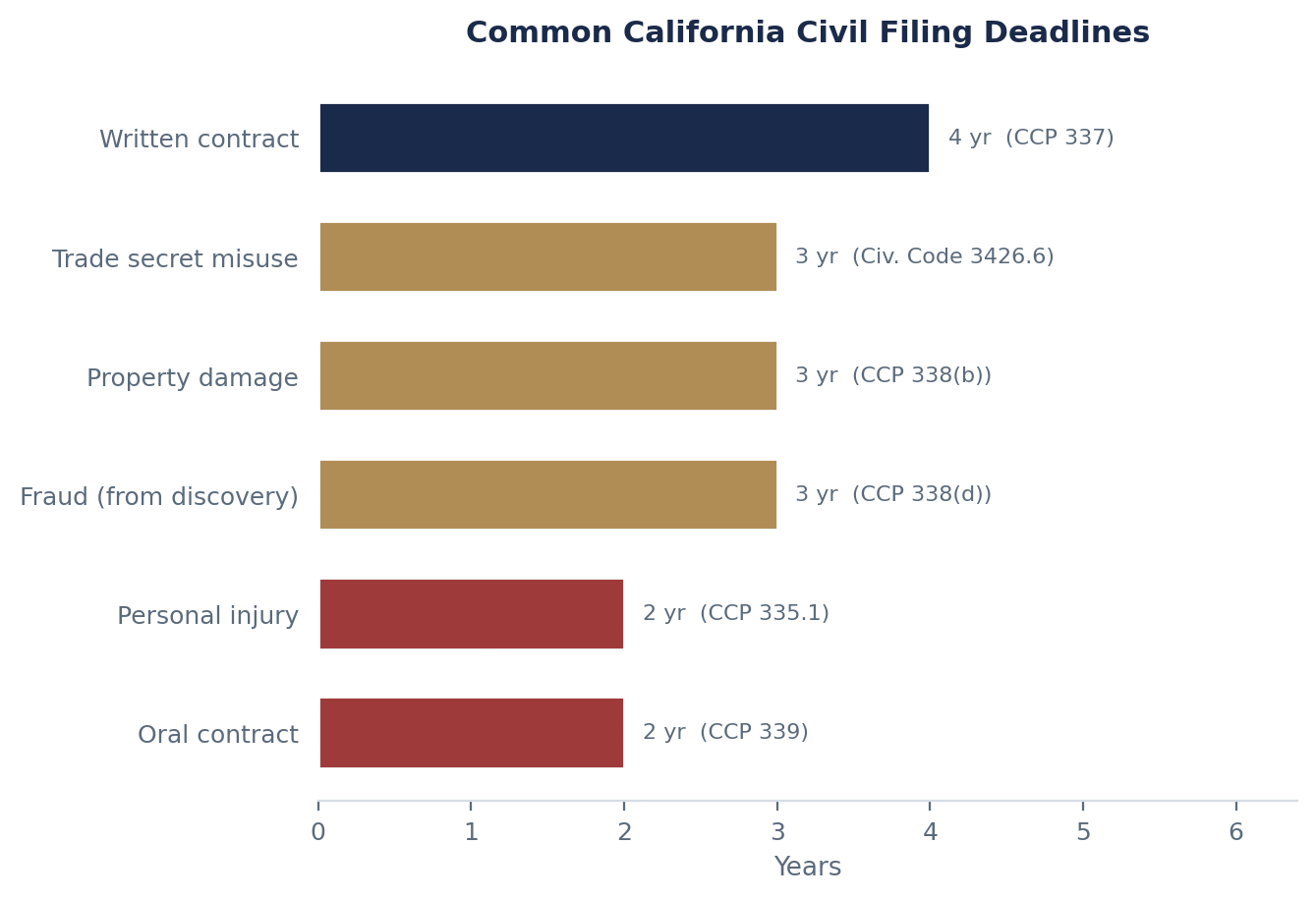
Figure 1: Common California civil filing deadlines and the statutes that set them.
Several rules can lengthen or shorten these periods. The discovery rule delays the start of the clock for some claims until the injury was or should have been discovered. Tolling rules pause the clock in limited situations, such as when a defendant is out of the state or a plaintiff is a minor. Contracts may contain shorter contractual limitation periods, which California courts will enforce if reasonable. Because errors here are unrecoverable, calendaring the earliest possible deadline and confirming it early is the first step in any case.
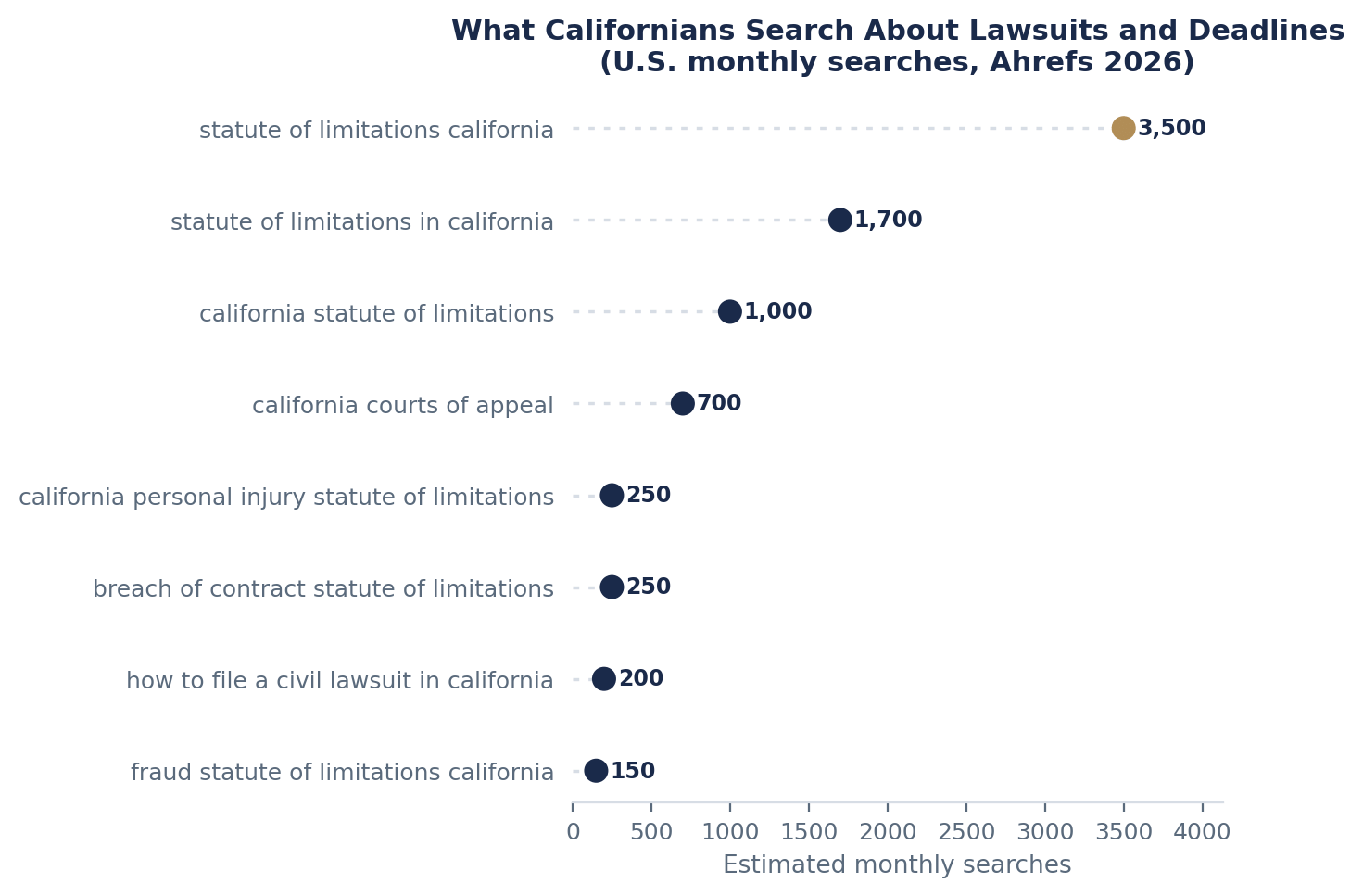
Figure 2: What Californians search about lawsuits and deadlines (U.S. monthly searches, Ahrefs, 2026).
How to File a Civil Lawsuit in California
A civil lawsuit starts when the plaintiff files a complaint in the proper county, pays the filing fee, and serves the defendant with the summons and complaint. The defendant generally has 30 days to respond with an answer or a demurrer under Code of Civil Procedure section 412.20. A demurrer challenges the complaint’s legal sufficiency, and our comparison of a demurrer versus an answer as a first response explains when each makes sense. Venue rules in Code of Civil Procedure sections 395 and 392 usually place a case in the county where the defendant lives, or the contract was performed, and a case about real property in the county where the property sits.
The plaintiff must serve the defendant correctly, because defective service can undo a default judgment later. The court then sets a case management conference, at which it reviews the issues, sets deadlines for discovery and motions, and often encourages alternative dispute resolution.

Which California Court Hears Your Case
California divides civil cases by amount. Since January 1, 2024, under Senate Bill 71, small claims court hears disputes up to $12,500 for individual plaintiffs and $6,250 for businesses, limited civil cases cover disputes of $35,000 or less, and unlimited civil cases cover everything above that. The tier matters because it controls procedure, discovery rights, cost, and whether attorneys can appear. Small claims is faster and cheaper but does not allow attorneys to represent parties at the hearing, and a plaintiff who sues for the small claims maximum may give up the right to claim more. Disputes with significant stakes, complex facts, or a need for injunctive relief belong in unlimited civil court.
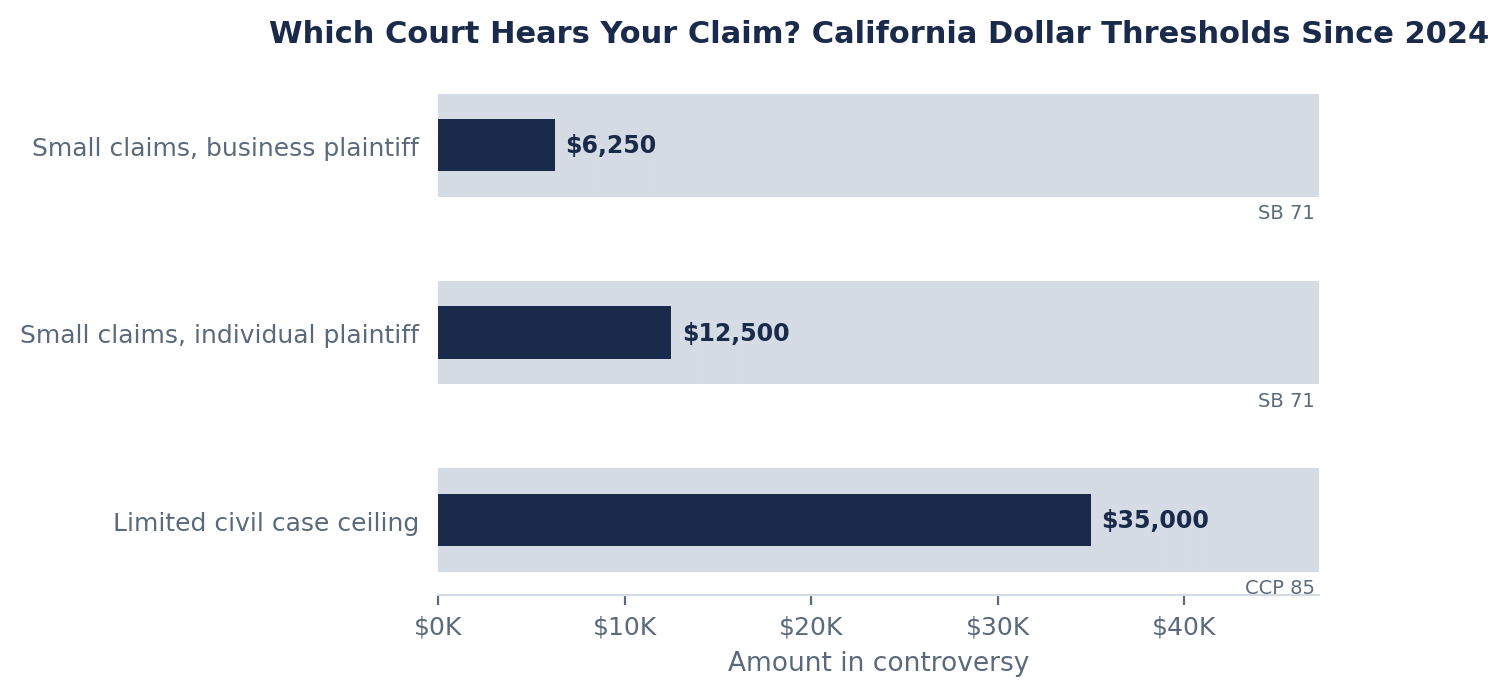
Figure 3: California dollar thresholds for small claims and limited civil cases since 2024 (SB 71).
The Stages of a Contested Civil Case
A contested case in a California superior court commonly runs 14 to 24 months from filing to trial, though the pace depends on the county’s calendar. Written discovery, depositions, and expert work usually take the largest share of the time and the budget. Dispositive motions such as summary judgment can narrow or end a case before trial. Many courts require or strongly encourage a mediation or settlement conference before a trial date, and the majority of cases resolve at or before that point.
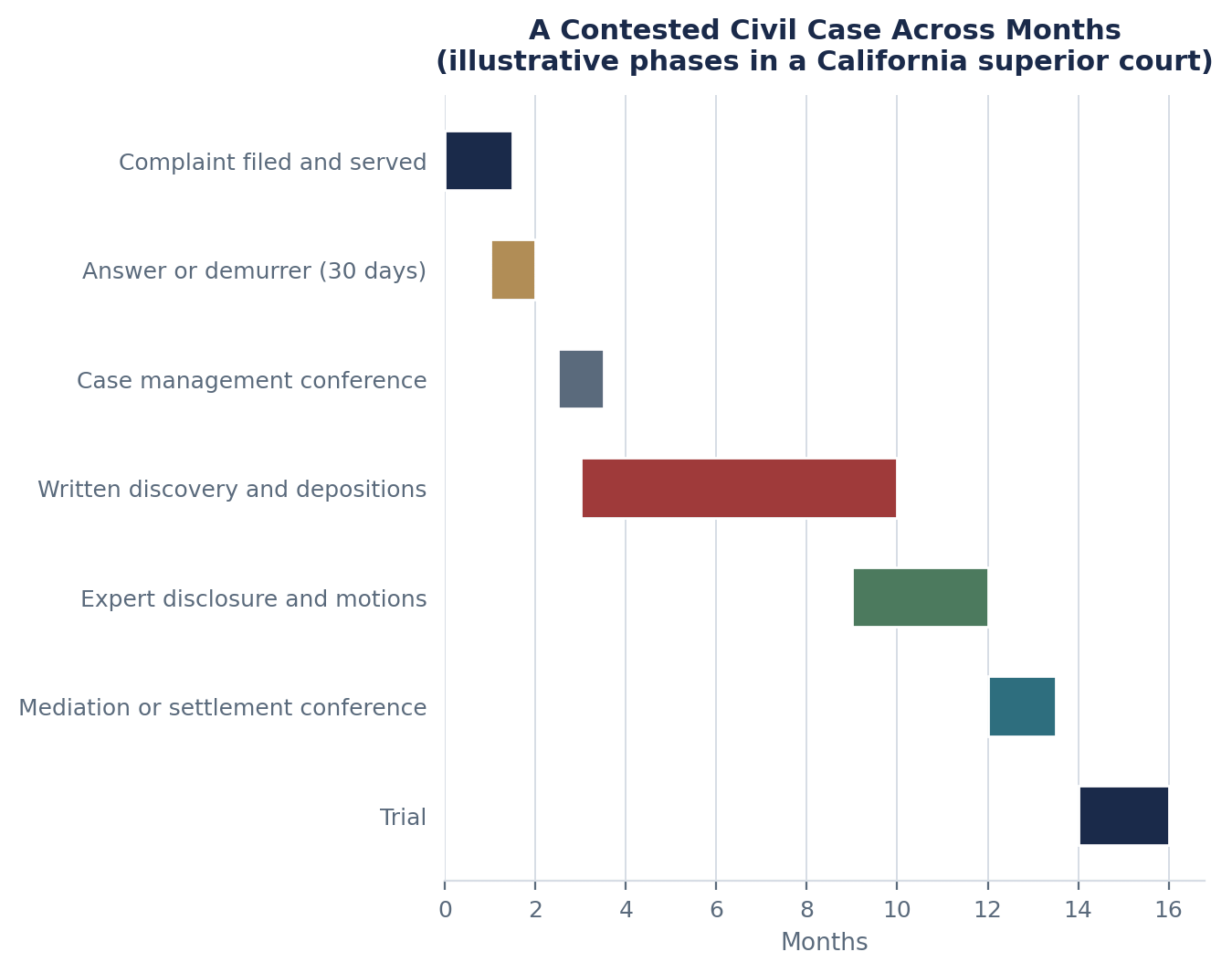
Figure 4: A contested civil case across months (illustrative phases in a California superior court).
Breach of Contract, Fraud, and Business Tort Claims
Breach of contract claims require proving a valid contract, the plaintiff’s performance or excuse, the defendant’s breach, and resulting damages. Fraud claims require a knowing misrepresentation of a material fact, reasonable reliance, and damage, and they must be proven by clear and convincing evidence rather than the ordinary preponderance standard. Related business torts include negligent misrepresentation, interference with contract or prospective advantage, and unfair competition. The right claims to plead depend on the documents and communications, and pleading too many weak theories can invite early motions that cost time and credibility.
Business-focused disputes also draw on partnership and shareholder law, which we address in our California business litigation page, and disputes about land and buildings are covered on our California real estate litigation page.
Defending a Lawsuit: Demurrers, Answers, and Early Motions
Being served with a complaint starts a clock. Failing to respond within 30 days can lead to a default judgment, which may be set aside only for limited reasons. A defendant can demur to the complaint, move to strike improper allegations, move to compel arbitration if the contract requires it, or file an answer with affirmative defenses such as the statute of limitations, waiver, or failure to mitigate damages. A defendant can also file a cross-complaint to assert its own claims in the same case. Early, well-supported motions can sometimes resolve a case before discovery costs accumulate.
Injunctions, Restraining Orders, and Emergency Relief
Some civil disputes cannot wait for a trial. When ongoing conduct is causing harm that money cannot repair, such as the misuse of trade secrets, the destruction of evidence, or the transfer of disputed assets, a party can seek a temporary restraining order and a preliminary injunction. Courts require a showing of likely success on the merits and that the harm outweighs the burden on the other side, and a denied emergency request can weaken a party’s position, so these motions should be filed only when the facts support them.
Mediation, Arbitration, and Settlement
Most civil disputes end by agreement. Mediation brings in a neutral who helps the parties find a resolution, arbitration submits the dispute to a private decision-maker whose ruling is largely final, and negotiated settlement can occur at any point. Many commercial contracts contain arbitration clauses, and whether one applies is often the first battle in a case, since California courts generally enforce valid arbitration agreements but not unconscionable ones. Reviewing the contract’s dispute resolution language before filing avoids wasting time in the wrong forum.
Discovery and Electronic Evidence
Discovery is the phase in which each side obtains the other’s documents and testimony, and in modern disputes it is dominated by electronic evidence. Emails, text messages, collaboration platforms, cloud-stored contracts, and the metadata that shows when a file was created or changed can decide a case. Parties have a duty to preserve relevant data as soon as litigation is reasonably anticipated, and losing it can lead to sanctions even when the loss was careless rather than intentional. Written discovery, depositions, and requests for inspection should be sequenced so that the most important evidence is obtained before costly expert work begins.
Attorney Fees, Costs, and Prejudgment Interest
California follows the American rule, under which each side pays its own attorney fees unless a statute or a contract provides otherwise. Many commercial contracts, leases, and promissory notes contain an attorney fee clause, and under Civil Code section 1717 such a clause is applied reciprocally, so the winning party can recover fees whichever side the clause was written to favor. Prevailing parties may also recover ordinary litigation costs, and prejudgment interest may be available on certain damages. Whether a fee clause exists should be checked before a case is filed, because it changes both the risk and the settlement value.
Collecting on a Civil Judgment
Winning a judgment does not automatically produce payment. A judgment creditor may use tools such as a wage garnishment, a bank levy, or a lien on real property, and a judgment in California generally remains enforceable for ten years and can be renewed. Collection is easier when the defendant has identifiable assets, which is one reason to evaluate collectability at the start of a case. A strong claim against a defendant with no assets or insurance may not justify the cost of litigation, while a modest claim against a solvent business may be well worth pursuing.
How California Counties Handle Civil Cases Differently
Civil procedure is statewide, but county courts differ in where they hear civil matters, how they assign complex cases, and how quickly they set dates. The table summarizes verified court information for the regions where Wade Litigation files cases.
County | Where Civil Matters Are Heard | Notable Local Fact |
Los Angeles | Civil departments across the county, including the Beverly Hills Courthouse (West District) for the area | Beverly Hills retains its own courthouse for civil, small claims, and traffic matters. |
Orange | Central Justice Center, 700 Civic Center Drive West, Santa Ana | Newport Beach litigants file in Santa Ana, not at the local Harbor Justice Center. |
Santa Clara | Downtown Superior Courthouse, San Jose | San Jose is the county seat, and the Sixth District Court of Appeal sits in the same city. |
Alameda | Hayward Hall of Justice for most civil filings | Complex civil cases may be assigned to the Oakland courthouse. |
Contra Costa | Wakefield Taylor Courthouse, 725 Court Street, Martinez | The county’s civil and complex civil departments sit in Martinez, not Walnut Creek. |
Local pages discuss these differences further, including our pages for Beverly Hills, Newport Beach, Walnut Creek, Pleasanton, Palo Alto, and San Jose.
Comparison: Settlement vs. Trial
Factor | Settlement | Trial |
Typical Duration | 6 to 12 months | 18 to 30+ months |
Cost Exposure | Lower and more predictable | Significantly higher |
Outcome Certainty | Negotiated terms | Decided by judge or jury |
Confidentiality | Terms can stay private | Public record |
What This Means for Your Case
The strongest civil cases are built before anyone files. Preserve emails, texts, contracts, invoices, and photographs the moment a dispute arises, calendar the earliest possible deadline, and avoid public statements about the other side that can become evidence or invite a counterclaim. Whether you are considering a lawsuit or have just been served, the first 30 days shape what follows, and an early evaluation of the claims, the defenses, and the likely forum makes every later decision better informed.
Objections We Commonly Address
Some people delay speaking with a civil litigation attorney because they assume the amount at stake is too small to justify a lawyer, or because they hope the other side will back down. A well-documented demand letter often resolves a dispute before any filing, and a delay can cost a claim through the statute of limitations or invite a default judgment against a defendant who did not respond on time.
What Happens When You Call
When you call Wade Litigation, the intake team asks what the dispute is about, whether you have been served, and what deadlines are already running. During the case evaluation, an attorney assesses your claims or defenses, explains the likely court and timeline, and outlines whether negotiation, mediation, or litigation is the most effective path.
Related Reading
Readers with a pending case often review California civil lawsuit lawyers and how they approach a case and how courts decide on non-monetary remedies in civil litigation. If a judgment goes the wrong way, our California appeals page explains the strict deadlines that follow.
Frequently Asked Questions
Speak With a California Civil Litigation Attorney
Yuri Voronin and the Wade Litigation team have represented individuals and businesses across California in contract, fraud, and property disputes, and the firm’s attorneys have been recognized with seven 2026 industry awards. Call to schedule a case evaluation and get a clear view of your options.