A Walnut Creek business litigation attorney represents owners, partners, and professional practices in disputes filed in Contra Costa County Superior Court, including partnership and shareholder disputes, contract breaches, and conflicts among professionals who practice together. Walnut Creek’s downtown office market, medical and dental practices, and base of financial and professional services firms generate a distinct mix of business disputes. Wade Litigation offers a case evaluation to review your dispute and outline a resolution strategy.
Business litigation in Walnut Creek reflects the character of an East Bay professional hub: law firms, accounting practices, medical groups, real estate brokerages, wealth management firms, and a deep base of owner-operated small businesses along Main Street, Broadway Plaza, and the surrounding commercial corridors. Disputes here frequently involve disagreements among partners in a professional practice, breach of fiduciary duty, vendor and customer contract disputes, and commercial lease conflicts, alongside the more familiar categories of contract breach that arise in any business.
Common Business Dispute Categories in Walnut Creek
Partnership and shareholder disputes arise when co-owners or business partners disagree about company direction, compensation, profit splits, or an exit strategy, a topic covered further in our guide to business disputes: a guide for shareholders and partners. Contract breaches cover failures to perform under vendor agreements, service contracts, and customer agreements. Professional practice disputes involve disagreements among doctors, dentists, attorneys, accountants, and other professionals about compensation, patient or client relationships, and buyout terms.
Where Walnut Creek Business Disputes Are Filed
Business litigation for Walnut Creek companies proceeds through the Superior Court of California, County of Contra Costa, and is heard in Martinez, primarily at the Wakefield Taylor Courthouse on Court Street, which houses the county’s civil departments and its complex civil litigation department. The courthouse on Ygnacio Valley Road in Walnut Creek now serves as a juvenile and traffic center, so Walnut Creek businesses should expect to file and appear at the county seat.

How a Business Dispute Narrows Toward Resolution
A business dispute rarely proceeds in a straight line to trial. From the point a disagreement first arises, a case typically narrows at each stage: many disputes resolve through a demand letter or direct negotiation, others settle during mediation, and only a small fraction ultimately require a trial.
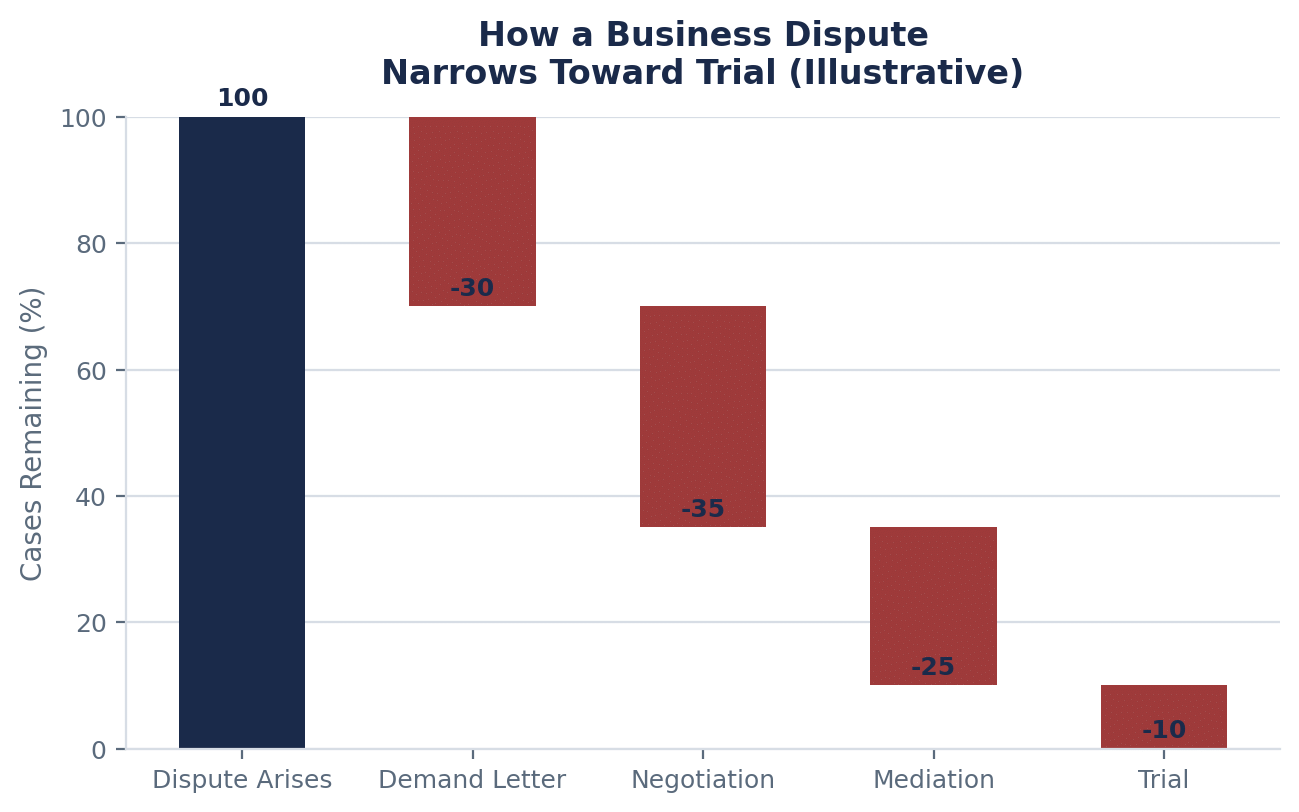
Figure 1: Illustrative progression of a business dispute from initial disagreement to trial.
How Dispute Type Affects the Timeline
Not every business dispute resolves at the same pace. A vendor dispute with clear contractual terms often resolves faster than a partnership split or trade secret case, which typically require more extensive discovery and expert analysis.
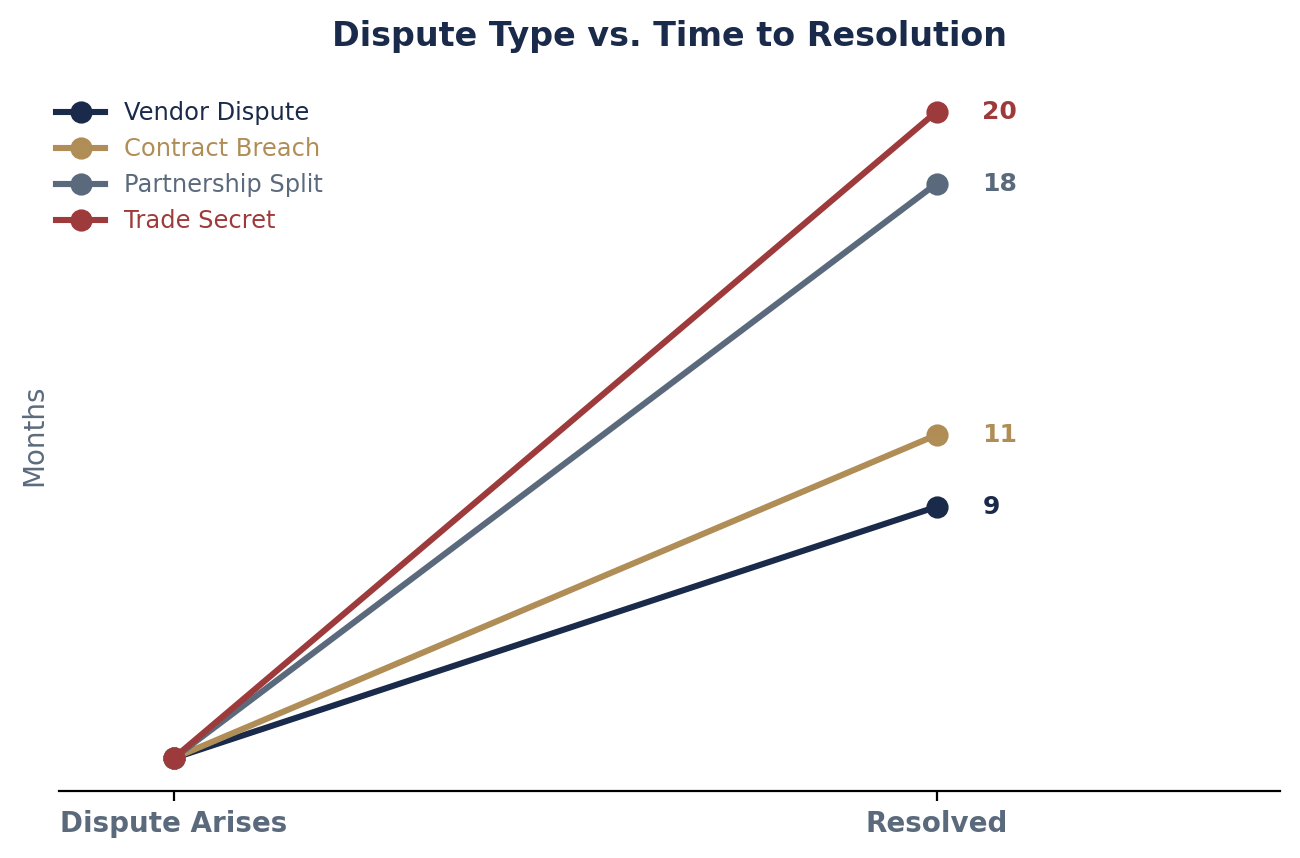
Figure 2: How dispute type affects the typical timeline from dispute to resolution (illustrative).
Business Dispute Types Among Walnut Creek Companies
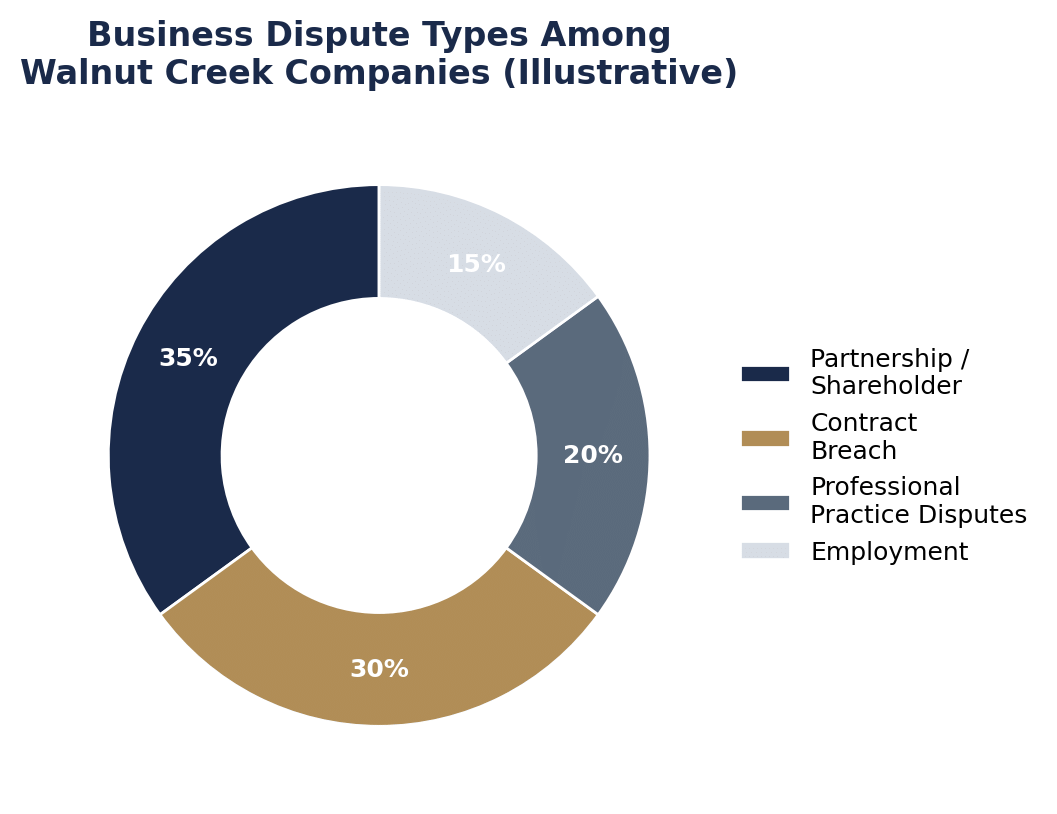
Figure 3: Business dispute types among Walnut Creek companies (illustrative).
Common Grounds for Partner and Owner Disputes
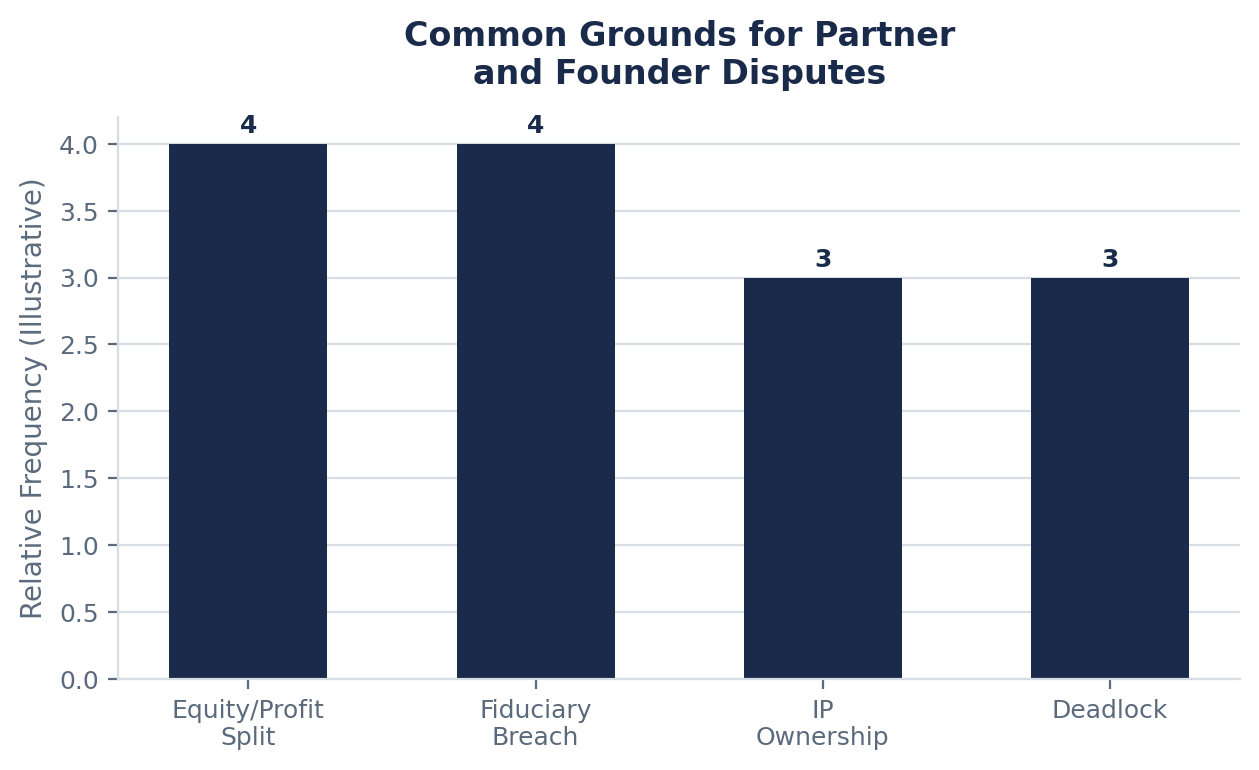
Figure 4: Common grounds for partner and owner disputes among Walnut Creek businesses (illustrative).
Breach of Fiduciary Duty Among Business Partners
Business partners, co-owners, and majority shareholders owe fiduciary duties to each other and, in some structures, to minority shareholders. These duties include the duty of loyalty, which prohibits self-dealing and competing against the company, and the duty of care, which requires reasonable diligence in managing company affairs. When a partner diverts a business opportunity, takes an undisclosed side payment, or otherwise puts personal interests ahead of the company’s, the harmed partners or shareholders can pursue a breach of fiduciary duty claim seeking damages or equitable remedies.
Disputes Among Professional Practice Partners
Walnut Creek’s medical, dental, legal, and accounting practices produce a particular kind of business dispute: a partner who wants to leave, a partner who is being pushed out, or a group that disagrees about how profits are divided or how the practice should be run. These disputes often turn on the practice’s governing documents, including partnership or operating agreements, buy-sell provisions, and restrictive covenants that survive a departure.
California limits the enforceability of non-compete covenants, but certain protections, such as agreements tied to the sale of a practice and prohibitions on misusing confidential patient or client information, may still apply. Careful review of the documents, and of what each side actually did after the relationship soured, drives the strategy.
Comparison: Arbitration vs. Litigation for Business Disputes
Factor | Arbitration | Litigation |
Confidentiality | Private proceedings | Public court record |
Typical Duration | 6 to 12 months | 14 to 24+ months |
Appeal Rights | Very limited | Full appellate review |
Applicability | Only if agreement requires it | Default absent an arbitration clause |
Protecting Confidential Business and Client Information
California’s Uniform Trade Secrets Act protects confidential business information that derives independent economic value from not being generally known and that the company has taken reasonable steps to protect. For professional practices and service firms, this often extends to client lists, billing data, and proprietary methods. When a departing employee or competitor is suspected of misappropriating this information, the company must move quickly to preserve evidence and seek injunctive relief before the information spreads.
California generally does not enforce broad employee non-compete agreements under Business and Professions Code section 16600, which shapes how these firms protect their information: through confidentiality agreements and narrowly drafted non-solicitation terms rather than broad non-competes.
Commercial Lease and Office Space Disputes
Many business disputes in Walnut Creek intersect with commercial real estate, since a practice’s ability to operate often depends on the terms of its office lease in the downtown core or along the I-680 corridor. Common disputes include disagreements over tenant improvement obligations, common area maintenance charges, and conflicts that arise when a landlord attempts to terminate a lease early or a tenant attempts to exit before the term ends. These disputes require close review of the lease’s default, remedy, and notice provisions, since commercial leases are negotiated documents with far more variation than standard residential leases.
Business Succession and Buy-Sell Agreement Disputes
Many Walnut Creek businesses, including family-owned enterprises and closely held professional firms, face succession planning disputes that are among the more emotionally complex matters this practice handles. A buy-sell agreement drafted years earlier may include a valuation formula that the remaining owners now consider unfair, or a succession plan may have been discussed informally but never properly documented, leaving ambiguity about what was actually promised to a retiring owner.
Wade Litigation reviews the underlying governance documents, whether an operating agreement, shareholder agreement, or buy-sell agreement, to determine what was actually agreed to before recommending whether to enforce, renegotiate, or challenge its terms.
Employment-Related Business Disputes
Business litigation and employment disputes frequently overlap when a departing employee is also a business partner, shareholder, or holds a leadership role at the company. Disputes in this category include claims over unpaid commissions or bonuses, disagreements about whether a departing executive is entitled to accelerated vesting of equity, and allegations that a termination was actually a pretext to avoid an obligation owed under an employment or partnership agreement. These matters require careful attention to both the employment relationship and any separate ownership documents that may govern the same dispute.
Choosing Between Litigation, Mediation, and Direct Negotiation
Not every business dispute calls for the same resolution path, and choosing incorrectly wastes both time and money. Direct negotiation works best when the relationship remains largely intact and the dispute is narrow. Mediation introduces a neutral third party and works well when the parties are far apart on specifics but both genuinely want to resolve the matter. Litigation becomes necessary when one side is unwilling to negotiate in good faith, when the facts are genuinely disputed, or when a party needs the coercive power of the court, such as an injunction. Wade Litigation makes this assessment early in every engagement rather than defaulting to litigation as the first option.
Preserving the Business Relationship Where Possible
Not every business dispute needs to end the underlying relationship. When a dispute arises between partners who still see value in continuing to work together, or between a company and a vendor it depends on, Wade Litigation looks for resolution paths that address the immediate conflict without unnecessarily destroying a relationship that has value beyond the current disagreement. This is not always possible, particularly in fiduciary duty cases where trust has broken down completely, but when it is, it typically produces a faster and less expensive outcome than full litigation.
Disputes Involving Franchises and Owner-Operated Retail
Walnut Creek’s retail and restaurant corridors include many franchise locations and owner-operated shops, and these businesses generate their own category of disputes. Franchisees may dispute fees, territory, required purchases, or termination decisions made by the franchisor, while independent owners face landlord disputes, vendor conflicts, and disagreements with co-owners about how to divide profits or invest in expansion. Franchise relationships in California are subject to statutory protections as well as the franchise agreement itself, so understanding which obligations come from the contract and which come from the statute matters before taking any position.
Investor and Financing Disputes
As local companies grow, disputes with outside investors, lenders, or financing partners become more common, including claims that an investor breached a financing agreement, disagreements over control and voting rights tied to a preferred equity investment, and disputes arising when a recapitalization dilutes existing owners in ways they believe violate their contractual protections. These disputes require careful reading of complex financing documents, since a single defined term buried in an agreement can determine which side has the stronger legal position.
Wage, Misclassification, and Business Owner Exposure
California’s employment laws create exposure that catches many small business owners off guard, particularly around worker classification, overtime, and meal and rest break compliance. A claim by a current or former worker can become a business dispute when the owners disagree about who is responsible, when an insurance carrier disputes coverage, or when a buyer discovers undisclosed exposure during a sale. Addressing these issues early, and understanding how they interact with the ownership structure, protects both the business and its owners personally.
Documenting a Dispute Before It Escalates
The strongest business cases are usually built before anyone files anything. Preserving emails, texts, invoices, and meeting notes, writing a clear and measured demand letter, and avoiding public statements about the other side all strengthen a party’s position and reduce the risk of a counterclaim. Business owners who wait until a relationship has completely broken down often discover that key records are missing or that informal statements made in frustration have given the other side leverage.
Choosing Litigation Counsel for a Local Business
A Walnut Creek business benefits from an attorney who understands both the litigation and the business context: how a lawsuit against a vendor might affect an ongoing relationship, how a partner dispute might be viewed by lenders, clients, or referral sources, and how quickly a matter needs to resolve to avoid disrupting operations. Wade Litigation factors these business realities into its litigation strategy recommendations, rather than treating every dispute as an isolated legal question.
What This Means for Your Case
Whether you are a business owner facing a dispute with a partner, a practice protecting confidential client information from a departing employee, or a party to a contract gone wrong, the strength of your written agreements and documentation often determines how quickly the dispute resolves. Wade Litigation reviews your existing agreements and the facts of your dispute early to identify the strongest path toward resolution.
Objections We Commonly Address
Business owners sometimes avoid pursuing a dispute because they worry about the cost of litigation relative to the amount in controversy, or because they fear that suing a business partner or long-standing vendor will damage other important relationships. In many cases, resolving a partnership or vendor dispute quickly and directly, before it affects day-to-day operations or client relationships, protects the business more than avoiding the conflict does.
What Happens When You Call
When you call Wade Litigation, the intake team will ask about your company, the nature of the dispute, and any governing agreements already in place, such as an operating agreement, shareholder agreement, or vendor contract. During your case evaluation, an attorney will assess your position and outline whether negotiation, arbitration, or litigation is the most effective path forward.
Explore Related Walnut Creek Practice Areas
If your dispute involves general contract or property issues rather than a business partnership, see our Walnut Creek civil litigation attorney page, or if an appeal is on the table, our Walnut Creek appeals attorney page. You can also view our full Walnut Creek office overview for every practice area we handle in Contra Costa County.
Frequently Asked Questions
Speak With a Walnut Creek Business Litigation Attorney
Wade Litigation represents business owners and professional practices across the Bay Area in partnership, contract, and succession disputes, backed by the firm’s recognized track record of seven 2026 industry awards. Call to schedule a case evaluation.