A Pleasanton family law attorney represents clients across the full range of California family law matters in Alameda County, including divorce, child custody, spousal and child support, and domestic violence restraining orders. Family law issues rarely arrive one at a time, and Wade Litigation coordinates strategy across them so decisions in one area don’t create problems in another. Call to schedule a case evaluation.
Family law covers the full spectrum of legal issues that arise when a family relationship changes, whether through divorce, separation, a custody dispute, or a safety concern requiring a restraining order. In Pleasanton, family law matters often intersect with complex financial issues, including retirement accounts, business ownership, and high-value real estate, so it’s important to work with an attorney who understands both the emotional and financial dimensions of these cases.
What Family Law Covers
Family law covers more than divorce. It encompasses the establishment and modification of custody and visitation arrangements, the calculation and enforcement of child and spousal support, the division of marital property, domestic violence restraining orders, and parentage matters for unmarried parents, several of which we cover in more depth in family law matters: how to protect your rights. Many clients come to Wade Litigation with more than one of these issues overlapping at the same time, such as a custody dispute that arises alongside a divorce, or a support modification request that follows a change in employment.
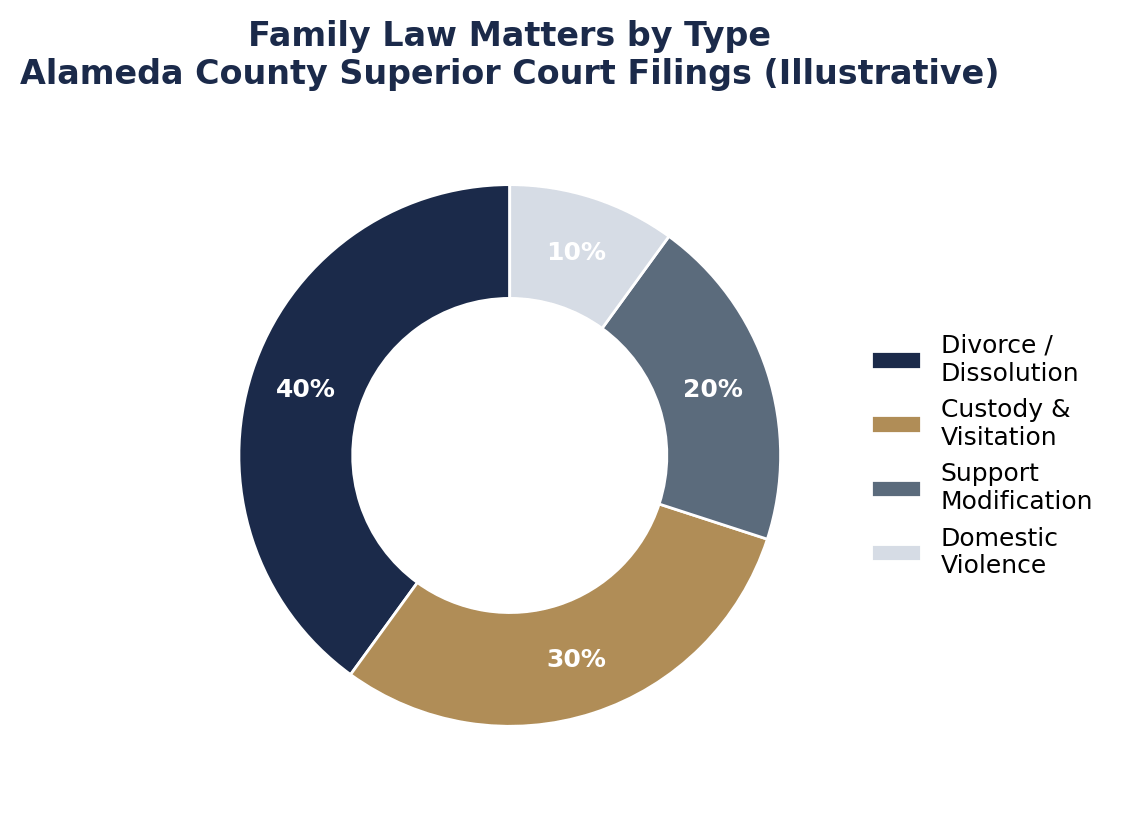
Figure 1: Family law matters by type in Alameda County Superior Court filings (illustrative).
Where Pleasanton Family Law Matters Are Filed
Family law filings for Pleasanton residents proceed through the Superior Court of California, County of Alameda, at the Hayward Hall of Justice, where the family law clerk’s office relocated in 2011 after previously operating locally in Pleasanton. Domestic violence and civil harassment restraining order requests remain an exception: those matters are still heard locally at the Gale-Schenone Hall of Justice in Pleasanton, meaning a single family law matter involving both a support request and a safety concern may proceed through two different Alameda County courthouse locations.
Spousal Support in California
California Family Code section 4320 sets out the factors courts must consider when awarding spousal support, including the marital standard of living, each spouse’s earning capacity, both parties’ age and health, and the duration of the marriage. There is no fixed formula for long-term spousal support like there is for child support, which gives judges considerable discretion and makes the presentation of evidence on these factors especially important.
As a general guideline, California courts often look to marriage duration when setting an expected support timeline, though this is not a rigid rule and judges retain discretion to depart from it based on the specific facts of the case.
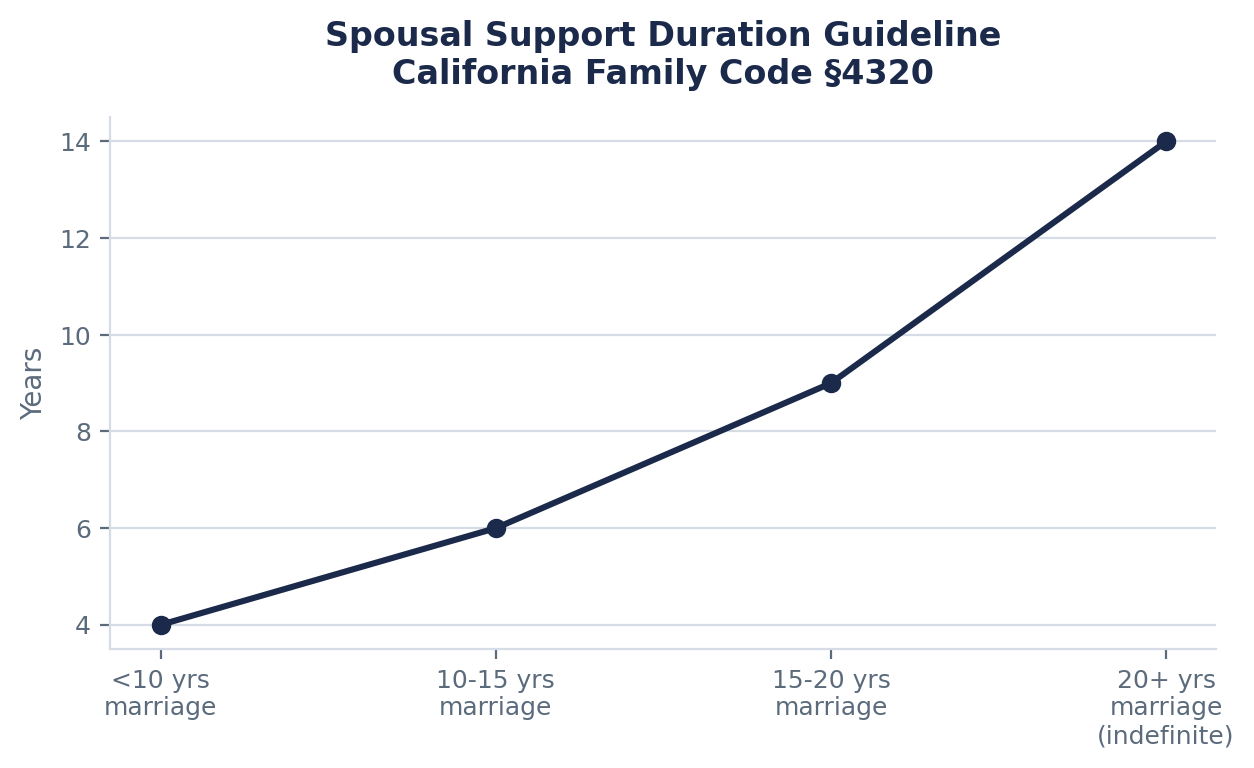
Figure 2: General spousal support duration guideline relative to marriage length under California Family Code section 4320 (illustrative).
Factors Courts Weigh in Support Orders
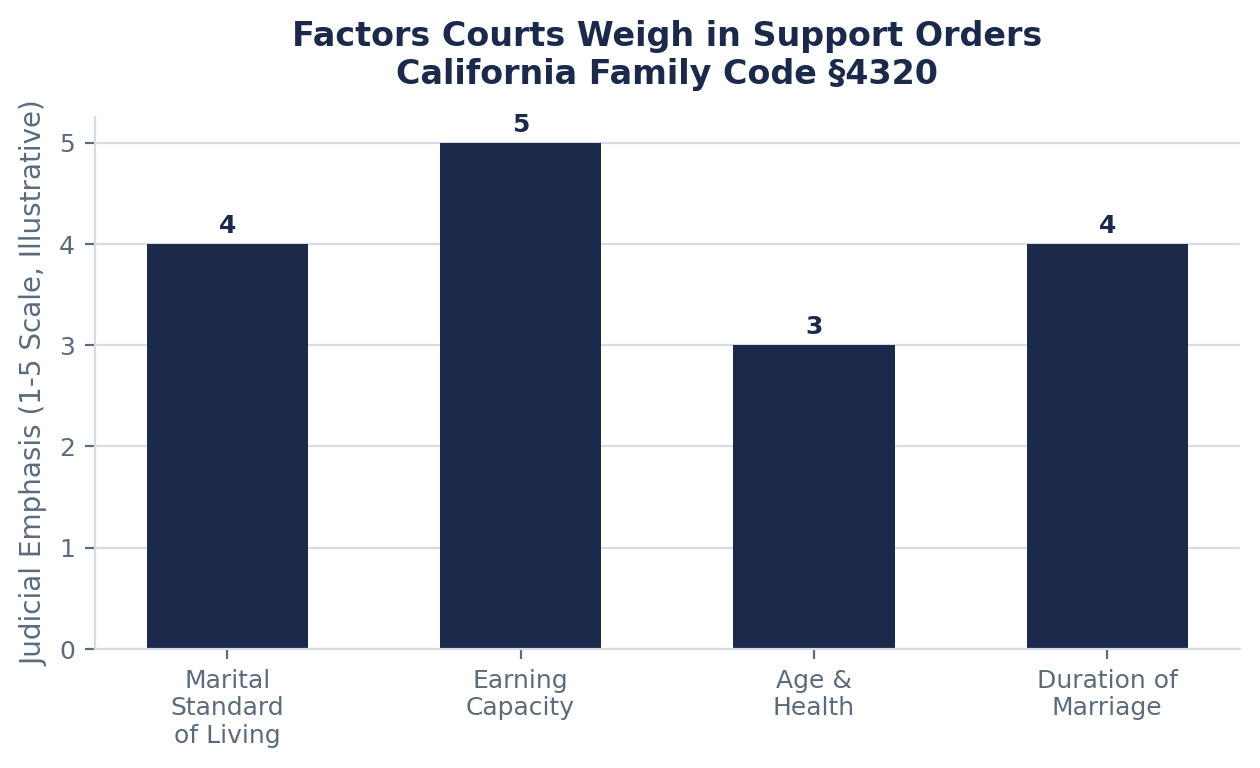
Figure 3: Illustrative judicial emphasis on key Family Code section 4320 factors in support determinations.
Search Interest in Family Law Representation
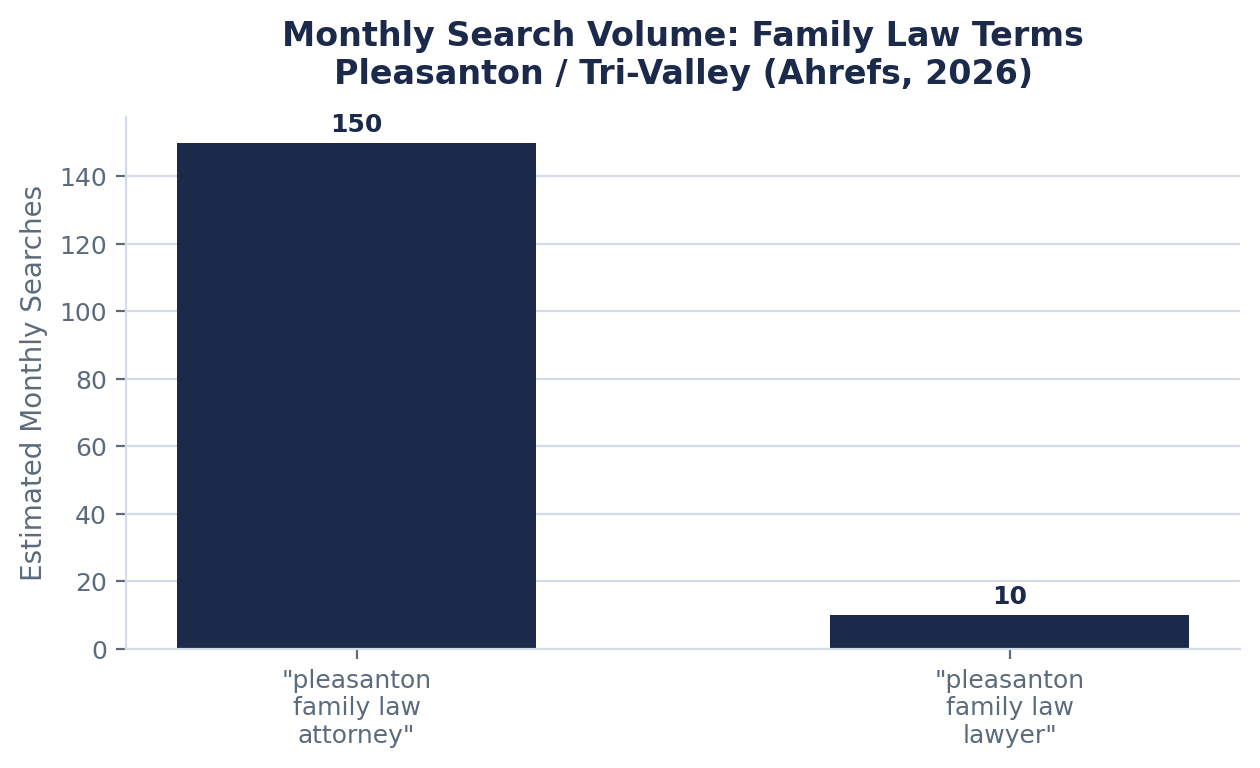
Figure 4: Estimated monthly search volume for family law-related terms in the Pleasanton market (Ahrefs, 2026).
Domestic Violence Restraining Orders
When safety is a concern, California allows a party to request a domestic violence restraining order on an emergency basis, with a hearing typically scheduled within weeks to determine whether a longer-term order is warranted. These orders can address more than physical safety, including temporary custody arrangements, exclusive use of the family home, and financial support while the underlying family law matter proceeds.
For Pleasanton residents, these matters are heard locally at the Gale-Schenone Hall of Justice rather than the Hayward Hall of Justice that handles most other family law filings. Wade Litigation represents both parties seeking protection and parties responding to a restraining order request, since a wrongly issued order can have serious, lasting consequences for custody and other family law proceedings.
Establishing Parentage for Unmarried Parents
Unmarried parents in California must establish legal parentage before either parent can seek custody, visitation, or child support orders. This typically happens through a voluntary declaration of paternity signed at the hospital or later, or through a court proceeding when parentage is disputed. Once parentage is established, unmarried parents have the same rights and obligations regarding custody and support as married parents going through a divorce.
Comparison: Family Law Mediation vs. Litigation
Factor | Mediation | Litigation |
Typical Duration | 3 to 6 months | 10 to 18+ months |
Cost | Generally lower | Generally higher |
Suitability | Cooperative parties | High conflict or safety concerns |
Outcome | Negotiated agreement | Court order |
Child Support Calculations and Guideline Formula
California calculates child support using a statewide guideline formula that accounts for each parent’s income, the percentage of time each parent has physical custody, tax filing status, and certain deductible expenses such as health insurance premiums and mandatory retirement contributions. While the formula itself is mechanical once the correct inputs are entered, disputes frequently arise over what those inputs should be, particularly when a parent is self-employed, receives irregular bonus income, or is suspected of being voluntarily underemployed to reduce a support obligation. Wade Litigation reviews income documentation closely in these situations, since an inaccurate income figure entered into the guideline calculator can produce a support order that remains wrong for years until someone catches the error and files for a modification.
Modifying Existing Family Court Orders
Family court orders, whether for custody, support, or visitation, are not permanent and can be modified when circumstances change materially. A job loss, relocation, remarriage, or a significant change in a child’s needs are common triggers for a modification request. California requires the requesting party to show the change is significant enough to justify revisiting the existing order, not simply preferring a different arrangement, so thoroughly documenting the change in circumstances is a critical first step.
Prenuptial and Postnuptial Agreements in Pleasanton Marriages
Given the concentration of pre-existing business ownership, retirement savings, and significant real property among Pleasanton residents entering a marriage later in life or a second marriage, prenuptial and postnuptial agreements come up often in this practice, both as planning tools and as documents at the center of a later dispute. California enforces these agreements under the Uniform Premarital Agreement Act, but only when both parties had adequate time to review the agreement, fully disclosed their finances, and each party either had independent counsel or knowingly waived that right. Agreements drafted hastily before a wedding, or without proper disclosure of retirement accounts or business interests, are the ones most likely to be challenged and set aside later.
Wade Litigation drafts and reviews these agreements for clients entering a marriage with significant separate property and represents clients seeking to enforce or challenge an existing agreement after a marriage ends.
Premarital Financial Disclosure and Its Long-Term Effect on a Case
Whether a family law matter ultimately involves a prenuptial agreement dispute or a straightforward divorce, the quality of financial disclosure made at the time of marriage, or the lack of it, tends to surface again years later. A spouse who failed to disclose a retirement account, a business interest, or a debt at the time of marriage may find that omission used against them in a later dispute over spousal support or property characterization, even where no prenuptial agreement was ever signed. Keeping thorough financial records throughout a marriage, rather than reconstructing them after a separation has already begun, puts a party in a materially stronger position no matter which family law issue eventually arises.
Coordinating Family Law Strategy With Financial Complexity
Because so many Pleasanton family law clients hold retirement accounts, business interests, or significant real property, they can’t handle the financial and family law sides of a case separately. A custody schedule that looks reasonable on paper can become impractical if it isn’t coordinated with a support order that accounts for variable income, and a property division agreement drafted without input from someone who understands the family law implications can create unintended tax or support consequences. Wade Litigation coordinates directly with forensic accountants, business valuators, and tax professionals when a case calls for it, so the family law outcome and the financial outcome work together rather than against each other.
Confidentiality in Family Law Matters
Family court proceedings are generally public record, which concerns many Pleasanton clients whose professional roles or business ownership make privacy a genuine priority. California law permits sealing certain filings under limited circumstances, and parties can agree to resolve disputes through private mediation or arbitration rather than public litigation, keeping the substance of financial and personal matters out of the public docket. Wade Litigation discusses these options with clients early when privacy matters, since the choice between a public and private process should be deliberate rather than by default.

Attorney’s Fees and Cost Awards in Family Law Cases
California allows a family court to order one spouse to pay a portion of the other spouse’s attorney’s fees, particularly when there is a significant disparity in income or access to marital funds between the parties. This provision exists specifically so that a spouse with less financial control during the marriage is not shut out of adequately defending or pursuing their case simply because the other spouse controls the accounts. Requesting fees requires a formal motion supported by a declaration of income and expenses, and courts consider both the requesting party’s need and the other party’s ability to pay before granting an award.
What This Means for Your Case
Family law matters often involve more than one issue at once, and decisions made early in one area, such as agreeing to a temporary custody arrangement, can affect leverage and outcomes in related areas like support or property division later. Wade Litigation reviews your full situation at the outset rather than addressing each issue in isolation, so your strategy stays consistent as the case develops.
Same-Sex Marriage and Family Law in California
California family law applies identically to same-sex and opposite-sex marriages, including divorce, custody, and support proceedings. Same-sex couples who married before establishing legal parentage for children born or adopted during the relationship sometimes need to address parentage questions that opposite-sex couples typically do not face, particularly when a child was conceived through assisted reproduction before certain legal protections were clarified in California law. Wade Litigation handles these parentage-related questions as part of a broader family law matter when they arise.
Objections We Commonly Address
Clients sometimes delay seeking family law representation because they hope to resolve matters informally with their former partner, or because they worry that involving an attorney will escalate an already difficult situation. In practice, having clear legal guidance early often reduces conflict by giving both parties a realistic framework for negotiation, rather than leaving important issues to informal agreements that can unravel under stress.
What Happens When You Call
When you call Wade Litigation, the intake team will ask about the family law issues you are facing, whether that involves divorce, custody, support, or a safety concern, and any deadlines already in motion. During your case evaluation, an attorney will review your situation as a whole and help you understand how the different pieces of your case connect before recommending next steps.