A Pleasanton divorce attorney helps spouses end a marriage under California’s no-fault system while dividing community property, including the family home, retirement accounts, and business interests common among Tri-Valley households.Wade Litigation represents clients in Pleasanton family law matters and throughout the surrounding Alameda County communities and offers a case evaluation to review filing requirements, timelines, and property exposure before filing any paperwork.
Pleasanton sits at the center of the Tri-Valley, a region built around dual-income households, a strong base of established mid-size and large employers, and some of the highest home values in Alameda County. That combination shapes what a divorce actually looks like here. Spouses in Pleasanton often need to divide not just a family home worth well above the county median, but also 401(k) and pension accounts accumulated over a long marriage, employer stock plans, and, in many cases, an interest in a family-owned or closely held business. Wade Litigation builds a property division strategy around these specific asset categories rather than treating every Pleasanton divorce as a standard template case.
How California Divorce Law Applies in Pleasanton
California is a no-fault divorce state. Under Family Code section 2310, a spouse only needs to state that irreconcilable differences have caused the marriage to break down. Neither spouse has to prove wrongdoing, and the court will not consider fault when dividing property or setting support in most cases. Our California divorce law overview covers filing requirements in more depth. California also imposes a mandatory six-month waiting period from the date the respondent is served before a divorce can be finalized, regardless of how quickly the spouses reach agreement.
The Superior Court of California, County of Alameda, processes Pleasanton family law filings. The civil and family law clerk’s office that once operated locally in Pleasanton relocated to the Hayward Hall of Justice in 2011, so most Pleasanton divorce filings and hearings now proceed through Hayward rather than a courthouse in Pleasanton itself. Domestic violence and civil harassment restraining order matters, by contrast, are still heard locally at the Gale-Schenone Hall of Justice on Stoneridge Drive in Pleasanton, which matters when a divorce also involves a request for protection.
California Is a Community Property State
California is also a community property state. Family Code section 760 defines community property as nearly everything either spouse acquires during the marriage, regardless of whose name is on the account or the paycheck. Separate property, defined under Family Code section 770, includes assets owned before marriage, inheritances, and gifts made to one spouse individually. The line between the two categories is where most Pleasanton divorce disputes actually happen, particularly once retirement accounts, employer equity, and commingled funds enter the picture.
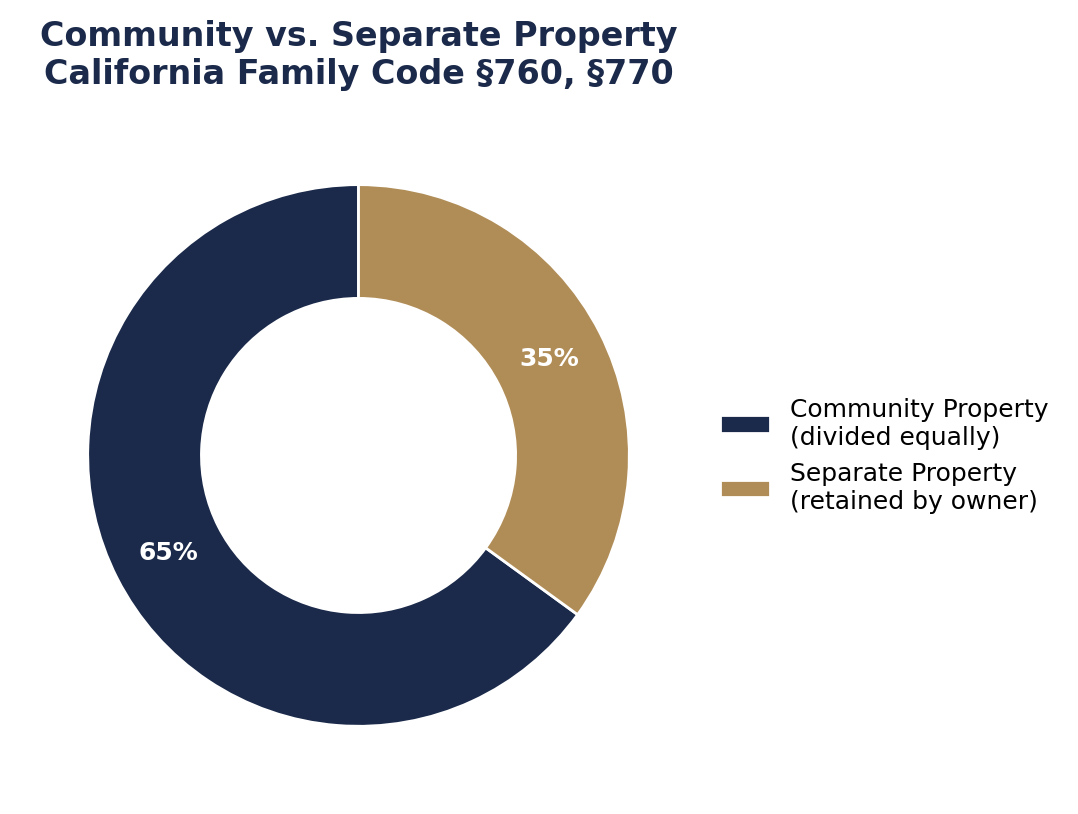
Figure 1: General community versus separate property division under California Family Code sections 760 and 770.
Dividing Retirement Accounts, Equity, and Business Interests
Pleasanton’s employment base includes many professionals with substantial retirement savings, whether through a traditional pension, a 401(k), or employer stock compensation. Dividing these accounts correctly usually requires a Qualified Domestic Relations Order, a separate court order that allows a retirement plan administrator to split the account between spouses without triggering an early withdrawal penalty or tax event. Getting the QDRO’s terms wrong, whether by miscalculating the marital share of a pension or overlooking a survivor benefit election, can cost a spouse tens of thousands of dollars long after the divorce is finalized, a topic we cover further in our guide to protecting your business during divorce when the underlying asset is an ownership interest rather than a retirement account.
A meaningful share of Pleasanton divorces also involve a spouse’s ownership interest in a business, whether a professional practice, a Tri-Valley small business, or a closely held family company. Valuing that interest typically requires a forensic accountant to separate the owner spouse’s personal labor contribution, which is generally treated differently than passive growth in the business’s value, and to account for any pre-marital ownership stake that should be treated as separate property.
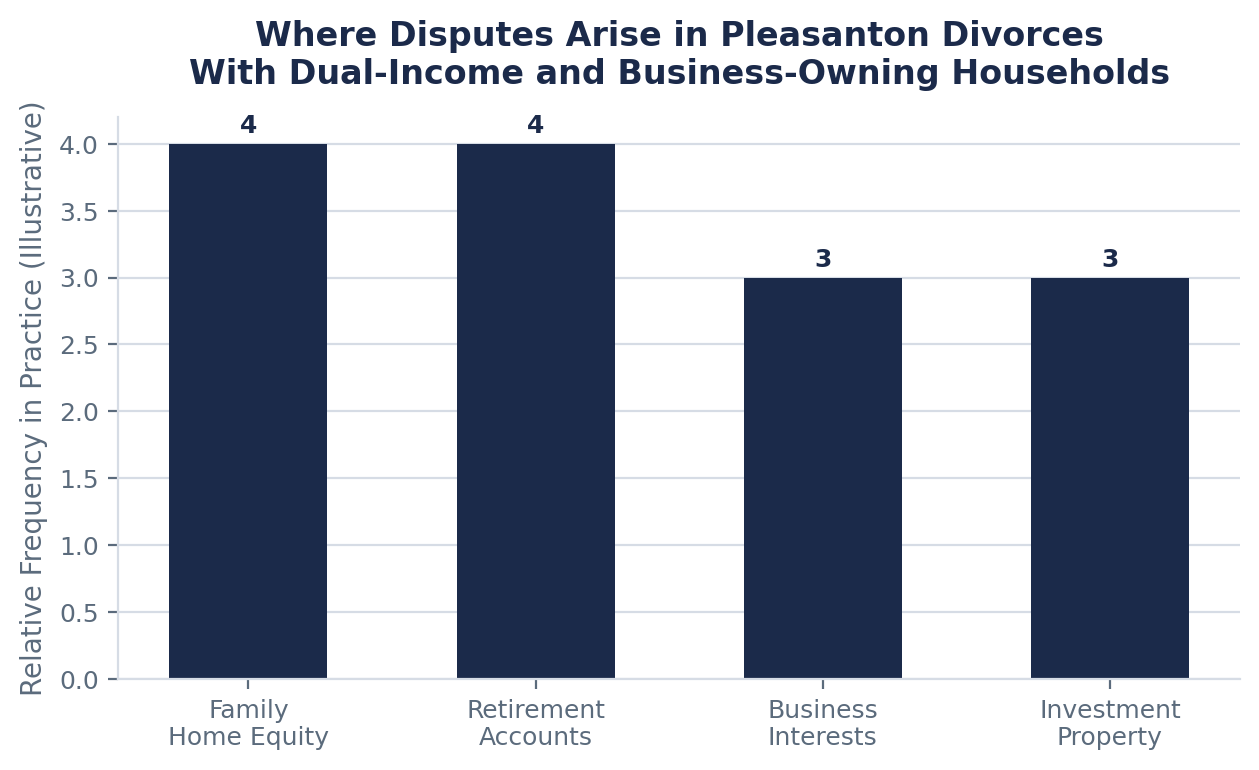
Figure 2: Where property division disputes most often arise in Pleasanton divorces (illustrative, based on case patterns).
Search Interest in Divorce Filing
Search interest in divorce representation across Pleasanton and the surrounding Tri-Valley cities remains steady, reflecting a population with a high concentration of dual-income households and above-median home values.
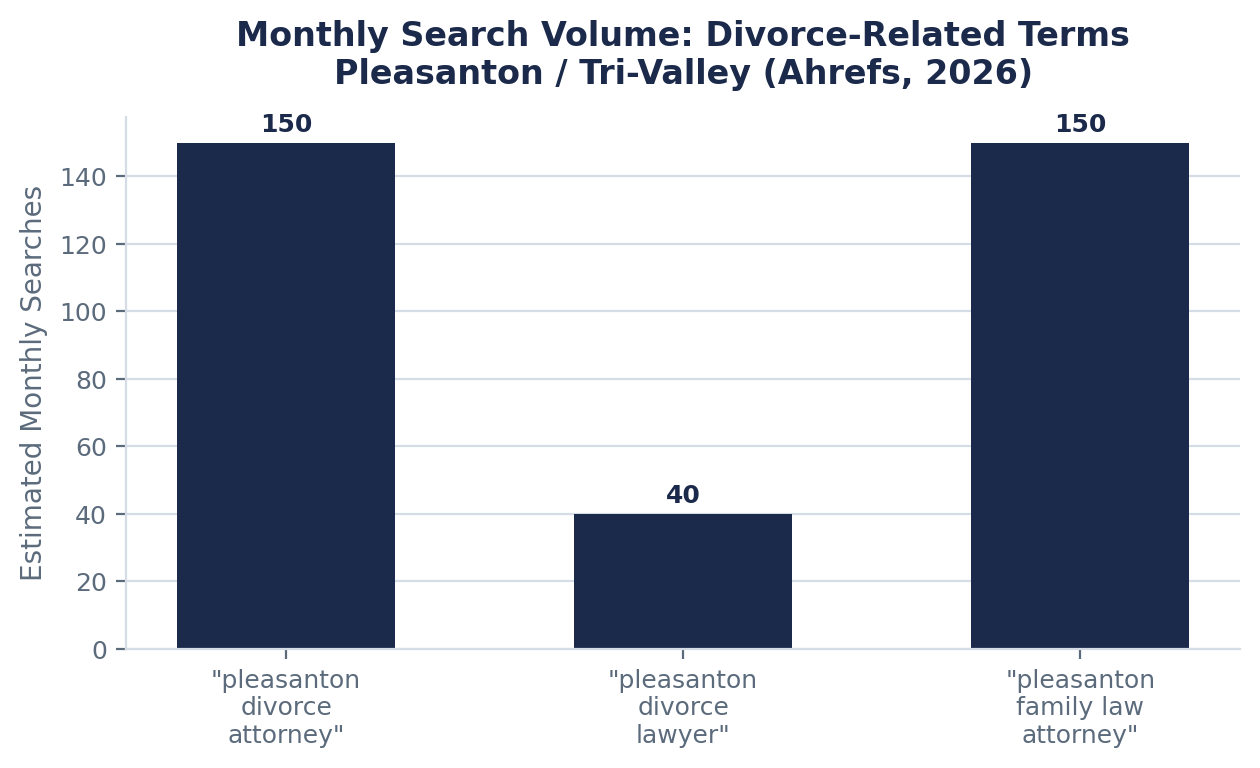
Figure 3: Estimated monthly search volume for divorce-related terms in the Pleasanton market (Ahrefs, 2026).
The Divorce Timeline for Pleasanton Filings
A Pleasanton divorce follows the same procedural sequence as any California dissolution, though filings and hearings now proceed through the Hayward Hall of Justice rather than a Pleasanton courthouse. After the petition is filed and served, the responding spouse has 30 days to respond. Both spouses then exchange Preliminary Declarations of Disclosure, listing all assets, debts, income, and expenses. From there, the case moves into discovery, where spouses typically produce and analyze retirement account statements, business records, and appraisals, followed by settlement negotiations or, if necessary, trial.
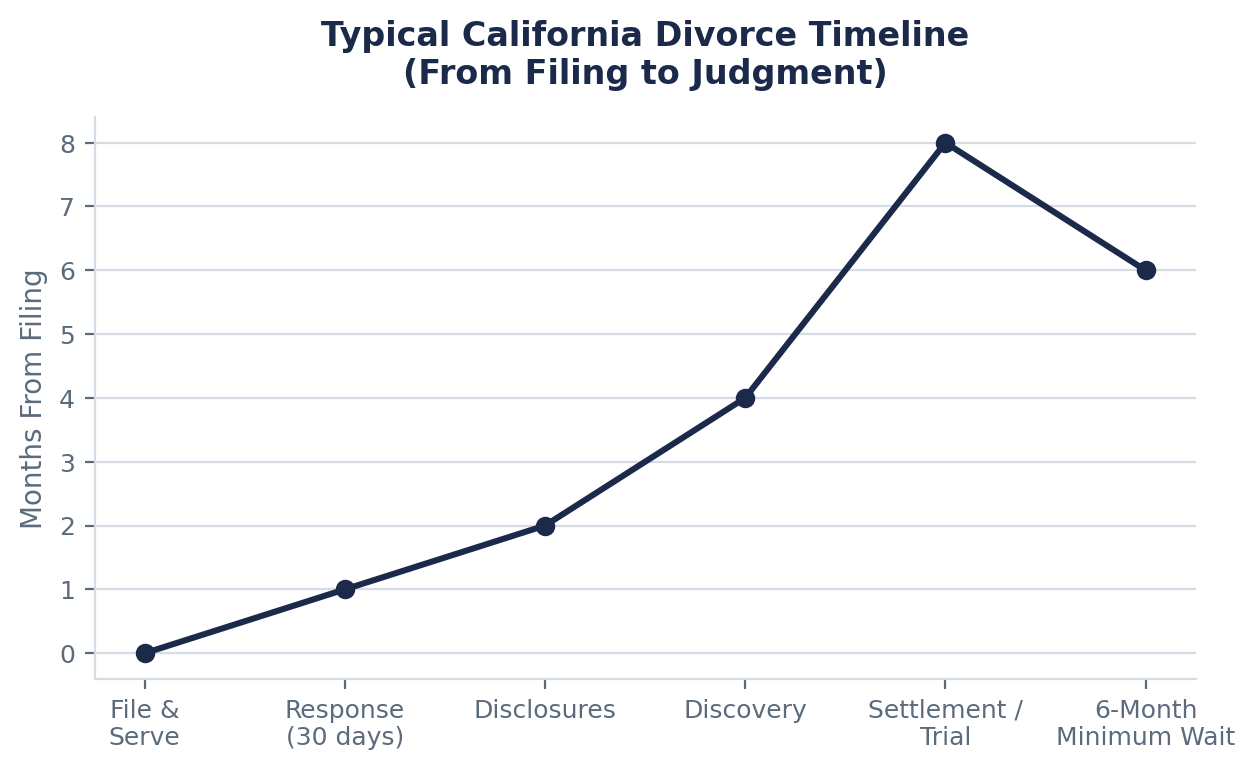
Figure 4: Typical elapsed time from filing to judgment in a California divorce with disputed property issues.
The Family Home in a Pleasanton Divorce
Pleasanton’s housing market, including sought-after neighborhoods like Ruby Hill, Birdland, and the Downtown core, often makes the family home the single largest community asset in a divorce. Spouses generally have three options: sell the home and divide the proceeds, have one spouse buy out the other’s equity share, or, in cases involving minor children, defer the sale under a deferred sale of home order so the children can remain in the home until a specified triggering event. Each option carries different tax consequences and different practical realities, particularly when refinancing to remove one spouse from an existing mortgage is not feasible at current interest rates.
Support and Custody Alongside Property Division
Most Pleasanton divorces involving significant assets also require the court to address spousal support and, where children are involved, child custody and child support, particularly given the number of Pleasanton Unified School District families navigating these cases. Support calculations become more complicated when a paying spouse’s income includes bonuses, stock vesting, or other variable compensation rather than a flat salary, since courts must decide how to average or annualize that income for support purposes. Wade Litigation coordinates the property division strategy with the support and custody strategy from the outset, since a settlement that resolves property division in isolation can create unintended consequences for support obligations later.
Comparison: Litigated Divorce vs. Negotiated Settlement
|
Factor |
Litigated Divorce |
Negotiated Settlement |
|
Typical Duration |
12 to 18+ months |
6 to 9 months |
|
Control Over Outcome |
Decided by judge |
Retained by spouses |
|
Asset Valuation |
Court-appointed expert |
Jointly retained or agreed expert |
|
Confidentiality |
Public court record |
Private negotiation |
Domestic Violence and Restraining Orders in a Pleasanton Divorce
When safety is a concern, a Pleasanton divorce sometimes proceeds alongside a request for a domestic violence restraining order. Unlike general family law filings, which now route through the Hayward Hall of Justice, restraining order matters remain local: the Gale-Schenone Hall of Justice on Stoneridge Drive in Pleasanton still hears domestic violence and civil harassment restraining order requests for Tri-Valley residents.
A restraining order can address more than physical safety, including temporary custody arrangements, exclusive use of the family home, and financial support while the underlying divorce proceeds. Wade Litigation represents both parties seeking protection and parties responding to a restraining order request, since a wrongly issued order can have serious, lasting consequences for later custody and property negotiations.
Working With Financial Professionals in a Complex Pleasanton Divorce
Divorces involving retirement accounts, business interests, and significant real property rarely resolve well without input from professionals outside the courtroom. A forensic accountant traces commingled funds and values a business or professional practice. A QDRO specialist drafts the retirement account division order so it survives the plan administrator’s review without costly delays or rejected submissions.
An appraiser establishes a defensible value for the family home or investment property when spouses disagree on its worth. Wade Litigation coordinates directly with these professionals throughout a case, sequencing their involvement so their reports arrive when needed for negotiation or trial, rather than incurring the expense of a full valuation before it is clear the issue will be contested.
Prenuptial and Postnuptial Agreements in Pleasanton Marriages
Given the concentration of pre-existing business ownership, inherited property, and significant retirement savings among Pleasanton residents entering a second marriage or a later-life marriage, prenuptial and postnuptial agreements come up often in this practice. California enforces these agreements under the Uniform Premarital Agreement Act, but only when both parties had adequate time to review the agreement, fully disclosed their finances, and each party either had independent counsel or knowingly waived that right. An agreement drafted hastily before a wedding, or without proper disclosure of a business interest or retirement account, is the kind most likely to be challenged and set aside later in a divorce.
Relocation and Custody Considerations Unique to the Tri-Valley
Pleasanton’s position along the I-580 and I-680 corridors, combined with a large share of residents commuting to jobs elsewhere in the Bay Area, means relocation requests come up more often in Tri-Valley custody disputes than in many other markets. A parent who accepts a job requiring a move out of the Pleasanton Unified School District, or even a substantial relocation within the region, must address how that change affects an existing custody schedule before moving, not after. California law does not automatically favor either the relocating parent or the parent staying behind, and the court’s analysis considers the reasons for the move alongside the impact on the child’s existing relationships and schooling.
What This Means for Your Case
If your marriage includes a pension, a 401(k) with a long vesting history, or an interest in a Tri-Valley business, the accuracy of your property characterization matters as much as the terms of your eventual settlement. Wade Litigation has represented clients whose initial case evaluation surfaced a survivor benefit election or a pre-marital ownership stake that changed the entire division strategy. Amiel Wade, founding attorney and recognized among the Top Ten California Family Law Attorneys, brings that pattern recognition to Pleasanton clients from the first consultation.

Objections We Commonly Address
Some Pleasanton clients delay contacting an attorney because they assume a long, seemingly stable marriage will divide itself fairly without much dispute, or because they worry that raising financial questions early will make an otherwise amicable separation more contentious. In practice, addressing retirement account division and business valuation early tends to shorten the overall timeline, since waiting until late in the case to obtain a QDRO or a business appraisal typically causes delays and renewed disputes.
What Happens When You Call
When you call Wade Litigation, a member of the client intake team will ask about your marriage date, separation date, and the types of income and assets involved so we can prepare the case evaluation in advance. During the case evaluation, you will speak directly with an attorney about your filing options, a preliminary view of how your property may be characterized, and what documentation to gather before your next step. You will leave the call with a clear understanding of your filing timeline and what to expect in the following 30 days.