A Palo Alto real estate litigation attorney represents owners, buyers, and co-owners in California real estate litigation, including boundary and easement disputes, partition actions among co-owners, and disputes arising from a purchase contract or disclosure failure. Given Palo Alto’s property values, even a narrow boundary dispute can carry significant financial stakes. Wade Litigation offers a case evaluation to review your dispute and outline your options.
A dispute over California real estate is a dispute about one of the most valuable assets most people own, and in Palo Alto, where median home values run well above the state average, that stakes-driven dynamic is especially pronounced. Whether the conflict involves a disputed property line with a neighbor, a co-owner who wants to force a sale, or a seller who concealed a known defect, Wade Litigation represents Santa Clara County property owners through negotiation, mediation, and litigation when necessary.
Common Real Estate Dispute Categories
Boundary and easement disputes arise when neighboring property owners disagree about where a property line actually falls, or about the scope of an easement granting one party the right to use part of another’s land, as we discuss further in resolving boundary line disputes in real estate. Partition actions allow a co-owner of real property to force a sale or physical division of the property when co-owners can no longer agree on how to use or dispose of it, a remedy that comes up often in Palo Alto among family members who inherited property jointly or unmarried partners who purchased together. Purchase contract disputes involve disagreements over financing contingencies, closing timelines, or a buyer’s attempt to back out of a deal. Disclosure failures involve a seller’s failure to disclose known material defects, a claim that carries particular weight in a market where buyers pay a premium expecting a property free of hidden problems.
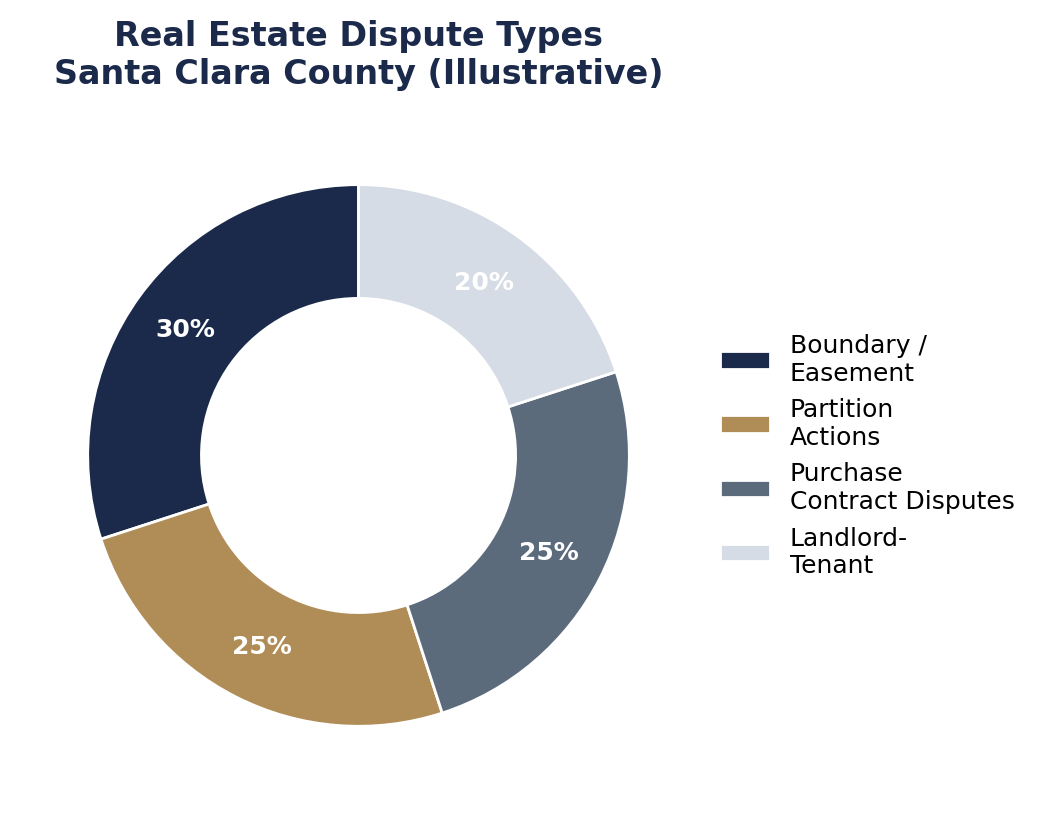
Figure 1: Real estate dispute types in Santa Clara County property litigation practice (illustrative).
Property Values and What Is at Stake
Palo Alto’s real estate market carries some of the highest per-square-foot values in the state, which changes the calculus around whether to litigate a real estate dispute at all. A boundary encroachment measured in a few feet, or a disclosure issue affecting a fraction of a property’s value, can represent a financial stake that dwarfs the litigation costs, making disputes that might be dismissed as minor elsewhere worth pursuing seriously in this market.
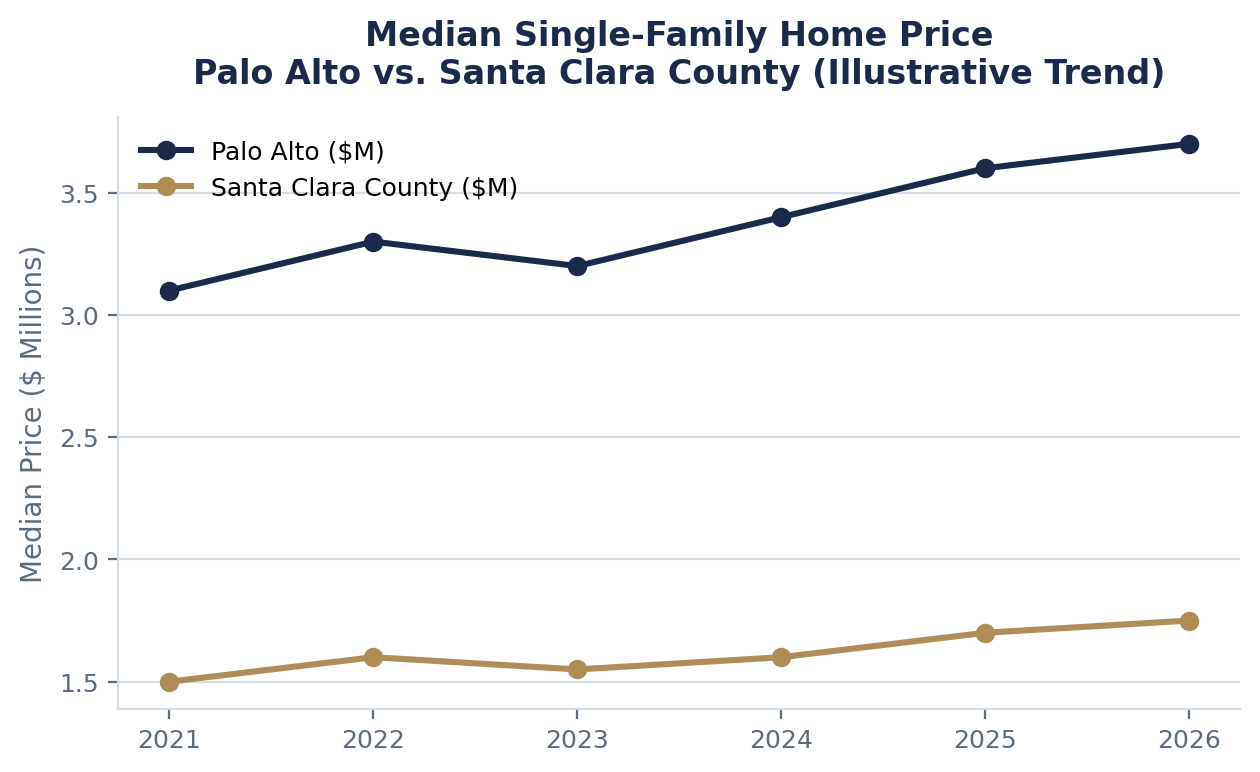
Figure 2: Illustrative median single-family home price trend, Palo Alto versus Santa Clara County overall.
Common Triggers for Real Estate Disputes
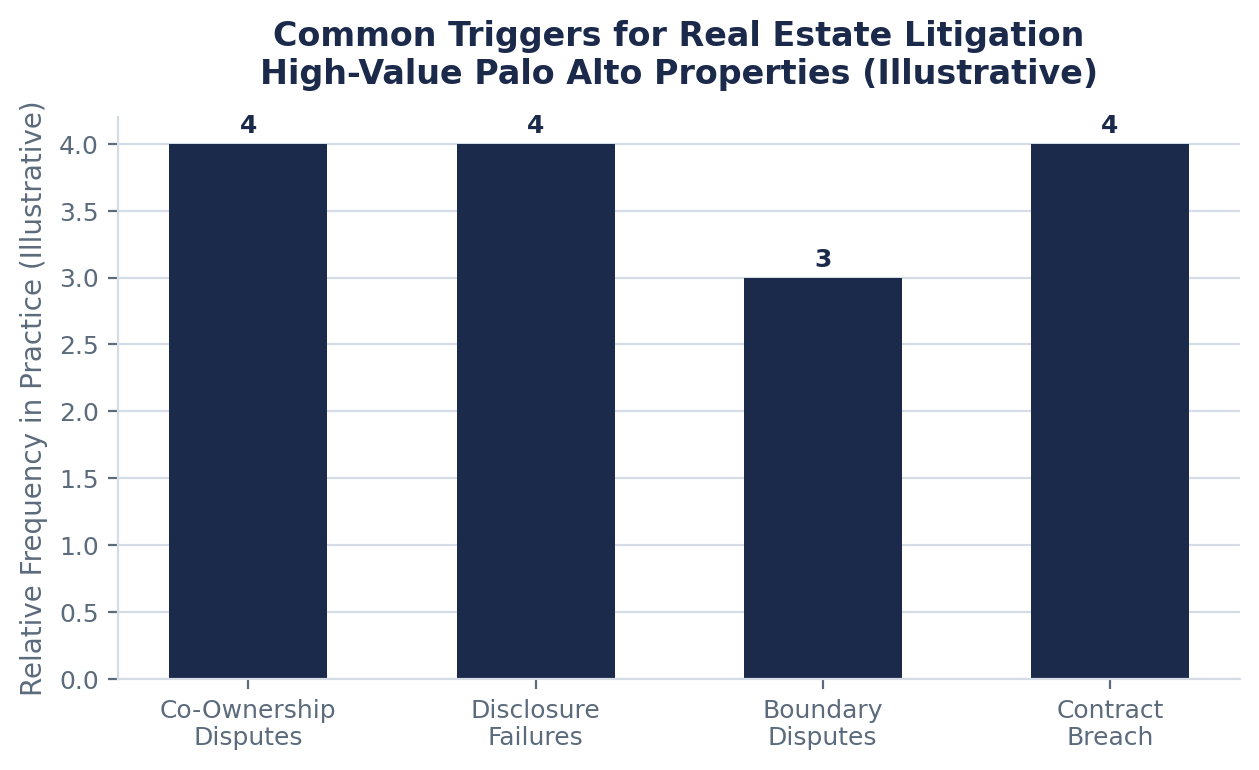
Figure 4: Common triggers for real estate litigation involving high-value Palo Alto properties (illustrative).
Partition Actions Among Co-Owners
When two or more people own real property together and cannot agree on whether to sell, refinance, or continue holding the property, California law allows any co-owner to file a partition action asking the court to divide the property or, more commonly for a single residence, order it sold with proceeds divided according to ownership share. Partition actions come up frequently among siblings who inherited a family home, including situations where the ownership dispute overlaps with a Palo Alto probate matter, as well as property disputes that arise during a Palo Alto divorce and disputes between business partners who jointly own investment property. The Uniform Partition of Heirs Property Act, adopted in California, adds additional procedural protections when the property was inherited, including a right of first refusal for co-owners who want to buy out the others before a forced sale.
Disclosure Obligations in California Real Estate Transactions
California law requires sellers to disclose known material facts about a property’s condition, including structural issues, past water intrusion, pest infestations, and any material facts affecting the property’s value or desirability. When a buyer discovers a defect after closing that the seller knew about and failed to disclose, the buyer can pursue claims for fraud, negligent misrepresentation, or breach of contract, depending on what the seller knew and when. These cases often turn on what the seller’s disclosure statement said and what evidence shows the seller knew about the defect beforehand.

Comparison: Boundary Dispute Resolution Options
Approach | What It Involves | Best Suited For |
Negotiated Boundary Agreement | Neighbors agree on a boundary line, often confirmed by survey | Cooperative neighbors |
Quiet Title Action | Court determines legal ownership of disputed area | Disputed legal ownership |
Adverse Possession Claim | Claim based on long-term, open use of disputed land | Long-standing encroachments |
Easement Disputes and Shared Access
Easement disputes involve one property owner’s legal right to use a portion of a neighboring property for a specific purpose, such as a shared driveway, a utility line, or access to a landlocked parcel. Conflicts arise when a property owner blocks an existing easement, expands their use of an easement beyond its original scope, or disputes whether an easement exists at all when it was never formally recorded. California recognizes both express easements, created by a written agreement or deed, and implied or prescriptive easements, which can arise from long-standing use even without a written document. Resolving these disputes often requires reviewing decades of title history and, in some cases, testimony from long-time neighbors about how a shared access point has actually been used over time.
Commercial and Investment Property Disputes
Beyond residential matters, Palo Alto’s commercial real estate market generates its own category of disputes, including commercial lease breaches, disputes over tenant improvement obligations, and conflicts between co-investors in commercial or multi-unit residential property. When these disputes also involve partnership, contract, or other business-related conflicts, our Palo Alto business litigation attorneys can address the related litigation issues. These disputes often involve more complex lease and partnership documents than residential matters, and typically carry higher financial stakes given the scale of commercial property values in this market.
Working With Real Estate Agents, Inspectors, and Third Parties
Real estate disputes do not always stay limited to buyer and seller. When a defect goes undisclosed, questions often follow about whether a real estate agent failed to disclose known issues, whether a home inspector missed something a reasonably competent inspection should have caught, or whether a contractor performed defective work that a subsequent owner later discovers. California allows claims against these third parties in appropriate circumstances, and identifying every potentially responsible party early, rather than focusing solely on the seller, can significantly affect the total recovery available in a disclosure or defect case.
What This Means for Your Case
Whether you are dealing with a boundary dispute, a co-ownership conflict, or a disclosure failure from a recent purchase, the documentation you gather early, surveys, disclosure statements, communications with the other party, shapes how quickly your dispute can resolve. Wade Litigation reviews the available evidence and your ownership documents early to identify the strongest path toward resolution.
Objections We Commonly Address
Property owners sometimes hesitate to pursue a real estate dispute because they assume the cost of litigation will exceed the value of the disputed issue, or because they hope an informal conversation with the other party will resolve things. In a market where even small boundary or disclosure issues carry significant financial weight, an early legal evaluation often reveals that pursuing the matter is worthwhile, and a well-documented demand can resolve many disputes before litigation becomes necessary.
What Happens When You Call
When you call Wade Litigation, the intake team will ask about your property, the nature of the dispute, and any documents you already have, such as a survey, title report, or purchase agreement. During your case evaluation, an attorney will review what you have and explain your realistic options for resolving the dispute.
Related Reading
For more on how California real estate disputes are resolved, see our guides on resolving boundary line disputes in real estate, property rights and easements in residential sales, and handling legal disputes over easements, along with our overview of commercial versus residential property rights.
Frequently Asked Questions
Explore Related Palo Alto Practice Areas
If your dispute involves co-owned property alongside a divorce or inheritance, see our Palo Alto divorce attorney page or our Palo Alto probate attorney page. You can also view our full Palo Alto office overview for every practice area we handle in Santa Clara County.
Speak With a Palo Alto Real Estate Litigation Attorney
Wade Litigation represents property owners across Santa Clara County in boundary, partition, and purchase contract disputes, backed by the firm’s recognized track record of seven 2026 industry awards. Call to schedule a case evaluation.