A Newport Beach divorce attorney helps spouses end a marriage under California’s no-fault system while dividing community property, including waterfront real estate, investment portfolios, and business interests common among Orange County’s coastal households. Wade Litigation represents clients throughout Newport Beach and offers a case evaluation to review filing requirements, timelines, and property exposure before filing any paperwork.
Newport Beach carries some of the highest property values in Orange County, and that reality shapes divorce practice here more than almost any other factor. A waterfront home on Balboa Island or in Corona del Mar, a boat slip, a family trust holding decades of accumulated wealth, or an ownership stake in a private business can each represent more value than an entire household’s net worth in a more typical California city.
Wade Litigation builds a property division strategy around these specific asset categories rather than treating every Newport Beach divorce as a standard checklist.
How California Divorce Law Applies in Newport Beach
California is a no-fault divorce state. Under Family Code section 2310, a spouse only needs to state that irreconcilable differences have caused the marriage to break down. Neither spouse has to prove wrongdoing, and the court will not consider fault when dividing property or setting support in most cases. Our California divorce law overview covers filing requirements in more depth. California also imposes a mandatory six-month waiting period from the date the respondent is served before a divorce can be finalized, regardless of how quickly the spouses reach agreement.
Newport Beach divorce filings are processed through the Superior Court of California, County of Orange. Notably, Newport Beach has its own courthouse, the Harbor Justice Center on Jamboree Road, but it handles only traffic and criminal matters. Family law cases, including divorce, are instead heard at the Lamoreaux Justice Center in Orange, meaning Newport Beach residents travel outside their own city for every family court appearance despite having a courthouse nearby.
California Is a Community Property State
California is also a community property state. Family Code section 760 defines community property as nearly everything either spouse acquires during the marriage, regardless of whose name is on the account or the paycheck. Separate property, defined under Family Code section 770, includes assets owned before marriage, inheritances, and gifts made to one spouse individually. The line between the two categories is where most Newport Beach divorce disputes happen, especially when trust distributions, business income, and commingled funds enter the picture.
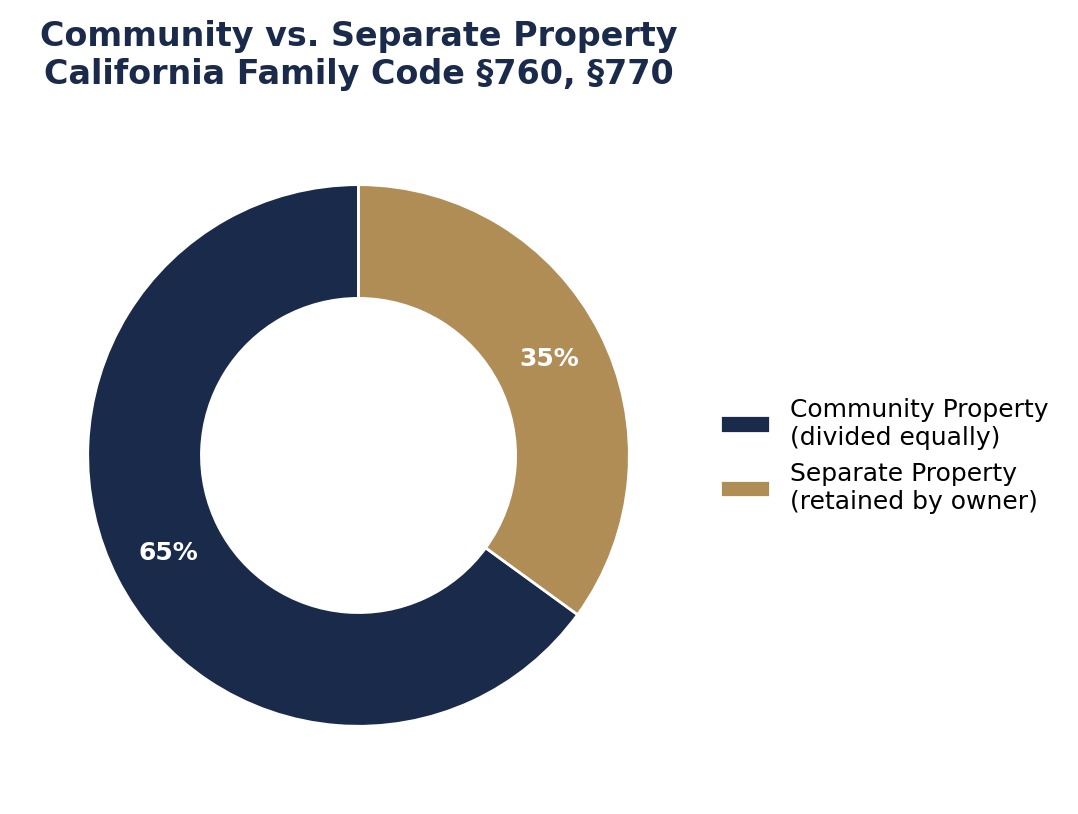
Figure 1: General community versus separate property division under California Family Code sections 760 and 770.
What Shapes a Newport Beach Property Division Strategy
No two Newport Beach divorces weigh the same factors identically, but a handful of considerations tend to drive strategy more than others: how complex the marital estate actually is, whether trust or estate planning structures overlap with the marital property, whether either spouse holds a business interest, and how quickly the parties need resolution.
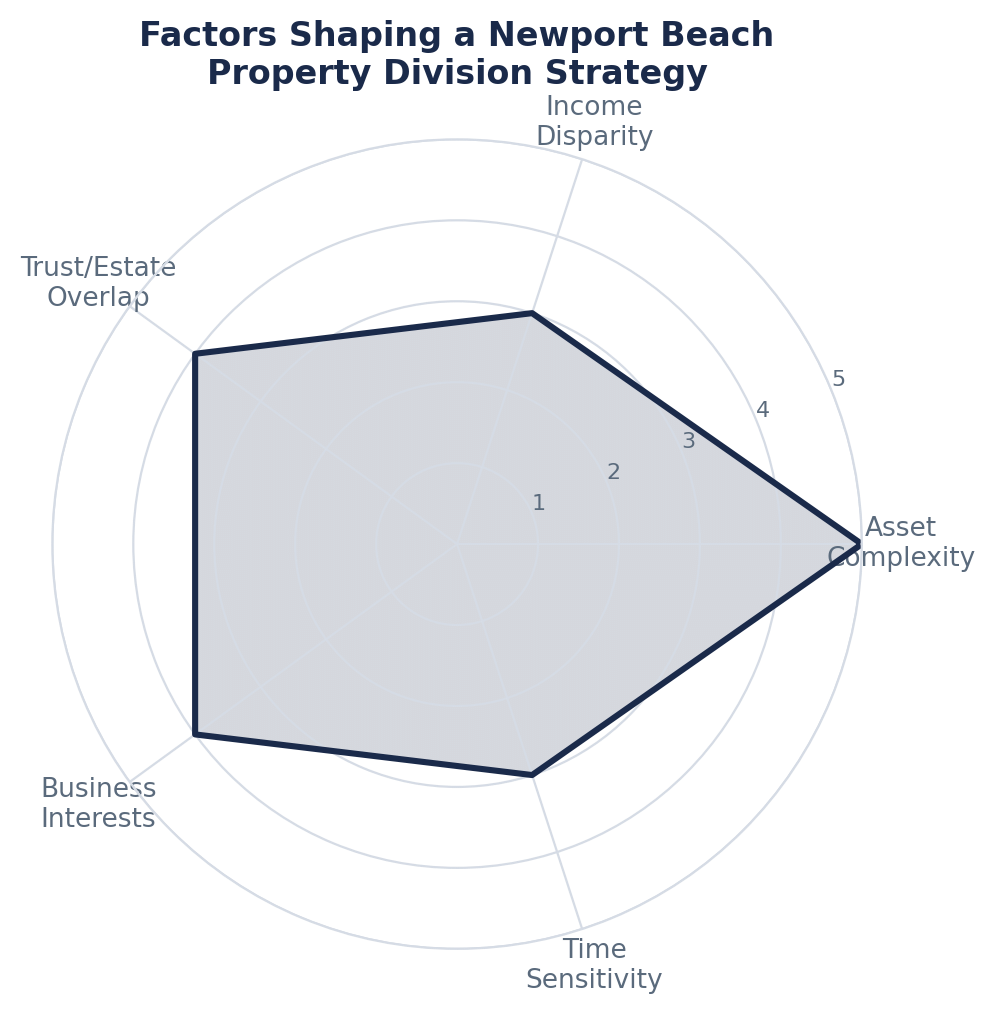
Figure 2: Relative weight of common factors shaping a Newport Beach property division strategy (illustrative).
Dividing Waterfront Property, Trusts, and Business Interests
Waterfront and harbor-adjacent property is where a large share of Newport Beach property division disputes concentrate, alongside investment portfolios, closely held business interests, and boats or other recreational assets that carry both a purchase price and ongoing carrying costs.
When one spouse owns or co-founded a business, the court must determine what portion of the business’s value is community property, which often requires a forensic accountant to separate the owner spouse’s labor contribution from passive growth in the company’s value, a process we outline further in our guide to protecting your business during divorce.
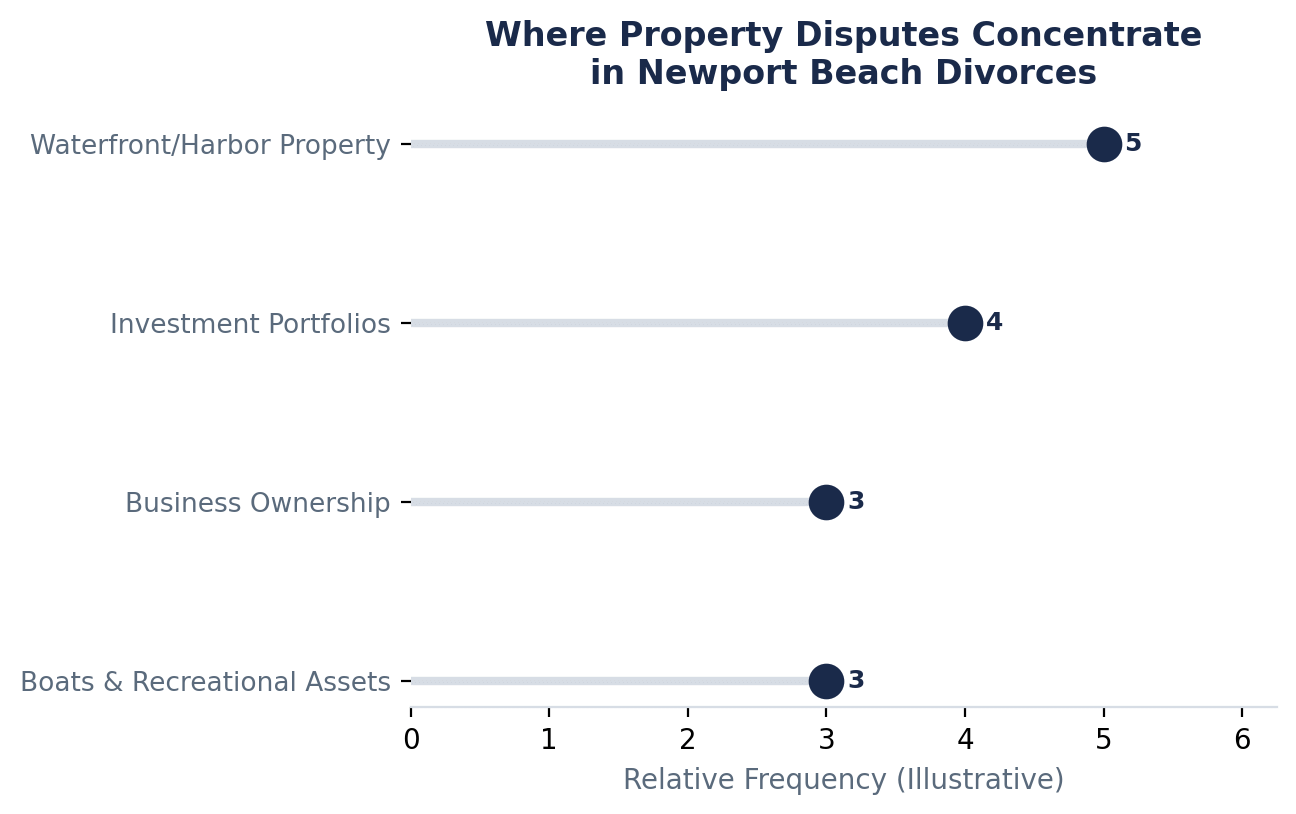
Figure 3: Where property division disputes most often concentrate in Newport Beach divorces (illustrative, based on case patterns).
Trusts and Estate Planning Structures in a Newport Beach Divorce
A meaningful share of Newport Beach marriages involve pre-existing trusts, whether a revocable living trust set up for estate planning purposes, an irrevocable trust established by a parent for a spouse’s benefit, or a family trust that predates the marriage entirely.
Distributions from a trust to one spouse during the marriage can raise difficult characterization questions: whether the distribution became community property upon receipt, whether the underlying trust corpus remains separate property regardless of distributions, and how income generated by trust assets should be treated for support purposes. These questions require careful review of the trust instrument itself, not just the distribution history, since trust language can vary considerably in how it defines a beneficiary spouse’s interest.

The Divorce Timeline in Orange County
A Newport Beach divorce follows the same procedural sequence as any California dissolution, but the discovery phase tends to run longer when trusts, business interests, or high-value real property require appraisal. After the petition is filed and served, the responding spouse has 30 days to respond.
Both spouses then exchange Preliminary Declarations of Disclosure, listing all assets, debts, income, and expenses. From there, the case moves into discovery, where trust documents, business records, and property appraisals are typically produced and analyzed, followed by settlement negotiations or, if necessary, trial.
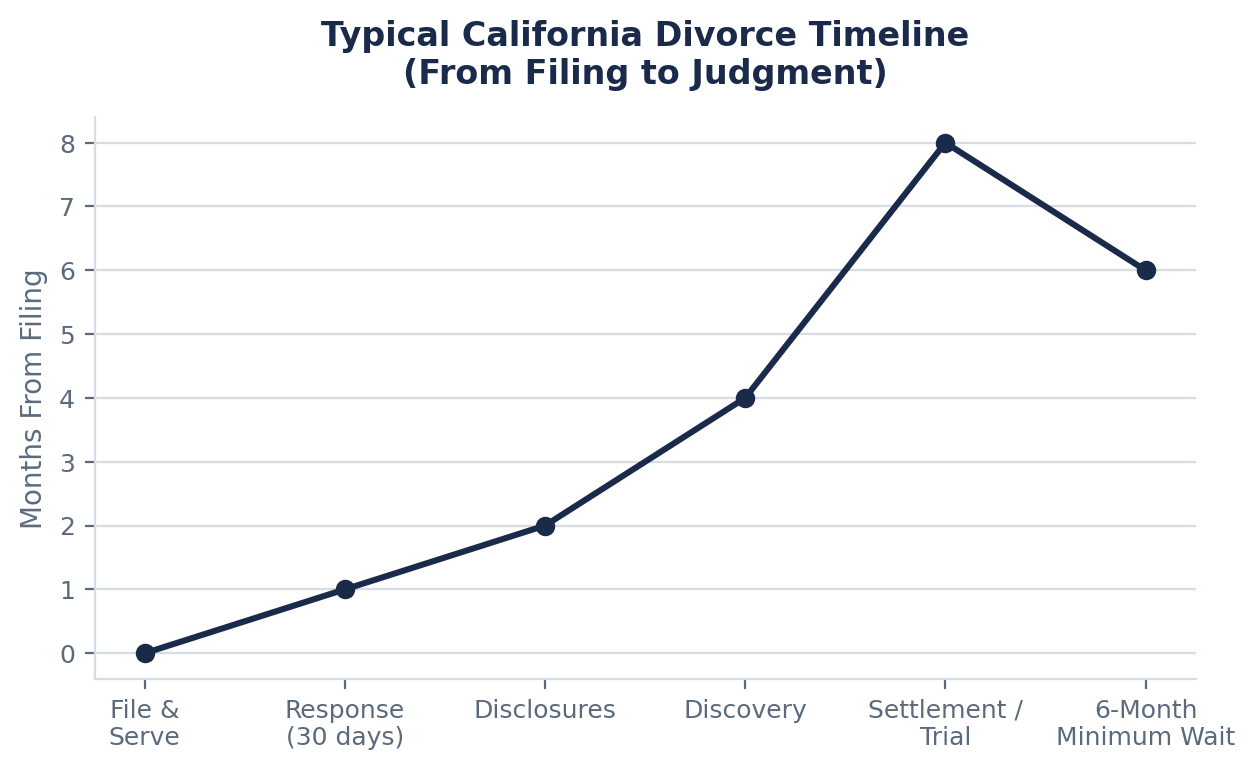
Figure 4: Typical elapsed time from filing to judgment in a California divorce with disputed property issues.
Support and Custody Alongside Property Division
Most Newport Beach divorces involving significant assets also require the court to address spousal support and, where children are involved, custody and child support. Support calculations become more complicated when a paying spouse’s income includes trust distributions, business profits, or investment returns rather than a flat salary, since courts must decide how to characterize and annualize that income for support purposes.
Wade Litigation coordinates the property division strategy with the support and custody strategy from the outset, since a settlement that resolves property division in isolation can create unintended consequences for later support obligations.
Comparison: Litigated Divorce vs. Negotiated Settlement
| Factor | Litigated Divorce | Negotiated Settlement |
| Typical Duration | 12 to 18+ months | 6 to 9 months |
| Control Over Outcome | Decided by judge | Retained by spouses |
| Asset Valuation | Court-appointed expert | Jointly retained or agreed expert |
| Confidentiality | Public court record | Private negotiation |
Prenuptial and Postnuptial Agreements
Given the concentration of family wealth, trust interests, and pre-existing business ownership among Newport Beach residents, prenuptial and postnuptial agreements come up often in this practice, both as planning tools and as documents at the center of a later dispute.
California enforces these agreements under the Uniform Premarital Agreement Act, but only when both parties had adequate time to review the agreement, fully disclosed their finances, and each party either had independent counsel or knowingly waived that right. An agreement drafted hastily before a wedding, or without proper disclosure of a trust interest or business holding, is the kind most likely to be challenged and set aside later in a divorce.
Domestic Violence and Restraining Orders
When safety is a concern, a Newport Beach divorce sometimes proceeds alongside a request for a domestic violence restraining order. As with other family law matters, the Lamoreaux Justice Center in Orange hears these requests rather than Newport Beach courts.
A restraining order can address more than physical safety, including temporary custody arrangements, exclusive use of the family home, and financial support while the underlying divorce proceeds. Wade Litigation represents both parties seeking protection and parties responding to a restraining order request, since a wrongly issued order can have serious, lasting consequences for custody and property negotiations later in the case.
Working With Financial Professionals in a Complex Divorce
Divorces involving trusts, business interests, and significant real property rarely resolve well without input from professionals outside the courtroom. A forensic accountant traces commingled funds and values a business or professional practice. An estate planning attorney may need to weigh in on how a trust instrument characterizes a beneficiary spouse’s interest.
An appraiser establishes a defensible value for waterfront property or a boat when spouses disagree on its worth. Wade Litigation coordinates directly with these professionals throughout a case, sequencing their involvement so their reports arrive when needed for negotiation or trial, rather than incurring the expense of a full valuation before it is clear the issue will be contested.
Relocation and Custody Considerations
Newport Beach’s international and out-of-state professional connections mean relocation requests come up regularly in custody disputes tied to a divorce, whether a parent is offered a position elsewhere or wants to move closer to extended family.
California law does not automatically favor either the relocating parent or the parent staying behind, and the court’s analysis considers the reasons for the move alongside the impact on the child’s existing relationships and schooling. Addressing a likely relocation scenario in the initial custody agreement, rather than waiting for it to arise later, tends to produce a more workable outcome for both parents.
What This Means for Your Case
If your marriage includes a trust interest, a business ownership stake, or waterfront property, the accuracy of your property characterization matters as much as the terms of your eventual settlement.
Wade Litigation has represented clients whose initial case evaluation surfaced a trust distribution question or a pre-marital ownership stake that changed the entire division strategy. Amiel Wade, founding attorney and recognized among the Top Ten California Family Law Attorneys, brings that pattern recognition to Newport Beach clients from the first consultation.
Confidentiality in High-Profile Divorces
Family court proceedings are generally public record, which concerns many Newport Beach clients whose business roles or public visibility make privacy a genuine priority. California law permits sealing certain filings under limited circumstances, and parties can agree to resolve disputes through private mediation or arbitration rather than public litigation, keeping the substance of financial and personal matters out of the public docket.
Wade Litigation discusses these options with clients early when privacy matters, since the choice between a public and private process should be deliberate rather than by default.
Objections We Commonly Address
Some Newport Beach clients delay contacting an attorney because they assume a long, seemingly stable marriage will divide itself fairly without much dispute, or because they worry that raising financial questions early will make an otherwise amicable separation more contentious. In practice, addressing trust characterization and business valuation early tends to shorten the overall timeline, since waiting until late in the case to review trust documents or obtain a business appraisal is what typically causes delay and renewed disputes.
What Happens When You Call
When you call Wade Litigation, a member of the client intake team will ask about your marriage date, separation date, and the types of income and assets involved so we can prepare the case evaluation in advance. During the case evaluation, you will speak directly with an attorney about your filing options, a preliminary view of how your property may be characterized, and what documentation to gather before your next step. You will leave the call with a clear understanding of your filing timeline and what to expect in the following 30 days.
Explore Related Newport Beach Practice Areas
If your divorce also involves children, see our Newport Beach child custody attorney page, or for the broader family law picture, our Newport Beach family law attorney page. You can also view our full Newport Beach office overview for every practice area we handle in Orange County.
Frequently Asked Questions
Speak With a Newport Beach Divorce Attorney
Wade Litigation has resolved matters involving trusts, business interests, and significant real property for Orange County families, including the firm’s own reported track record: seven 2026 industry awards and recognition of Amiel Wade among the Top Ten California Family Law Attorneys. Call to schedule a case evaluation and get a clear view of how your property will be characterized before you file.