A San Jose business litigation attorney represents founders, partners, and companies in disputes filed in Santa Clara County Superior Court, including partnership and shareholder disputes, contract breaches, and trade secret and vendor agreement disputes. As the capital of Silicon Valley, San Jose generates a distinct mix of business disputes: technology company disagreements, manufacturing and supply chain conflicts, and disputes among the region’s long-standing family-owned businesses. Wade Litigation offers a case evaluation to review your dispute and outline a resolution strategy.
Business litigation in San Jose reflects a city that is both the largest municipality in Silicon Valley and home to a deep base of manufacturing, retail, and family-owned businesses that predate the technology industry’s arrival. Disputes here frequently involve founder equity splits, breach of fiduciary duty among co-founders or partners, trade secret misappropriation between competing technology companies, and vendor or supply agreement disputes tied to manufacturing operations, alongside the more familiar categories of contract breach that arise in any business.
Common Business Dispute Categories in San Jose
Partnership and shareholder disputes arise when co-founders or business partners disagree about company direction, compensation, equity splits, or an exit strategy, a topic covered further in our guide to business disputes: a guide for shareholders and partners. Contract breaches cover failures to perform under vendor agreements, licensing deals, and service contracts. Trade secret disputes involve departing employees who allegedly take proprietary information to a competitor or new venture, a category that carries particular weight in a region built on proprietary technology.
Where San Jose Business Disputes Are Filed
Business litigation for San Jose companies proceeds through the Superior Court of California, County of Santa Clara, generally at the Downtown Superior Courthouse on West Hedding Street. Larger or more complex business disputes may be assigned to the court’s complex civil litigation program, which handles cases requiring specialized case management given their scale or technical complexity.
How a Business Dispute Narrows Toward Resolution
A business dispute rarely proceeds in a straight line to trial. From the point a disagreement first arises, a case typically narrows at each stage: many disputes resolve through a demand letter or direct negotiation, others settle during mediation, and only a small fraction ultimately require a trial.
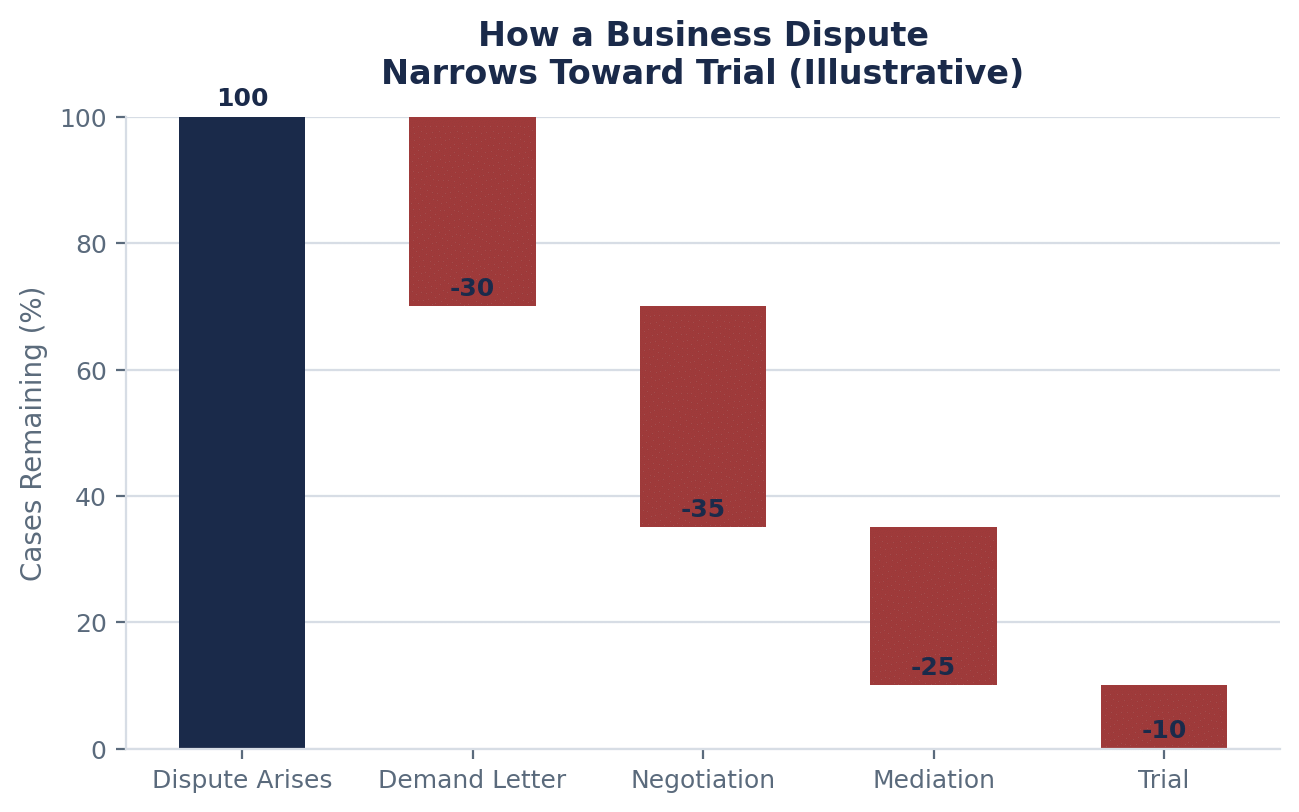
Figure 1: Illustrative progression of a business dispute from initial disagreement to trial.
How Dispute Type Affects the Timeline
Not every business dispute resolves at the same pace. A vendor dispute with clear contractual terms often resolves faster than a trade secret case, which typically requires more extensive discovery and expert analysis to establish misappropriation.
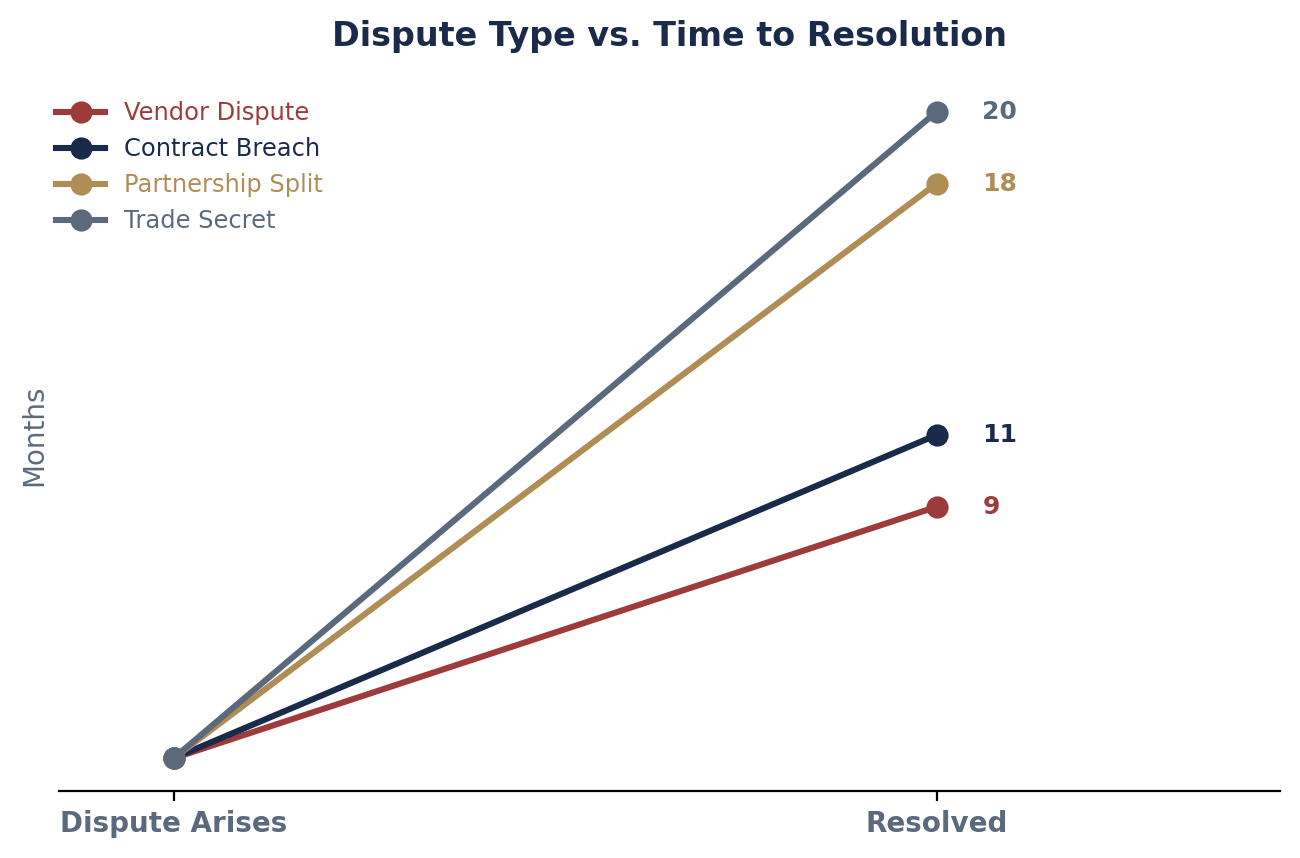
Figure 2: How dispute type affects the typical timeline from dispute to resolution (illustrative).
Founder Dispute Outcomes
Founder and partner disputes follow a recognizable pattern of their own: most disputes never reach a courtroom, with a meaningful share resolving through a negotiated buyout once the parties recognize continuing the partnership is no longer workable, and only a smaller share proceeding all the way to a litigated judgment.
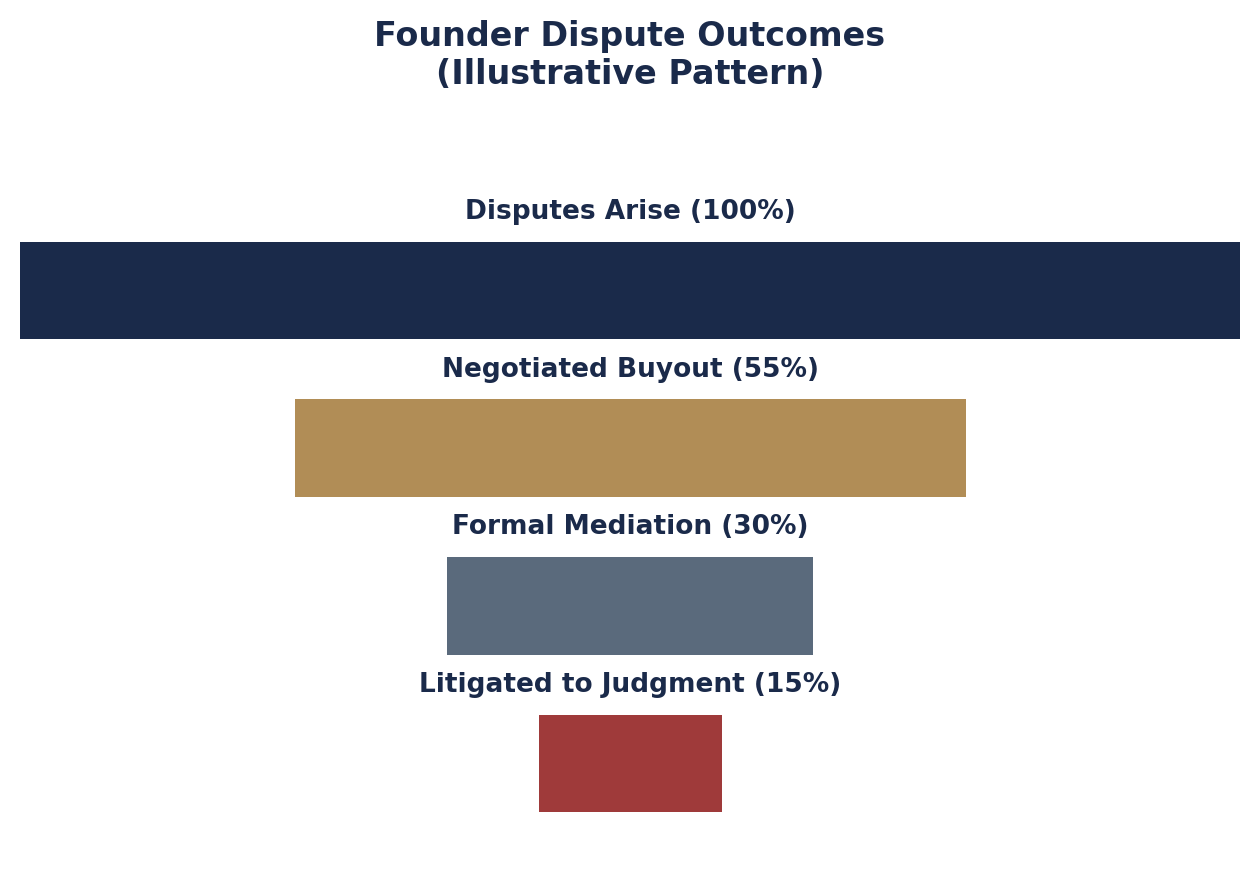
Figure 3: Illustrative pattern of how founder and partner disputes resolve over time.
Common Grounds for Partner and Founder Disputes
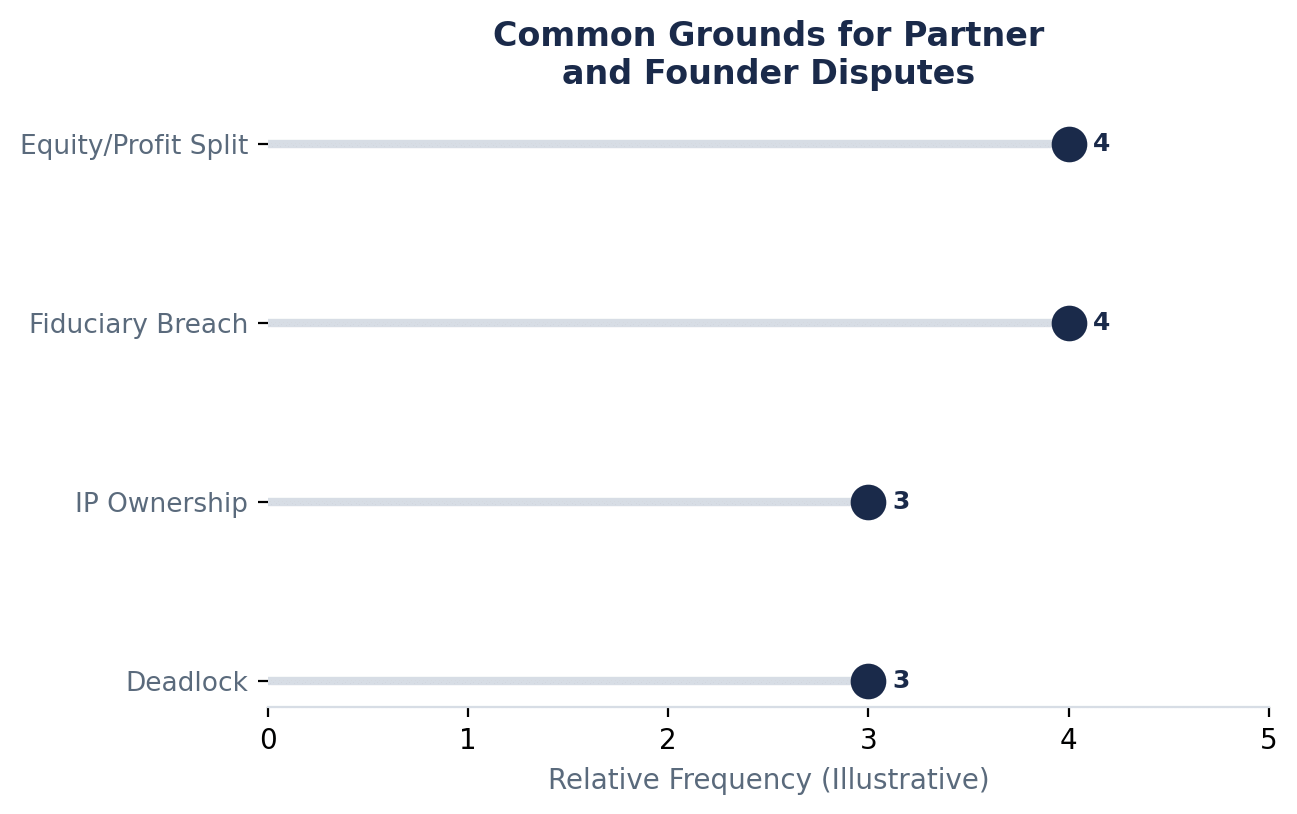
Figure 4: Common grounds for founder and partner disputes among San Jose businesses (illustrative).
Breach of Fiduciary Duty Among Business Partners
Business partners, co-founders, and majority shareholders owe fiduciary duties to each other and, in some structures, to minority shareholders. These duties include the duty of loyalty, which prohibits self-dealing and competing against the company, and the duty of care, which requires reasonable diligence in managing company affairs.
When a partner diverts a business opportunity, takes an undisclosed side payment, or otherwise puts personal interests ahead of the company’s, the harmed partners or shareholders can pursue a breach of fiduciary duty claim seeking damages or equitable remedies.
Protecting Trade Secrets and Confidential Information
California’s Uniform Trade Secrets Act protects confidential business information that derives independent economic value from not being generally known and that the company has taken reasonable steps to protect. When a departing employee or competitor is suspected of misappropriating trade secrets, the company must move quickly to preserve evidence and seek injunctive relief before the information spreads further.
Notably, California generally does not enforce employee non-compete agreements under Business and Professions Code section 16600, which shapes how San Jose companies protect their proprietary information: through trade secret protection, confidentiality agreements, and narrowly drafted non-solicitation terms rather than broad non-competes.
Comparison: Arbitration vs. Litigation for Business Disputes
| Factor | Arbitration | Litigation |
| Confidentiality | Private proceedings | Public court record |
| Typical Duration | 6 to 12 months | 14 to 24+ months |
| Appeal Rights | Very limited | Full appellate review |
| Applicability | Only if agreement requires it | Default absent an arbitration clause |
Employment-Related Business Disputes
Business litigation and employment disputes frequently overlap when a departing employee is also a business partner, shareholder, or holds a leadership role at the company. Disputes in this category include claims over unpaid commissions or bonuses tied to company performance, disagreements about whether a departing executive is entitled to accelerated vesting of equity compensation, and, in some cases, allegations that a terminated employee’s departure was actually a pretext to avoid an obligation owed to them under an employment or partnership agreement. These matters require careful attention to both the employment relationship and any separate ownership or partnership documents that may govern the same dispute.
Manufacturing and Supply Chain Disputes
San Jose’s business community includes many companies that depend on manufacturing relationships and supply agreements to operate, a legacy of the region’s industrial base that predates its technology reputation. Disputes arise when a supplier fails to deliver goods to the agreed specification or timeline, when pricing or exclusivity terms in a long-term supply agreement are allegedly violated, or when one party attempts to terminate an agreement without following the contract’s required notice procedures. These disputes often hinge on the contract’s precise wording, so a careful review of the agreement’s termination, warranty, and remedy provisions is the first step before deciding whether to pursue litigation or seek a negotiated resolution.
Commercial Lease and Real Property Disputes Tied to Business Operations
Many business disputes in San Jose intersect with commercial real estate, since a company’s ability to operate often depends on its lease terms or the property it occupies. Common disputes include disagreements over tenant improvement obligations, disputes over common area maintenance charges in a shared commercial or industrial development, and conflicts that arise when a landlord tries to terminate a lease early or a tenant tries to exit before the lease term ends. These disputes require close review of the lease’s specific default, remedy, and notice provisions, since commercial leases are typically negotiated documents with far more variation than a standard residential lease.
Investor and Venture Capital Disputes
A category unique to this market involves disputes between founders and their investors, including claims that a venture capital investor breached the terms of a term sheet or investment agreement, disagreements over board control and voting rights, and disputes arising when a down round or recapitalization dilutes existing shareholders in ways they believe violate their contractual protections. These disputes require careful reading of complex investment documents, including preferred stock provisions, anti-dilution clauses, and protective voting rights, since a single defined term buried in a term sheet can determine which side has the stronger legal position.
Choosing Between Litigation, Mediation, and Direct Negotiation
Not every business dispute calls for the same resolution path, and choosing the wrong one wastes both time and money. Direct negotiation between the parties, sometimes with counsel present but without a formal process, works best when the relationship remains largely intact and the dispute is narrow.
Mediation introduces a neutral third party to help the sides reach a voluntary agreement, and works well when the parties are far apart on specifics, but both genuinely want to resolve the matter. Litigation becomes necessary when one side refuses to negotiate in good faith, when the facts are genuinely disputed and require a formal fact-finding process, or when a party needs the coercive power of the court, such as an injunction, that a negotiated agreement cannot provide. Wade Litigation makes this assessment early in every engagement rather than defaulting to litigation as the first option.
Preserving the Business Relationship Where Possible
Not every business dispute needs to end the underlying relationship. When a dispute arises between partners who still see value in continuing to work together, or between a company and a vendor it depends on for ongoing operations, Wade Litigation looks for resolution paths that address the immediate conflict without unnecessarily destroying a relationship that has value beyond the current disagreement. This is not always possible, particularly in fiduciary duty and trade secret cases where trust has broken down completely, but when it is, it typically produces a faster and less expensive outcome than full litigation.
Business Succession Disputes in Family-Owned Companies
San Jose’s business community includes many family-owned enterprises that predate the region’s technology reputation by decades, and disputes over succession planning among these businesses are among the more emotionally complex matters this practice handles.
A buy-sell agreement drafted years earlier may include a valuation formula that the remaining owners now consider unfair, or a succession plan may have been discussed informally but never properly documented, leaving ambiguity about what was actually promised to a departing or retiring owner. Wade Litigation reviews the underlying governance documents, whether an operating agreement, shareholder agreement, or buy-sell agreement, to determine what was actually agreed to before recommending whether to enforce, renegotiate, or challenge its terms.
Choosing Litigation Counsel for a Growing Company
A growing San Jose company benefits from an attorney who understands both the litigation and the business context: how a lawsuit against a vendor might affect an ongoing customer relationship, how a founder dispute might be viewed by current or future investors during diligence, and how quickly a matter needs to resolve to avoid disrupting day-to-day operations. Wade Litigation factors these business realities into its litigation strategy recommendations, rather than treating every dispute as an isolated legal question.
What This Means for Your Case
Whether you are a founder facing a dispute with a co-founder, a company protecting trade secrets from a departing employee, or a business dealing with a breached contract, the strength of your written agreements and documentation often determines how quickly the dispute resolves. Wade Litigation reviews your existing agreements and the facts of your dispute early to identify the strongest path toward resolution.
Objections We Commonly Address
Founders and business owners sometimes avoid pursuing a dispute because they worry about the cost of litigation relative to a young company’s resources, or because they fear that suing a co-founder or partner will damage the company’s reputation with investors or customers. In many cases, resolving a founder dispute quickly and privately, before it becomes public or affects company operations, protects the business more than avoiding the conflict does.
What Happens When You Call
When you call Wade Litigation, the intake team will ask about your company, the nature of the dispute, and any governing agreements already in place, such as an operating agreement, shareholder agreement, or employment contract. During your case evaluation, an attorney will assess your position and outline whether negotiation, arbitration, or litigation is the most effective path forward.
Explore Related San Jose Practice Areas
If your dispute involves general contract or property issues rather than a business partnership, see our San Jose civil litigation attorney page, or if an appeal is on the table, our San Jose appeals attorney page. You can also view our full San Jose office overview for every practice area we handle in the South Bay.