A San Jose appeals attorney represents clients challenging a Santa Clara County Superior Court judgment before California’s Sixth District Court of Appeal in both civil and family law matters. An appeal is not a retrial. It is a legal argument that the trial court made a reversible error, and success depends on identifying that error and preserving it correctly in the trial record. Wade Litigation offers a case evaluation to assess whether your case presents strong grounds for appeal.
Losing at trial does not necessarily mean the case is over. California law allows a party to appeal a final judgment to the Court of Appeal, but an appeal is fundamentally different from a second trial. Appellate courts do not re-hear witness testimony or re-weigh evidence the way a trial court does. Instead, they review the trial court record for legal errors, procedural mistakes, or an abuse of discretion that affected the outcome. San Jose and the rest of Santa Clara County fall within California’s Sixth District Court of Appeal, headquartered in downtown San Jose itself, giving San Jose litigants direct proximity to the appellate court that most other South Bay cities do not share. Wade Litigation represents both appellants challenging a judgment and respondents defending one.
Grounds for a Civil Appeal
Not every unfavorable outcome supports a viable appeal. Appellate courts generally require a showing of legal error, meaning the trial court misapplied the law; an abuse of discretion, meaning the trial court’s decision fell outside the range of reasonable choices available to it; insufficient evidence to support a factual finding; or a procedural error that prejudiced the outcome of the case. We walk through these grounds in more detail in identifying grounds for appeal in civil litigation. Identifying which of these grounds applies to your case, and whether you properly preserved the issue for appeal by objecting at the right time during trial, is the first and most important step in evaluating an appeal.
Where San Jose Appeals Are Heard
California’s Sixth District Court of Appeal hears appeals from Santa Clara County Superior Court judgments, including cases originating from the Downtown Superior Courthouse on West Hedding Street, and sits in downtown San Jose. This is a separate court from the trial court that issued the original judgment, staffed by a different panel of justices whose role is limited to reviewing the trial record for legal error rather than reconsidering the facts.
How Civil Appeals Narrow to a Final Decision
Filing a notice of appeal is only the first step in a process that narrows considerably before reaching a final decision. Most appeals that clear the initial notice deadline proceed through full briefing, but fewer reach oral argument, and only a portion of those result in a reversal or modification of the trial court’s judgment.
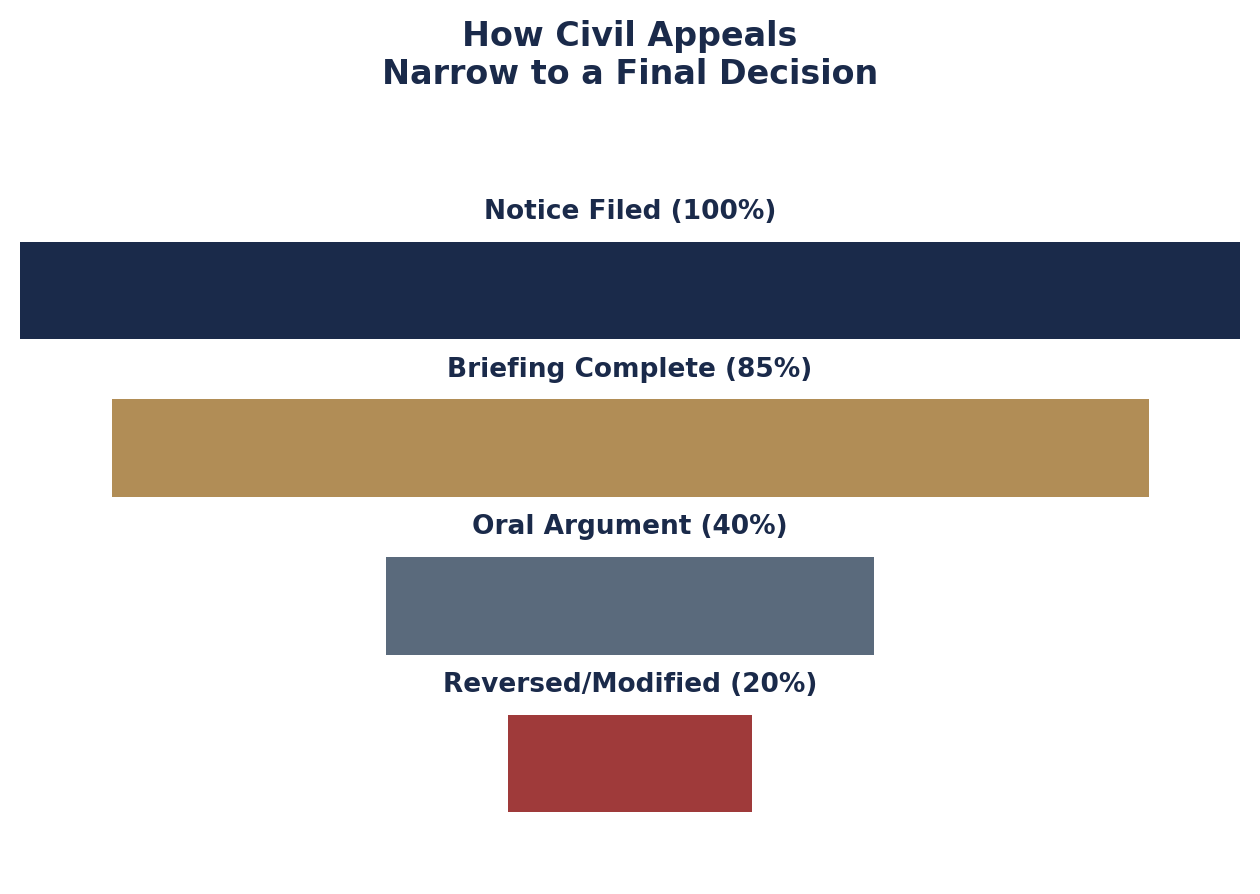
Figure 1: Illustrative progression of a civil appeal from notice of appeal to final decision.
Time Elapsed Across the Appellate Process
An appeal moves through several distinct phases, each adding to the overall timeline before a final decision arrives.
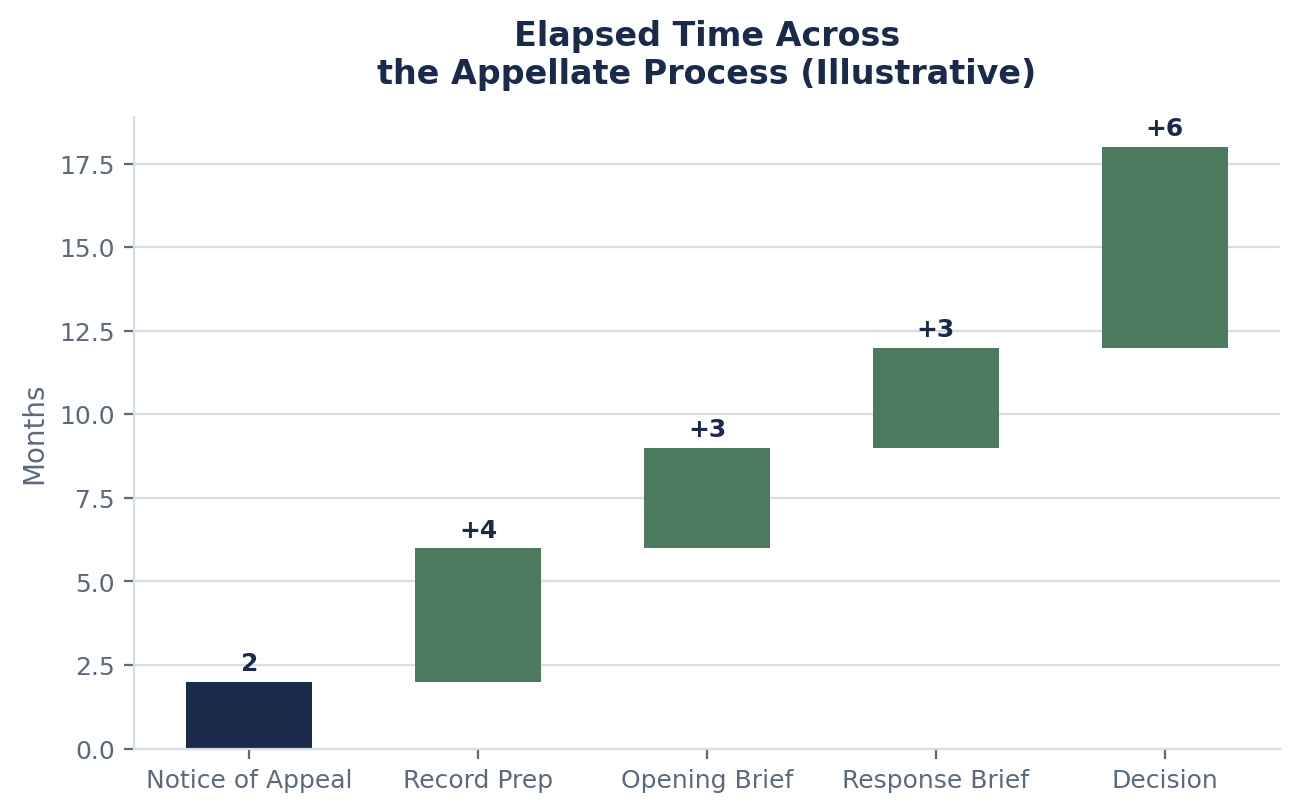
Figure 2: Illustrative elapsed time across each phase of the California appellate process.
Standard of Review and Reversal Likelihood
Not every issue on appeal is reviewed the same way, and understanding which standard applies to a given argument shapes how strong that argument actually is. Pure legal questions are reviewed de novo, meaning the appellate court considers the question fresh without deferring to the trial court’s conclusion, and these arguments tend to succeed more often than arguments asking the court to revisit a factual finding or a discretionary ruling.
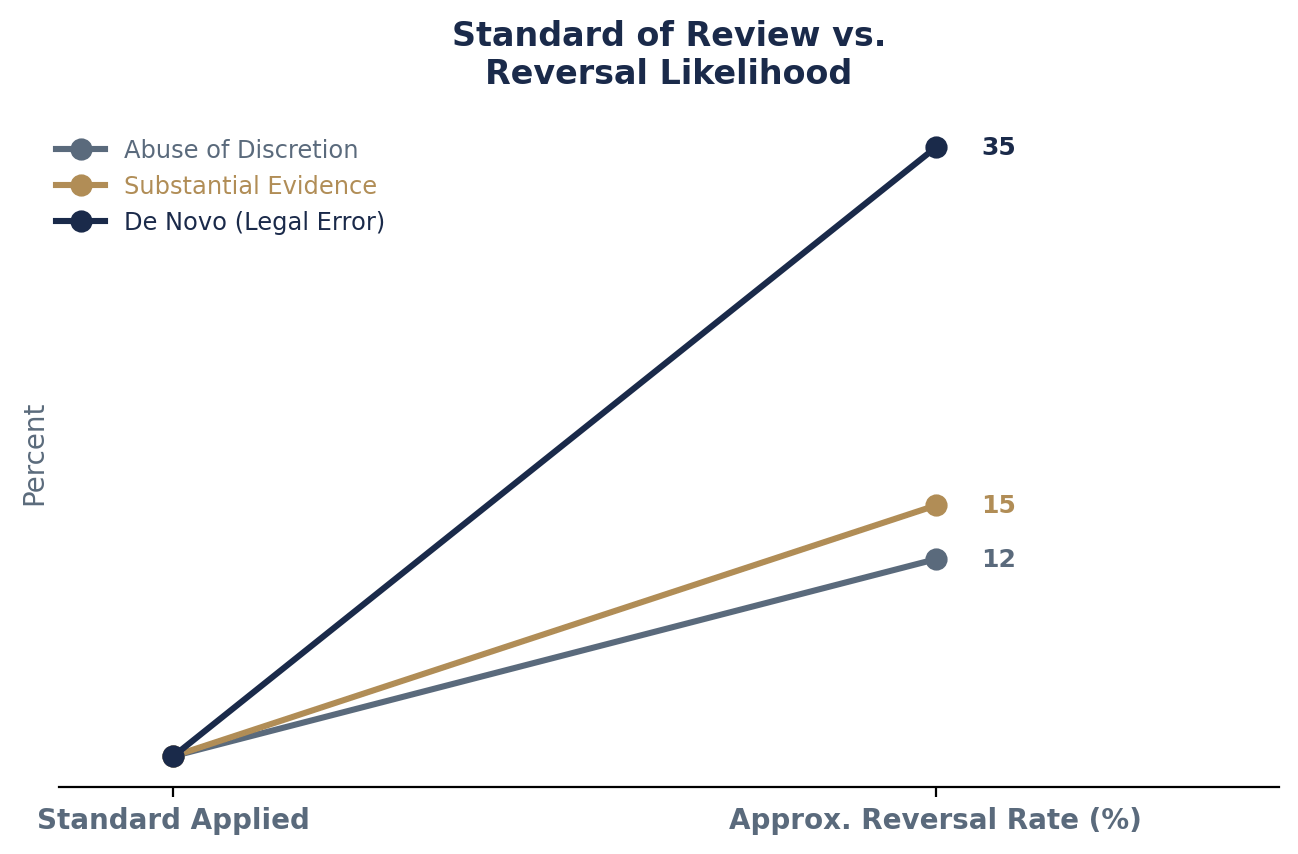
Figure 3: Illustrative relationship between the standard of review applied and approximate reversal likelihood.
Appeal Grounds by Case Type
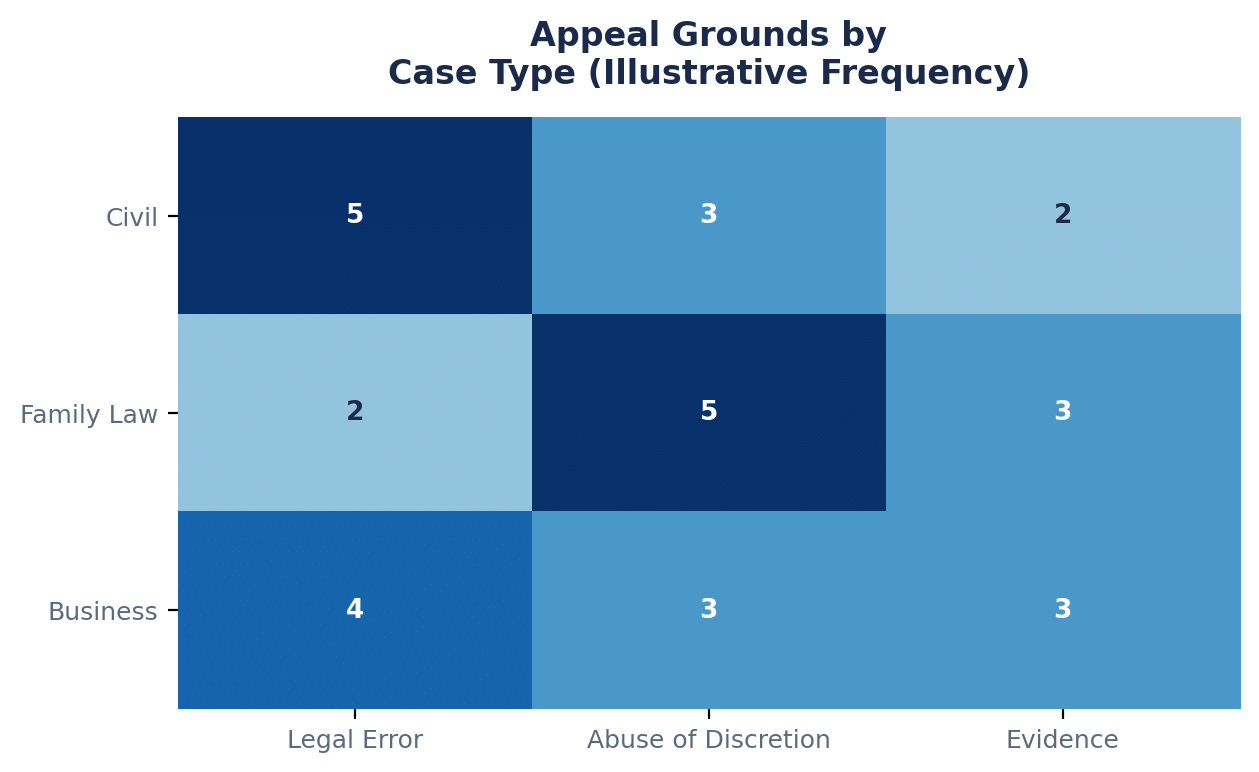
Figure 4: Illustrative frequency of appeal grounds by case type before California Courts of Appeal.
The Civil Appeal Timeline
An appeal begins with a notice of appeal, which must generally be filed within 60 days of the entry of judgment or the denial of a post-trial motion, a deadline that California courts enforce strictly and that cannot be extended for most civil cases. Once the notice is filed, the appellant must prepare the appellate record, consisting of the trial court transcripts and relevant filings. The appellant then files an opening brief laying out the legal arguments for reversal, the respondent files a brief defending the judgment, and the appellant typically has an opportunity to file a reply. Most appeals are decided on the written briefs alone, though the court may schedule oral argument before issuing its written decision.
Preserving Issues for Appeal During Trial
One of the most consequential mistakes a party can make happens long before any appeal is filed: failing to object to an error at trial, which can waive the right to raise that issue on appeal. Appellate courts generally will not consider an argument that was not first raised in the trial court, with narrow exceptions for certain types of fundamental error. This is why the strongest appeals often trace back to careful trial counsel who understood, while the case was still being tried, which rulings might later need to be challenged and made sure to object on the record at the right moments.
Comparison: Appealing a Judgment vs. Filing a Post-Trial Motion
| Factor | Post-Trial Motion | Appeal |
| Filed With | Trial court | Court of Appeal |
| Typical Deadline | 15 to 30 days after judgment | 60 days after judgment |
| Scope of Review | Same judge reconsiders | New panel reviews for legal error |
| Typical Duration | 1 to 3 months | 12 to 18+ months |
Appellate Standards of Review
Beyond the de novo standard applied to pure legal questions, factual findings are reviewed under the more deferential substantial evidence standard, meaning the appellate court will uphold the trial court’s finding as long as any reasonable evidence in the record supports it, even if the appellate justices might have decided the facts differently themselves. Discretionary rulings, such as evidentiary decisions or case management orders, are reviewed for abuse of discretion, the most deferential standard of the three. Knowing which standard governs a specific argument shapes how it should be framed and how much weight it is likely to carry with the panel.
Appeals in Family Law Cases
Family law judgments and orders, including custody determinations, property division rulings, and support orders, can also be appealed, though appellate courts give trial judges especially wide discretion in family law matters given the fact-intensive, individualized nature of these decisions. A family law appeal generally needs to show that the trial court either misapplied the governing legal standard or reached a decision so far outside the range of reasonable outcomes that it constitutes an abuse of discretion, a higher bar than simply disagreeing with the result.
Writ Petitions as an Alternative to a Standard Appeal
Not every adverse ruling has to wait for a final judgment before it can be challenged. In limited circumstances, a party can seek immediate appellate review of a specific trial court order through a writ petition, most commonly a petition for writ of mandate, rather than waiting for the entire case to conclude. Writ relief is discretionary and reserved for situations where waiting for a final judgment would cause irreparable harm or where the trial court clearly exceeded its authority, making it a narrower and less certain path than a standard appeal, but sometimes the only option when an early ruling threatens to make the rest of the case unwinnable.
The Cost of Preparing an Appellate Record
A significant share of any appeal’s cost comes from preparing the record itself, since the Court of Appeal reviews only what was actually before the trial court. For a case that included a multi-day trial with extensive witness testimony, ordering and reviewing the full reporter’s transcript alone can represent a substantial expense before any brief is even drafted. Wade Litigation reviews the trial record early in the appellate process to identify which portions are necessary to support the specific arguments being raised, rather than ordering the complete record by default, which helps control costs without weakening the appeal.
Settling a Case While an Appeal Is Pending
An appeal does not preclude settlement, and in practice, a meaningful share of appeals resolve through negotiated settlement rather than a final appellate decision. Once an opening brief is filed and the other side sees the specific arguments being raised, the perceived risk of losing on appeal can shift settlement leverage significantly in either direction. Parties on both sides of an appeal should periodically reassess whether continuing to litigate the appeal, with its attendant cost and delay, still makes sense compared to a negotiated resolution, particularly after key briefing milestones clarify how strong or weak the appellate arguments actually are.

Choosing an Appellate Attorney Versus Continuing With Trial Counsel
Trial and appellate advocacy require different skills, and the attorney who tried a case is not always the best choice to handle its appeal. Appellate practice rewards close attention to the trial record, precise legal writing, and an understanding of the specific procedural rules governing the Court of Appeal, skills that are distinct from the courtroom advocacy skills that matter most at trial. Bringing in appellate counsel, either to handle the appeal entirely or to work alongside trial counsel, often strengthens a case, particularly because a fresh set of eyes reviewing the trial record can spot preserved errors that the attorney who lived through the trial may have overlooked.
The Role of Amicus Curiae in Significant Appeals
In appeals involving issues of broader public or industry significance, particularly in technology-related disputes common to the Silicon Valley market, outside organizations or trade groups can sometimes file an amicus curiae, or friend of the court, brief offering the appellate court additional perspective beyond the arguments of the parties themselves, a practice we discuss further in our guide to the role of amicus curiae in civil appeals. While not every case attracts this kind of outside interest, appeals involving novel legal questions occasionally do, and understanding whether your case might attract this attention can factor into overall appellate strategy.
What This Means for Your Case
If you are considering an appeal, the 60-day filing deadline leaves little room for delay, and your appeal’s strength depends heavily on what you preserved in the trial court record. Wade Litigation reviews the trial record and the judgment to give you a realistic assessment of your grounds for appeal before that deadline passes.
Objections We Commonly Address
Clients sometimes assume that because they lost at trial, or because they disagree strongly with the outcome, they automatically have a viable appeal. In reality, disagreement with a factual finding the jury or judge was entitled to make rarely succeeds on appeal, while a genuine legal error, even one that seemed minor during trial, can be the strongest ground for reversal. An honest early assessment saves clients from spending resources on an appeal unlikely to succeed while helping identify cases with genuine merit.
What Happens When You Call
When you call Wade Litigation, the intake team will ask about your case, the judgment or order you are considering appealing, and how much time has passed since it was entered, since the filing deadline is critical. During your case evaluation, an attorney will review the trial record where possible and give you a candid assessment of your realistic grounds for appeal.
Explore Related San Jose Practice Areas
If your appeal arises from a family court judgment, see our San Jose family law attorney page, or if it arises from a business dispute, our San Jose business litigation attorney page. You can also view our full San Jose office overview for every practice area we handle in the South Bay.
Frequently Asked Questions
Speak With a San Jose Appeals Attorney
Wade Litigation represents clients before the Sixth District Court of Appeal in civil and family law matters, backed by the firm’s recognized track record of seven 2026 industry awards. Call to schedule a case evaluation before your filing deadline passes.